
Travel Guides & Tips in this video
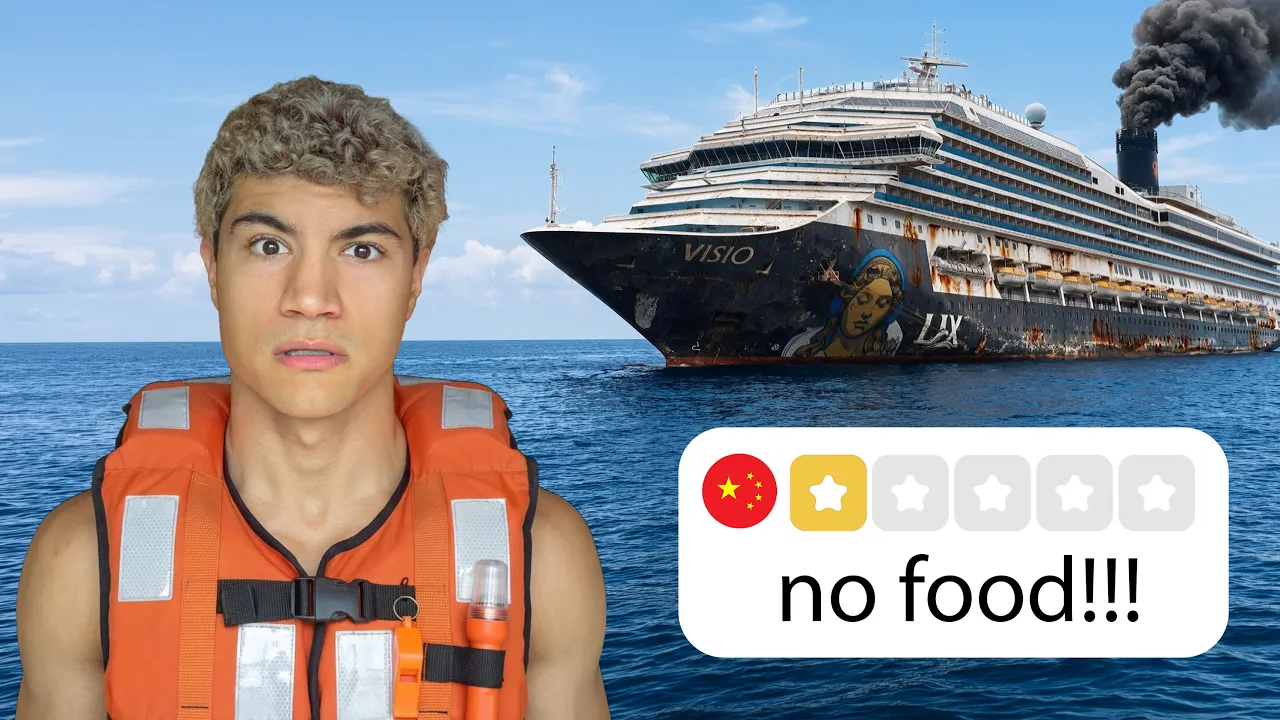
Joel Griffin boards the Oriental Dream for what he calls China's cheapest cruise. The ship was previously a Costa Cruises vessel and still has Italian signs covered over. His interior cabin has no windows, a broken fridge, rust and a television with two channels. Free buffet meals are available only during dinner from five to six in the evening and breakfast from eight to nine in the morning, while bottled water costs extra. Joel relies on free hot water on deck five and brings snacks. He meets fellow passengers, including Jurgen and two Chinese friends, and spends time with them over drinks and karaoke. He declines a Russian strip show pitch and finds a beauty contest activity has no meaningful prize. In Korean ports, his American passport lets him skip the required group tour and explore Jeju and Incheon, visiting Central Park, a museum and Costco. The people he meets become the trip's main value.
More about the current video:()
Cabin, meals and ship activities
Joel Griffin boards the Oriental Dream, which he calls the cheapest cruise in China, after locals warn him to expect a poor experience. The ship used to belong to Costa Cruises in Italy, and some Italian signs are still covered over. His interior cabin has no windows, a broken fridge, rust marks and a television with only two channels.
The food schedule is limited: the free buffet serves dinner from five to six in the evening and breakfast from eight to nine in the morning, with no other free meals. Water is mostly paid, although hot water is available on deck five. Joel brings snacks and protein bars, saves coffee from breakfast and uses buffet juice as a mixer. He meets Jurgen and two Chinese friends who become his companions. Crew members are friendly; Nini invites him to a Russian strip show, which he politely declines.
Korean ports and unexpected connections
On the Korean stops in Jeju and Incheon, Joel uses his American passport to skip a mandatory tour group and explore on his own. He visits Central Park, a free museum and Costco. In Korea's Chinatown, he uses WeChat to exchange money with a Chinese shopkeeper after forgetting his bank card. A calligraphy class has no pens, while the beauty contest turns out to be a misleading activity where participants receive only a small medal. The ship's gym, with Technogym equipment, is a pleasant surprise.
Disembarkation is delayed by two hours, and there is no food while passengers wait. Joel completes his challenge to spend no extra money onboard, but compares the cruise unfavorably with budget Carnival trips that offer food around the clock. The people he meets are what make the journey worthwhile for him. His review includes both the ship's shortcomings and moments of connection, along with practical advice about food, water, activities and port arrangements.
FAQs (From the traveler's perspective)
- Q: What were the sweet potato noodles like?
- A: They looked like shining leather and tasted yummy. That description is from an old FAQ retained with this article, although the source video is about Joel's cruise.
- Q: What was the most surprising thing you found?
- A: The old FAQ says the most surprising things were a one-dollar haircut and not needing a ticket to enter Zhu-long cave. Those details do not match this cruise source, so they remain an inherited FAQ rather than claims about Joel's trip.
- Q: When are free meals available on the cruise?
- A: Joel says the buffet is free for dinner from five to six in the evening and for breakfast from eight to nine in the morning. No other free meals are available, so he recommends bringing snacks.