
Travel Guides & Tips in this video
William interviews Solo about a 17,000 km electric journey from China to Norway in a Tesla Model Y. Solo describes charging across Kazakhstan, Russia and Europe, including the challenges of GBT-to-CCS2 compatibility, adapters, backup cables and different charger networks. He keeps logs of charging sessions and shares data with adapter developers. The conversation also covers winter tires, sleeping and camping in the car, food storage, heating and cooking with an EcoFlow power bank, and software updates. Solo discusses traveling for two months and planning for slower charging during the route. He discusses the route's charging data, overnight stops and the equipment needed for cold-weather travel. The interview also considers how logs can help identify compatibility problems across charging networks and inform changes to adapters. He reviews charging strategy for the route.
More about the current video:()
A long electric drive from Shanghai to Norway
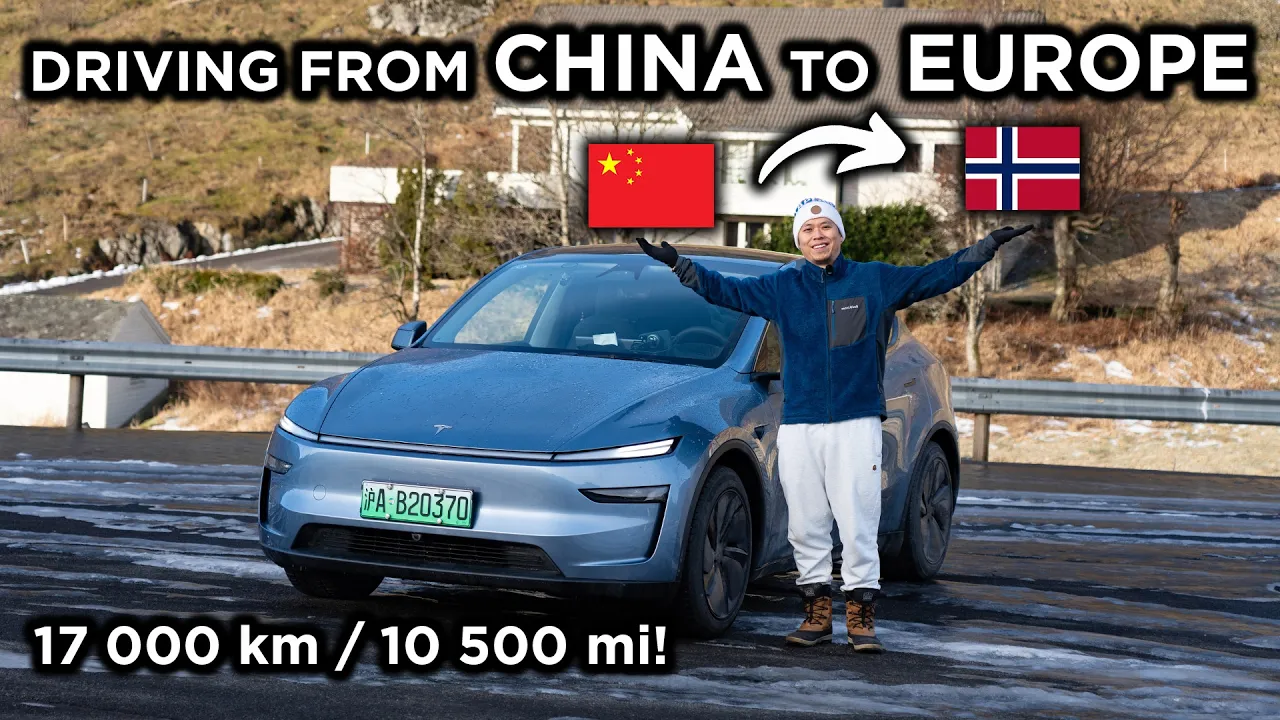
Solo drives a Tesla Model Y from Shanghai toward western Norway, covering a 17,000 km route. William asks about the vehicle choice and how Solo handles charging across countries. The trip passes through Kazakhstan and Russia before continuing through Europe, including Finland, Sweden and Norway. Solo talks about charging deserts in Kazakhstan and difficult charging networks in Russia, as well as the challenges of connecting GBT and CCS2 systems at different charger types.
Adapters and charging records are central to the discussion. Solo carries multiple adapters and cables, including backup options, and records charging sessions. He shares data and works with adapter manufacturers on software updates and compatibility. The conversation covers how charger interoperability can vary across networks and why logging each stop helps identify issues.
Camping, cold weather and daily routines
The discussion also covers living in the car for two months. Solo talks about the sleeping setup, winter tires and preparing for winter driving. He camps behind the car, stores food in a compact fridge and uses an EcoFlow power bank for heating and cooking. The route requires planning around slower charging and the charging networks available in each country.
Solo describes practical lessons from the journey, from keeping track of adapters to adjusting to different infrastructure. The interview focuses on his experience with this route and vehicle, along with the data he has gathered for improving adapter compatibility.
The interview also covers how charging varies by region. Solo talks about adapters for different plugs and charging equipment, using backup cables when systems do not connect smoothly, and tracking which combinations work. The recorded data is useful to the people developing adapters, and the discussion includes software updates intended to improve compatibility. These details are grounded in the interview rather than a general guarantee that a given connector will work at every station.
Weather and overnight routines shape the drive as well. Solo discusses winter tires and getting the car ready for cold conditions, then describes sleeping in or behind the vehicle and planning for long charging stops. A compact fridge helps keep food, while an EcoFlow power bank supports heating and cooking. He describes the practicalities of spending two months on the road, including balancing range, charging time and the equipment he carries. The interview follows the journey through Kazakhstan, Russia and northern Europe and focuses on the lessons Solo drew from those specific charging and camping experiences.
FAQs (From the traveler's perspective)
- Q: How did Solo manage charging across diverse networks?
- A: He relied on a mix of adapters, kept logs for all sessions, and coordinated with adapter manufacturers for software updates while using backup cables for compatibility.
- Q: Which countries did Solo drive through?
- A: The route went through Kazakhstan and Russia, then across Europe toward Finland, Sweden and Norway.
- Q: How did Solo handle food and warmth while camping?
- A: He used a compact fridge to store food and an EcoFlow power bank for heating and cooking. The interview also covers his sleeping setup and winter preparation.