Original source
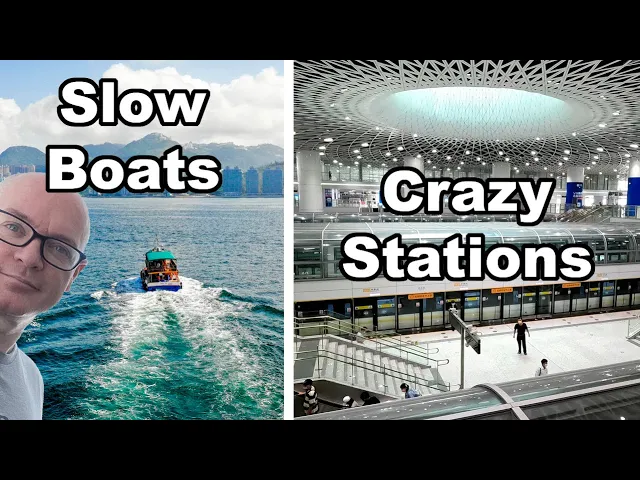
Hong Kong and Shenzhen, from slow boats to ultra-modern metro systems.
Hong Kong & Shenzhen: From Lamma Island to High-Speed Rail
Tim Chambers explores Hong Kong's tranquil Lamma Island and vibrant city life, then journeys to ultra-modern Shenzhen via high-speed rail, experiencing a fascinating cultural and technological contrast.
I take a ferry from Lamma Island to Aberdeen and then the Hong Kong MTR Metro to Kowloon Station for a High-Speed train to Shenzhen, but fail, then have to change tracks (...) and use the MTR again up to the border crossing at Lok Ma Chau.
In contrast to Hong Kong Island and Kowloon, Lamma is peaceful and tranquil with an abundance of natural scenery. Buildings higher than three storeys are prohibited and there are no automobiles but diminutive fire trucks and ambulances, as well as village vehicles; distinctive open-back vehicles to transport construction materials. The community's only means of transport is either by foot or bicycle.
Lamma provides an alternative to the hectic life in the city. Property and rents are cheap compared with those of central Hong Kong. These factors have attracted a significant expatriate community to Lamma Island. It is also popular with younger people and a haven for artists and musicians.
There are regular ferry services to Yung Shue Wan and Sok Kwu Wan from Central on Hong Kong Island, as well as to Yung Shue Wan via Pak Kok, and to Sok Kwu Wan via Mo Tat Wan, from Aberdeen. It takes about 25 minutes by ferry between Yung Shue Wan and Central. There are no cars on Lamma Island.
Hong Kong is officially the Hong Kong Special Administrative Region of the People's Republic of China is a city and special administrative region of China on the eastern Pearl River Delta in South China. With 7.4 million residents of various nationalities in a 1,104-square-kilometre (426 sq mi) territory, Hong Kong is one of the most densely populated places in the world. Hong Kong is also a major global financial centre and one of the most developed cities in the world.
Hong Kong was established as a colony of the British Empire after the Qing Empire ceded Hong Kong Island from Xin'an County at the end of the First Opium War in 1841 then again in 1842. The colony expanded to the Kowloon Peninsula in 1860 after the Second Opium War and was further...
My Hong Kong and Shenzhen adventure began on the serene Lamma Island, a stark contrast to the bustling city. Life moves at a slower pace here, with no cars allowed, only bicycles and the occasional diminutive fire truck. I then took a ferry to Aberdeen before heading to Kowloon Station to catch a high-speed train to Shenzhen. Unfortunately, my plans hit a snag, forcing an unexpected change of tracks and another MTR ride to the border. Hong Kong, a densely populated global financial center, offers a fascinating blend of modern and traditional, while Lamma Island provides a peaceful escape. The journey continued to Shenzhen, showcasing China's ultra-modern transportation systems.
I take a ferry from Lamma Island to Aberdeen and then the Hong Kong MTR Metro to Kowloon Station for a High-Speed train to Shenzhen, but fail, then have to change tracks (...) and use the MTR again up to the border crossing at Lok Ma Chau.
In contrast to Hong Kong Island and Kowloon, Lamma is peaceful and tranquil with an abundance of natural scenery. Buildings higher than three storeys are prohibited and there are no automobiles but diminutive fire trucks and ambulances, as well as village vehicles; distinctive open-back vehicles to transport construction materials. The community's only means of transport is either by foot or bicycle.
Lamma provides an alternative to the hectic life in the city. Property and rents are cheap compared with those of central Hong Kong. These factors have attracted a significant expatriate community to Lamma Island. It is also popular with younger people and a haven for artists and musicians.
There are regular ferry services to Yung Shue Wan and Sok Kwu Wan from Central on Hong Kong Island, as well as to Yung Shue Wan via Pak Kok, and to Sok Kwu Wan via Mo Tat Wan, from Aberdeen. It takes about 25 minutes by ferry between Yung Shue Wan and Central. There are no cars on Lamma Island.
Hong Kong is officially the Hong Kong Special Administrative Region of the People's Republic of China is a city and special administrative region of China on the eastern Pearl River Delta in South China. With 7.4 million residents of various nationalities in a 1,104-square-kilometre (426 sq mi) territory, Hong Kong is one of the most densely populated places in the world. Hong Kong is also a major global financial centre and one of the most developed cities in the world.
Hong Kong was established as a colony of the British Empire after the Qing Empire ceded Hong Kong Island from Xin'an County at the end of the First Opium War in 1841 then again in 1842. The colony expanded to the Kowloon Peninsula in 1860 after the Second Opium War and was further...
This travelogue follows Tim Chambers' journey through the contrasting landscapes and transport systems of Hong Kong and Shenzhen. His adventure begins on the peaceful Lamma Island, a car-free haven where life moves at a slower pace. The journey highlights the unique charm of Lamma, with its picturesque pathways, absence of automobiles, and vibrant community.
From Lamma, Tim takes a ferry to Aberdeen, a bustling port showcasing the contrast between the island's tranquility and the city's dynamism. The journey continues to Hong Kong's MTR, a marvel of modern engineering, transporting him towards the high-speed rail to Shenzhen. However, unexpected challenges arise, forcing Tim to adapt his route and utilize the MTR once again to reach the border.
Shenzhen unveils a different side of China, characterized by its futuristic cityscape and extensive metro network. Tim's exploration of Shenzhen's metro system is a highlight, detailing its impressive scale, modern infrastructure, and unique features. He navigates the intricate lines, encountering various stations, and experiencing the smooth and efficient transport system. The journey includes a visit to BYD, a prominent electric vehicle manufacturer, showcasing the city's commitment to innovation and technology.
Throughout his journey, Tim shares personal insights and emotional moments, capturing the essence of each location. The narrative is enriched with vivid descriptions of local interactions, surprising discoveries, and authentic experiences. His journey is not just about transportation; it's about connecting with the people and places he encounters, revealing the beauty and complexity of Hong Kong and Shenzhen.
Tim Chambers embarks on an extraordinary public transport adventure, seamlessly weaving through Hong Kong's tranquil Lamma Island and the ultramodern metro systems of Shenzhen. From quaint ferries to high-speed rails, his journey is a captivating blend of serene landscapes and futuristic infrastructure. Discover unexpected challenges, local encounters, and the sheer scale of Shenzhen's sprawling metro network.
Tim Chambers' Hong Kong & Shenzhen adventure blends serene island life with a thrilling exploration of futuristic metro systems. A unique journey filled with unexpected twists and stunning discoveries!
Hong Kong & Shenzhen: Ferry to Futuristic Metro
0:25 Explore Lamma Island's car-free environment and charming pathways. Enjoy the peaceful atmosphere and stunning natural scenery. This island offers a unique escape from the bustling city life.
2:10 Witness the unique sight of vessels collecting litter from the waters of Aberdeen Port, highlighting the city's commitment to environmental cleanliness.
3:12 Navigate the Hong Kong MTR system, a highly efficient and modern public transport network. Plan your route carefully, as unexpected changes might occur.
9:20 Utilize the ticketing machines in Shenzhen Metro stations to obtain an RFID tag for convenient travel. Understand the system to avoid delays.
15:32 Visit the BYD headquarters to witness their innovative skytrain system. Learn about their commitment to sustainable transportation.
0:06 Lamma Island exploration
1:04 Ferry to Aberdeen
2:05 Aberdeen Port arrival
3:04 MTR journey begins
4:45 Central Station
5:14 Kowloon Station
6:06 High-speed rail issue
6:35 MTR to Lok Ma Chau
8:58 Entering Shenzhen
9:09 Shenzhen Metro navigation
15:03 BYD Skytrain visit
0:06 Lamma Island exploration
1:04 Ferry to Aberdeen
2:05 Aberdeen Port arrival
3:04 MTR journey begins
4:45 Central Station
5:14 Kowloon Station
6:06 High-speed rail issue
6:35 MTR to Lok Ma Chau
8:58 Entering Shenzhen
9:09 Shenzhen Metro navigation
15:03 BYD Skytrain visit
What was the most challenging part of your journey?
Probably figuring out how to get from Hong Kong to Shenzhen after my high-speed rail plans fell through. The whole border crossing situation was a bit of a puzzle!
What was your favorite part of the trip?
I really loved the peace and quiet of Lamma Island. It was such a contrast to the busy cities, and the lack of cars made it so relaxing.
What surprised you most about Shenzhen?
The sheer size of the metro system was incredible! It's so extensive and modern. And the BYD skytrain was pretty futuristic.