
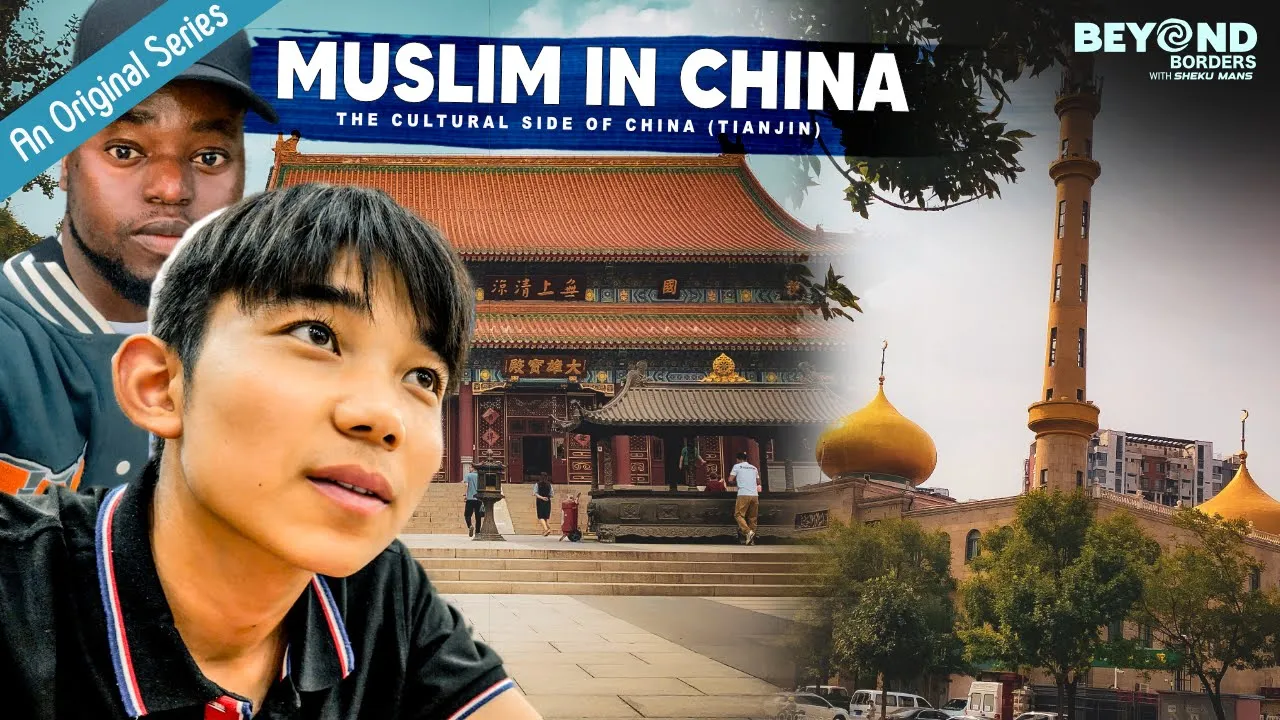
Travel Guides & Tips in this video
Sheku Mans's Tianjin visit contrasts his expectations with what he encounters in the city. He sees European and traditional Chinese architecture, rides the Tianjin Eye and visits Dule Temple. He also visits a Muslim restaurant in Beijing and speaks about Muslim communities in Tianjin and Beijing. Friendly residents help him despite the language barrier, and he tries local breakfast. His experience includes both historical sites and modern attractions, while his reflections focus on the city's atmosphere, food and the welcome he receives.
Next travel video:

More about the current video:()

Architecture and city landmarks
Sheku Mans explores Tianjin, a city in northeastern China, and finds a mix of European-style and traditional Chinese architecture. He visits the Tianjin Eye, a large Ferris wheel that gives him a view over the city, and later goes to Dule Temple, a historic Buddhist site. As he walks, he points out the different architectural styles and the way older landmarks sit alongside modern areas. His route also includes breakfast and local food, giving him a chance to experience more than the city's best-known sights.
Encounters and impressions
Sheku meets residents who are willing to help despite the language barrier. He talks about Muslim communities in Tianjin and Beijing, including a visit to a Muslim restaurant in Beijing, and reflects on his own expectations before arriving. He says the people he meets are hospitable and describes a relaxed atmosphere. The video presents his personal response to the places and conversations he encounters, including his view of how they differ from portrayals he had heard elsewhere. The city visit leaves him interested in the combination of historical sites, contemporary life and religious communities. He closes by encouraging viewers to form their own impressions through firsthand experiences in Tianjin. His route also includes a Muslim restaurant in Beijing, where he considers the Muslim community beyond Tianjin. In Tianjin, he tries local breakfast and speaks with residents who offer help. The video sets these conversations beside visits to a Buddhist temple and the Tianjin Eye, giving the trip both religious and architectural points of reference. Sheku describes what he personally sees and hears, including his changed expectations, rather than presenting his visit as a complete account of every community or viewpoint. His route also includes a Muslim restaurant in Beijing, where he considers the Muslim community beyond Tianjin. In Tianjin, he tries local breakfast and speaks with residents who offer help. The video sets these conversations beside visits to a Buddhist temple and the Tianjin Eye, giving the trip both religious and architectural points of reference. Sheku describes what he personally sees and hears, including his changed expectations, rather than presenting his visit as a complete account of every community or viewpoint.
Tianjin's mix of old and new
The video moves between historical sites, modern attractions and ordinary streets. Sheku's visit to the Tianjin Eye gives him a view across the city, while Dule Temple offers a contrasting stop with religious and historical significance. European-style facades appear alongside traditional Chinese architecture. He reacts to this mixture as he walks and talks with people. The city’s food is part of the day as well, including a local breakfast. These stops provide specific examples of the places that shape his impression of Tianjin.
People and expectations
Sheku says residents are helpful even when they do not share a language. His meetings and the meal at a Muslim restaurant in Beijing inform his observations about Muslim life and hospitality. He says the experience differs from some expectations he had before traveling, while the video remains a record of his own visit and conversations. The trip gives him reasons to think about how architecture, religion and daily life can coexist in the same region. He leaves with interest in Tianjin's historical landmarks and present-day atmosphere, and encourages viewers to see the city for themselves rather than rely solely on outside portrayals.
FAQs (From the traveler's perspective)
- Q: What places does Sheku visit in Tianjin?
- A: His stops include the Tianjin Eye, a local breakfast spot and Dule Temple. He also walks through areas where European-style and traditional Chinese architecture appear together.
- Q: What does Sheku say about the people he meets?
- A: He describes residents as friendly and willing to help despite language barriers. His impressions come from the conversations during this visit.
- Q: Does the video include Muslim communities?
- A: Yes. Sheku discusses Muslim communities in Tianjin and Beijing and visits a Muslim restaurant in Beijing. He reflects on these experiences alongside his other observations.
