Original source
Shanghai's First Airport, gone but not forgotten
Shanghai's Longhua Airport: Exploring the Art Deco Terminal and West Bund
Shanghai's Longhua Airport: A nostalgic journey through time, exploring the historical airport's Art Deco terminal and the vibrant West Bund Coffee Festival.
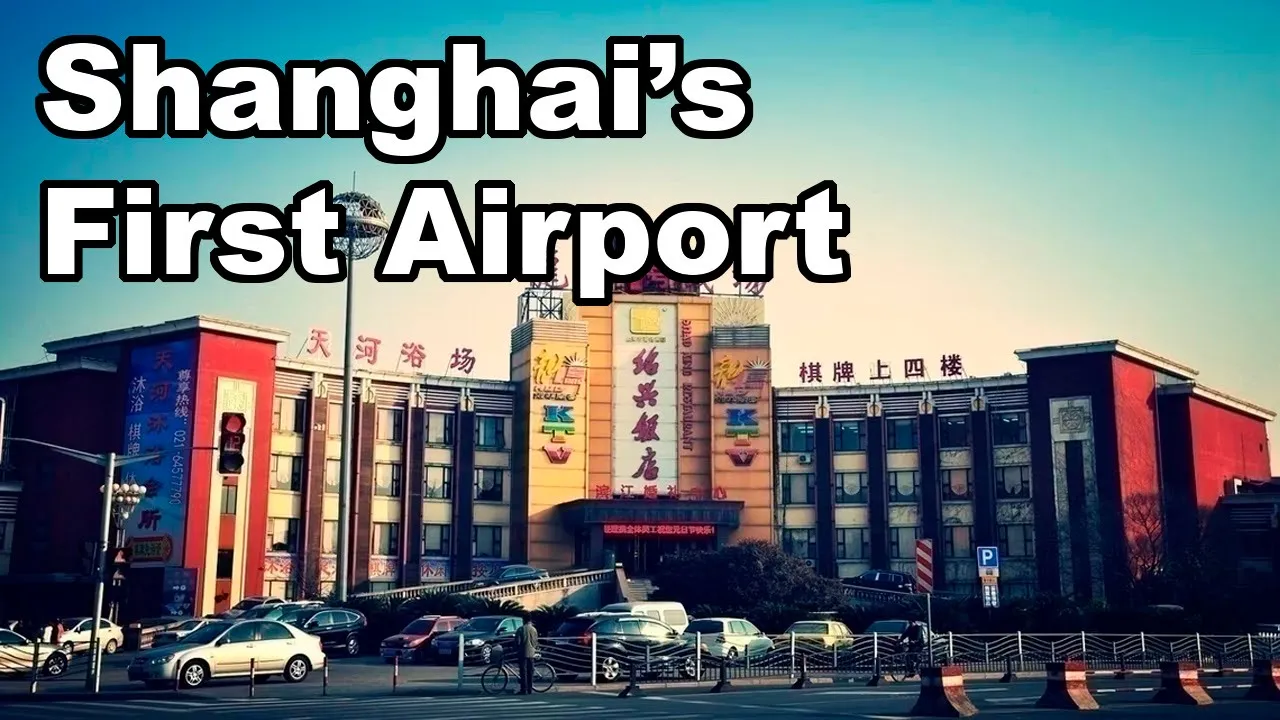
Join me as I visit some of the remains of Longhua Airport in Shanghai, in a brief video next to the Huangpu river, also incorporating 2024's coffee lifestyle festival on the West Bund. Shanghai Longhua Airport (ICAO: ZSSL), then called Shanghai Lunghwa Airport, was a converted general aviation airport and PLAAF airfield located south of downtown Shanghai, China, on the bank of the Huangpu River. It opened in the early 1920s and served as the city's airport until the 1950s when Shanghai Hongqiao International Airport opened. Thereafter, it was one of two general aviation airports serving Shanghai and also served as an emergency landing site for police, fire and rescue operations southwest of the city. The airport was eventually closed at 1966, and the airport grounds were slowly built over though a period of between 1993 and 2016. The site began airfield operations in late 1922 under the Beiyang government. In the early 1930s, the main, semi circular Art Deco terminal was built, along with the main ATC tower on the top of the main terminal, which still exists today, making it the last structure still remaining on what was once the airport. In the 1930s-1940s, during its golden age, the airport was known as the most popular airport for amphibious aircraft and the biggest airport of the Far East at the time. After the Battle of Shanghai, Imperial Japanese Airways operated services from Longhua to Fukuoka and Taipei during the late 1930s and early 1940s. Additionally, the tarmac was expanded to accommodate at least 100 aircraft (before 1937, only 10 airplanes could be parked at the tarmac), 2 gravel runways were added, making Longhua Airport one of China's first airport with more than one runway built. After the end of World War II, basic equipment such as power supply, radar, and communication systems were renovated and improved. Hence, the airport became a hub for China National Aviation Corporation (CNAC), as well as a famous stopover for many international...
Explore the remnants of Shanghai's Longhua Airport, once a bustling hub in the 1920s. Discover its Art Deco terminal, the sole survivor of this significant historical site, now standing proudly near the Huangpu River. Imagine the era of amphibious aircraft and its role as the Far East's largest airport. This captivating journey blends history with a visit to the 2024 Coffee Lifestyle Festival on the West Bund, offering a unique blend of past and present Shanghai.
Join me as I visit some of the remains of Longhua Airport in Shanghai, in a brief video next to the Huangpu river, also incorporating 2024's coffee lifestyle festival on the West Bund. Shanghai Longhua Airport (ICAO: ZSSL), then called Shanghai Lunghwa Airport, was a converted general aviation airport and PLAAF airfield located south of downtown Shanghai, China, on the bank of the Huangpu River. It opened in the early 1920s and served as the city's airport until the 1950s when Shanghai Hongqiao International Airport opened. Thereafter, it was one of two general aviation airports serving Shanghai and also served as an emergency landing site for police, fire and rescue operations southwest of the city. The airport was eventually closed at 1966, and the airport grounds were slowly built over though a period of between 1993 and 2016. The site began airfield operations in late 1922 under the Beiyang government. In the early 1930s, the main, semi circular Art Deco terminal was built, along with the main ATC tower on the top of the main terminal, which still exists today, making it the last structure still remaining on what was once the airport. In the 1930s-1940s, during its golden age, the airport was known as the most popular airport for amphibious aircraft and the biggest airport of the Far East at the time. After the Battle of Shanghai, Imperial Japanese Airways operated services from Longhua to Fukuoka and Taipei during the late 1930s and early 1940s. Additionally, the tarmac was expanded to accommodate at least 100 aircraft (before 1937, only 10 airplanes could be parked at the tarmac), 2 gravel runways were added, making Longhua Airport one of China's first airport with more than one runway built. After the end of World War II, basic equipment such as power supply, radar, and communication systems were renovated and improved. Hence, the airport became a hub for China National Aviation Corporation (CNAC), as well as a famous stopover for many international...
This video follows Tim Chambers' exploration of the remnants of Longhua Airport in Shanghai, China. Starting near the Longhua Pagoda, Tim reveals the airport's fascinating history, from its opening in the 1920s to its closure in 1966. He showcases the surviving Art Deco terminal building, which once housed air traffic control and now stands as a testament to the airport's golden age.
The video details the airport's transformation over the years, highlighting its use as a hotel and restaurant before eventually becoming part of a larger urban development. Tim points out the original airstrip, now a road, and the Shanghai Civil Aviation College situated on its former grounds. He shows a preserved airplane tail section, offering a glimpse into the airport's past.
The journey continues to the southern end of the airstrip, where Tim highlights Shanghai's focus on AI with the AI Plaza mall and mentions the conversion of the area into a park with waterways and recreational areas. He also points out the presence of luxury brand shops in the nearby office development.
Unexpectedly, the video then shifts to the West Bund, where Tim explores the vibrant atmosphere of the 2024 Coffee Lifestyle Festival. He shows various aspects of the festival, including the market, camping theme, and the presence of electric vehicles from companies like Avatar and Neo. The video concludes with Tim's encounter with a Cybertruck, adding a modern twist to the historical exploration. Throughout the video, Tim's commentary provides insightful details and personal observations, creating an engaging narrative for viewers. He shares his experiences in a conversational tone, making the history of Longhua Airport accessible and relatable.
Tim Chambers takes us on a unique journey through the remnants of Shanghai's first airport, Longhua Airport. He explores the surviving structures, from the Art Deco terminal to the old air traffic control tower, weaving a story of aviation history. The video then unexpectedly shifts to the vibrant West Bund International Coffee Lifestyle Festival, showcasing a blend of old and new Shanghai.
Tim Chambers explores Shanghai's forgotten Longhua Airport, discovering its historical remnants and experiencing the modern West Bund Coffee Festival. A captivating blend of past and present!
Shanghai Longhua Airport: Exploring Remnants & West Bund Coffee Festival
0:41 Visit the original terminal building of Longhua Airport, a remarkable piece of Art Deco architecture that survived the airport's closure. It's a fascinating blend of history and urban development.
1:38 Walk or cycle along the original airstrip, now a road. It offers a unique perspective on the airport's past, contrasting its former function with its current use. Observe the Shanghai Civil Aviation College along the way.
3:05 Explore the newly developed park area built on the former airport grounds. This park offers a peaceful contrast to the bustling city, providing a green space for recreation and relaxation.
4:14 Discover the Art Dome on the West Bund, a former concrete delivery area repurposed as an art space. This is a great example of urban regeneration, converting industrial areas into cultural hubs.
6:03 Attend the West Bund International Coffee Lifestyle Festival for a unique cultural experience. This festival combines coffee with a variety of lifestyle elements, creating a lively atmosphere.
0:01 Longhua Airport introduction
0:41 Original terminal building
1:38 Original airstrip
2:05 Preserved airplane tail
3:05 Park conversion
3:50 Luxury shops
4:14 Art Dome
6:03 Coffee Expo
7:21 West Bund Market
0:01 Longhua Airport introduction
0:41 Original terminal building
1:38 Original airstrip
2:05 Preserved airplane tail
3:05 Park conversion
3:50 Luxury shops
4:14 Art Dome
6:03 Coffee Expo
7:21 West Bund Market