
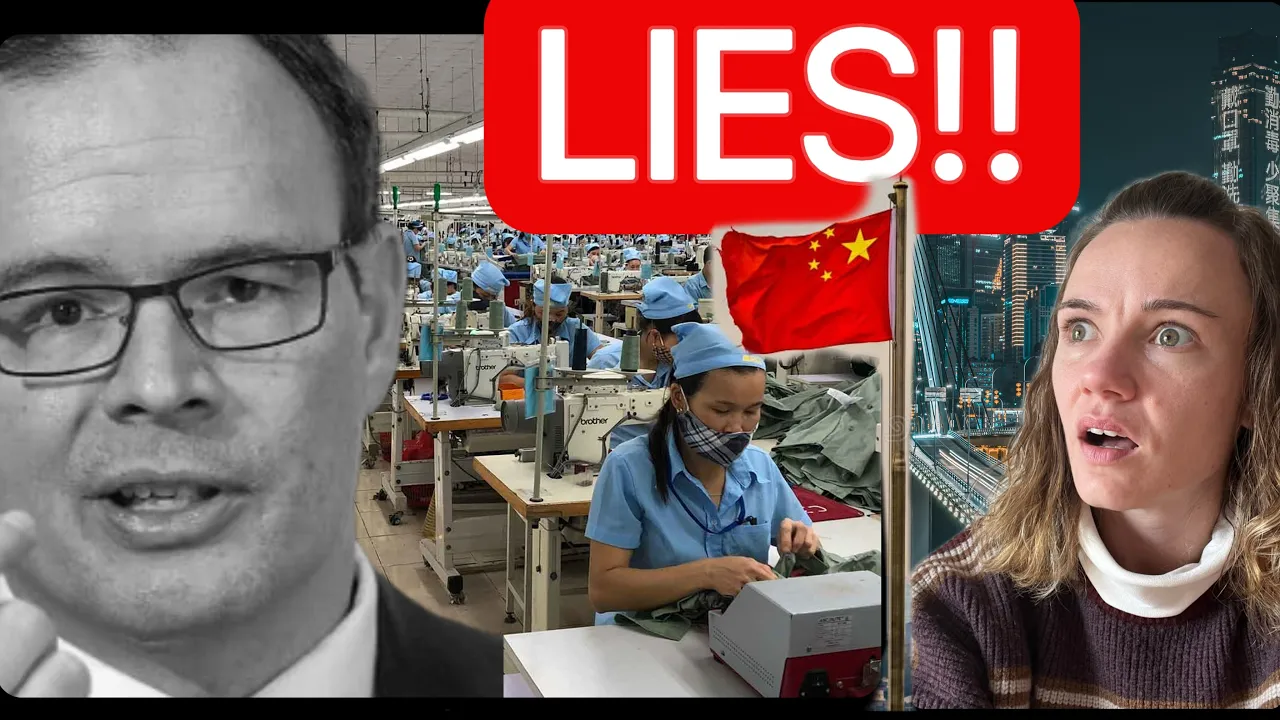
Travel Guides & Tips in this video
In her video, Lizzy argues that a France 2 report misrepresented Chinese factories and made unsupported claims about child and forced labor. She reviews two French journalists' footage and translations, including a girl waiting for her mother and a recruitment video that she says was mistranslated as evidence of forced labor connected to Xinjiang and North Korea. Lizzy also challenges the report's use of a worker's remark about Xinjiang cotton and discusses the effects she says the report had on factories, including halted production and lost income. Her analysis urges viewers to check translations, context and independent sources before accepting a media account.
Next travel video:

More about the current video:()

Lizzy's analysis of the France 2 report
Because I'm Lizzy reviews a France 2 report about Chinese factories and presents her own reading of its footage and translations. Lizzy says two French journalists, Justine and Marine, used hidden cameras and edited material in a way that created a misleading account of child and forced labor. She explains that she is fluent in Mandarin and compares the report with the original Chinese dialogue. Her video argues that the journalists' framing changed the meaning of several scenes.
One example concerns a 12-year-old girl whom Lizzy says was waiting for her mother, rather than working in a factory. She also examines a recruitment video and argues that a statement about attendance bonuses was mistranslated as evidence of forced labor linked to Xinjiang and North Korea. Lizzy discusses Adrian Zenz's interpretation of that material and disputes it. These are claims made in her analysis of the report, and the video asks viewers to pay attention to the original wording and context.
Xinjiang cotton and reported consequences
Lizzy also challenges how the France 2 segment connected factories with Xinjiang cotton, saying the report treated a worker's casual remark as evidence. She says the report harmed the factories by halting production and reducing income, and calls for accountability from the journalists. Her conclusion is a media-literacy argument: compare translations with the source language, look for context and consult independent information before accepting a claim. The video is an explanation of Lizzy's critique and her view of the report's consequences, rather than a neutral investigation of the factories themselves.
Lizzy's conclusion asks viewers to compare the report's claims with its original-language material and to check the context around the scenes. She says the factory allegations affected production and workers' income, and argues that the journalists and people interpreting the footage should be held accountable. Her video presents these points as her critique of France 2's report and encourages viewers to seek independent sources before drawing conclusions about factories in China.
FAQs (From the traveler's perspective)
- Q: What report does Lizzy discuss?
- A: She discusses a France 2 report by two French journalists about Chinese factories, including claims about child and forced labor.
- Q: How does Lizzy examine the report?
- A: She refers to the original Chinese dialogue and points to mistranslations and the presentation of footage as evidence.
- Q: What consequences for factories does the video describe?
- A: The account says production stopped and workers lost income after the report, and calls for accountability.
