Original source
China Built the Future (The West Can't Catch Up)
Qianhai, Shenzhen: Driverless Taxi, Robot Bus and Book City
I visited Qianhai in Shenzhen to see what the future of China’s cities actually looks like.
I jumped into a driverless taxi, experienced autonomous buses, explored the incredible Qianhai Book City and its rooftop “Eyes of the Greater Bay Area” reading space, and walked through Qianhai Stone Park. I...
I visited Qianhai in Shenzhen to see what the future of China’s cities actually looks like.
I jumped into a driverless taxi, experienced autonomous buses, explored the incredible Qianhai Book City and its rooftop “Eyes of the Greater Bay Area” reading space, and walked through Qianhai Stone Park. I also visited the Hong Kong Innovation & Entrepreneurship Hub to see how technology, infrastructure and innovation are shaping the next generation of Chinese cities.
From futuristic transport to massive public spaces, this was one of those days that made me realize just how quickly China is building the future — and how different everyday life could look in the years ahead.
Credits: soundridemusic
A day in Qianhai, the newest part of Shenzhen. The creator starts with a driverless taxi whose screen is in English: she fastens the seatbelt, presses start and the car pulls away with nobody at the wheel. Next is a driverless bus that uses lidar, cameras and high-definition maps to follow the road, spot obstacles, stop and pick up passengers. The ride is free, the service runs 20 buses on four lanes and has been going for two years. She then visits the Eyes of the Greater Bay Area, the rooftop reading space of Qianhai Book City, a huge library with automated systems behind the scenes, and walks Qianhai Stone Park, where locals sit by the waterfront and watch the skyline. She notes that Shenzhen looked completely different 40 years ago and that the future stops feeling futuristic once you use it.
I visited Qianhai in Shenzhen to see what the future of China’s cities actually looks like.
I jumped into a driverless taxi, experienced autonomous buses, explored the incredible Qianhai Book City and its rooftop “Eyes of the Greater Bay Area” reading space, and walked through Qianhai Stone Park. I also visited the Hong Kong Innovation & Entrepreneurship Hub to see how technology, infrastructure and innovation are shaping the next generation of Chinese cities.
From futuristic transport to massive public spaces, this was one of those days that made me realize just how quickly China is building the future — and how different everyday life could look in the years ahead.
Credits: soundridemusic
The video opens by asking what the future looks like, then introduces Qianhai in Shenzhen as a district that feels designed for a city that does not exist yet, where culture has not disappeared under the glass towers. The creator gets into a driverless taxi, notes that the screen is in English, fastens her seatbelt and presses start; the car moves smoothly with no hands on the wheel, and after a few minutes she forgets nobody is driving. She then boards a driverless bus with other passengers, watches the steering wheel move by itself and explains that it uses lidar, camera sensors and high-definition maps to follow the road, recognize obstacles, stop and pick up passengers. The ride is free, with 20 buses on four lanes and two years of operation, and she says it already feels like ordinary public transport. Stepping off, she finds new buildings, wide roads and open public spaces still taking shape. The next stop is the Eyes of the Greater Bay Area, a huge reading space in Qianhai Book City with books, people studying and automated systems running the building. She reflects that Shenzhen looked completely different 40 years ago, then walks Qianhai Stone Park, where people sit by the waterfront, talk, exercise and watch the skyline. She ends by saying the most futuristic thing is how fast the impossible becomes normal, and that once you live in it, it just feels like life.
A day in Qianhai, the newest part of Shenzhen. The creator starts with a driverless taxi whose screen is in English: she fastens the seatbelt, presses start and the car pulls away with nobody at the wheel. Next is a driverless bus that uses lidar, cameras and high-definition maps to follow the road, spot obstacles, stop and pick up passengers. The ride is free, the service runs 20 buses on four lanes and has been going for two years. She then visits the Eyes of the Greater Bay Area, the rooftop reading space of Qianhai Book City, a huge library with automated systems behind the scenes, and walks Qianhai Stone Park, where locals sit by the waterfront and watch the skyline. She notes that Shenzhen looked completely different 40 years ago and that the future stops feeling futuristic once you use it.
A day in Qianhai, Shenzhen: a driverless taxi and a free robot bus, the Eyes of the Greater Bay Area library and Qianhai Stone Park.
Qianhai, Shenzhen: Driverless Taxi, Robot Bus and Book City
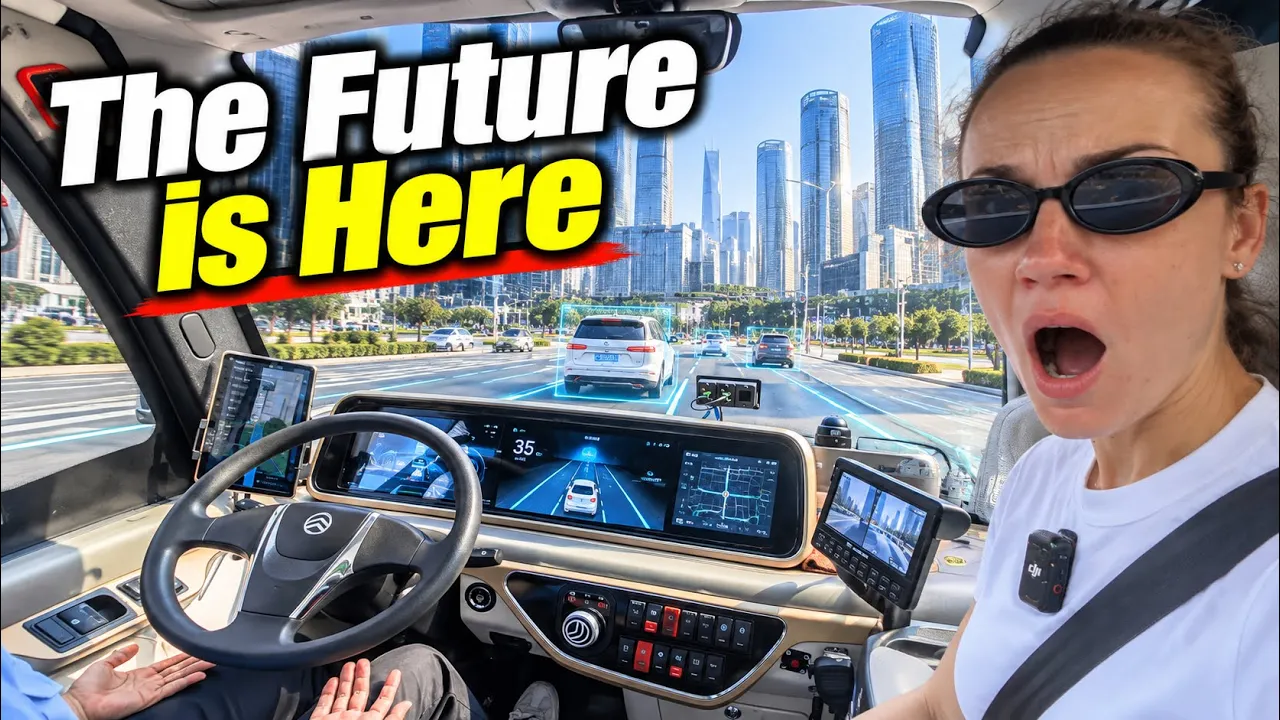
1:36 In the driverless taxi the screen is in English: fasten your seatbelt and press start ride, and the car pulls away with nobody at the wheel.
3:31 The bus understands the road with lidar, cameras and high-definition maps, so it can follow the lane, spot obstacles and stop on its own.
4:32 The driverless bus is free: the service runs 20 buses on four lanes and has been operating for two years, so you can simply get on and ride.
5:25 The rooftop reading space at Qianhai Book City is called the Eyes of the Greater Bay Area, a huge public library with automated systems, not just a bookshop.
6:52 Qianhai Stone Park is free to walk: locals come down to the waterfront to sit, talk, exercise and watch the skyline.
6:44 Shenzhen looked completely different 40 years ago; the skyline, the parks and the driverless transport all arrived within one generation.
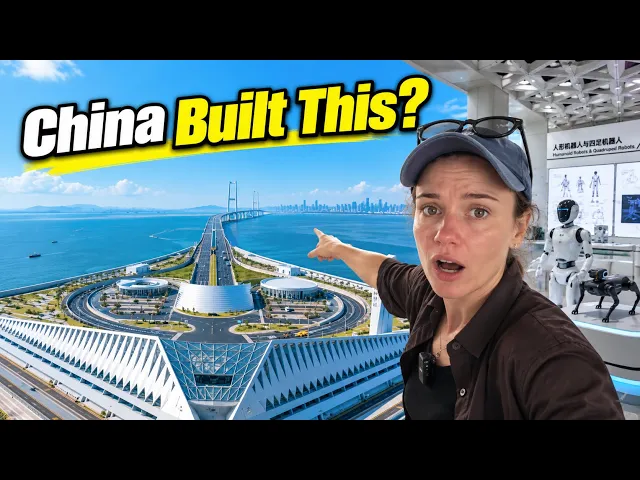
0:21 Qianhai is one of the newest parts of Shenzhen: the architecture, glass towers and public spaces were designed for a city that is still being built.
0:00 What the future looks like
0:17 Introducing Qianhai
1:10 The driverless taxi
2:35 The driverless bus
3:31 How the bus sees the road
4:32 A free bus service
5:17 Eyes of the Greater Bay Area
6:44 Shenzhen 40 years ago
6:52 Qianhai Stone Park
7:49 Getting used to the future
0:00 What the future looks like
0:17 Introducing Qianhai
1:10 The driverless taxi
2:35 The driverless bus
3:31 How the bus sees the road
4:32 A free bus service
5:17 Eyes of the Greater Bay Area
6:44 Shenzhen 40 years ago
6:52 Qianhai Stone Park
7:49 Getting used to the future
How do you use the driverless taxi in Qianhai?
The screen is in English. Fasten your seatbelt, press start ride and the car drives itself; the creator says you forget nobody is driving after a few minutes.
Is the driverless bus in Shenzhen free?
Yes. The service runs 20 buses on four lanes and has been operating for two years, and the creator rode it at no cost.
How does the driverless bus work?
It uses lidar, camera sensors and high-definition maps to follow the road, recognize obstacles, stop when needed and find the next passengers.
What is the Eyes of the Greater Bay Area?
A large reading space on the roof of Qianhai Book City, with books, study areas and automated systems running behind the scenes.
What can you do at Qianhai Stone Park?
Walk along the waterfront, sit, talk, exercise and watch the Shenzhen skyline; the creator calls it the most beautiful park she has seen.
How new is Qianhai?
Very new. The creator says Shenzhen looked completely different 40 years ago, and much of Qianhai still looks like a city taking shape.
Where is Qianhai?
In Shenzhen, Guangdong, on the coast of southern China.