Original source
Never Take the World's Highest Train to TIBET, China Alone! 🇨🇳(5000m!)
Qinghai–Tibet Railway from Xining to Lhasa: Sleeper Train Journey
This week, I'm finally taking the Qinghai–Tibet Railway(Qingzang Railway) to Tibet! 🇨🇳
Starting from Xining, Qinghai Province, I'm spending over 22 hours on a train across the Tibetan Plateau, traveling through snow-capped mountains, vast wilderness, and some of the highest railway tracks in the...
This week, I'm finally taking the Qinghai–Tibet Railway(Qingzang Railway) to Tibet! 🇨🇳
Starting from Xining, Qinghai Province, I'm spending over 22 hours on a train across the Tibetan Plateau, traveling through snow-capped mountains, vast wilderness, and some of the highest railway tracks in the world.
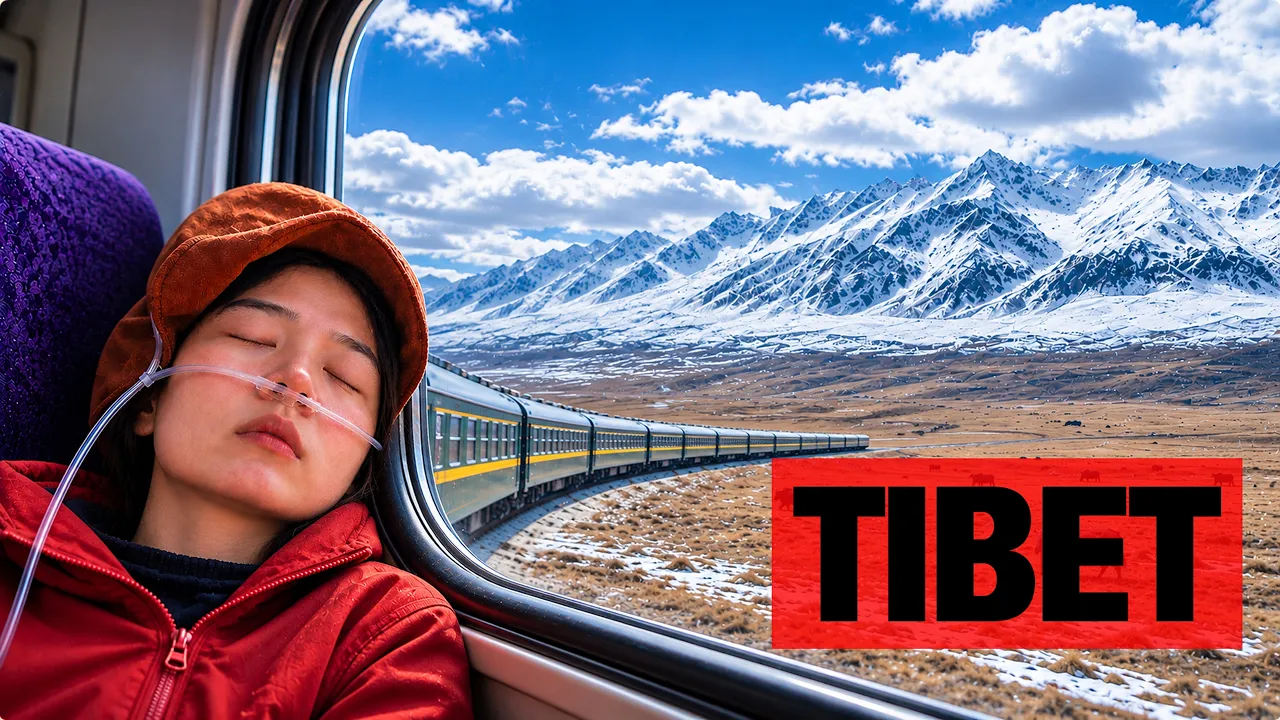
But the journey isn't easy. As we climb toward Tanggula Pass, the highest point of the railway at over 5,000 meters, my blood oxygen saturation drops from 93% to 73%. I struggle with the altitude and end up needing oxygen before finally reaching Lhasa.
Join me as I experience the world's highest railway! 🎬
00:00 Intro
01:33 Sleeper Cabin Experience
04:17 Locomotive Change in Golmud (2,828m)
06:23 Breakfast at 4,547m
08:09 Crossing Hoh Xil Wilderness (4,721m)
10:35 Climbing to Tanggula Pass (5,072m)
15:19 Lunch on the Train
21:18 My Honest Review: Is It Worth Taking the Train?
Rilla rides the Qinghai–Tibet Railway from Xining to Lhasa over more than 22 hours. She chooses a hard sleeper, describes its cabin and onboard facilities, and watches the train cross high-altitude scenery including Kekexili and Tanggula Pass. She eats in the dining car, meets fellow passengers, and tries food offered by a Tibetan family. On the climb toward Tanggula Pass, the route reaches 5,072 meters; Rilla describes struggling with the altitude and needing oxygen before reaching Lhasa. In her final review, she says the train may suit travelers who want to meet locals and take their time crossing the plateau, but she would not recommend it mainly as a way to avoid altitude sickness. She also says foreign travelers need a travel agency to apply for a special permit.
This week, I'm finally taking the Qinghai–Tibet Railway(Qingzang Railway) to Tibet! 🇨🇳
Starting from Xining, Qinghai Province, I'm spending over 22 hours on a train across the Tibetan Plateau, traveling through snow-capped mountains, vast wilderness, and some of the highest railway tracks in the world.
But the journey isn't easy. As we climb toward Tanggula Pass, the highest point of the railway at over 5,000 meters, my blood oxygen saturation drops from 93% to 73%. I struggle with the altitude and end up needing oxygen before finally reaching Lhasa.
Join me as I experience the world's highest railway! 🎬
00:00 Intro
01:33 Sleeper Cabin Experience
04:17 Locomotive Change in Golmud (2,828m)
06:23 Breakfast at 4,547m
08:09 Crossing Hoh Xil Wilderness (4,721m)
10:35 Climbing to Tanggula Pass (5,072m)
15:19 Lunch on the Train
21:18 My Honest Review: Is It Worth Taking the Train?
Rilla starts at Xining Railway Station for an over-22-hour trip to Lhasa on the Qinghai–Tibet Railway. She travels in a hard sleeper, which she says costs 76 dollars per person. Her cabin has six passengers, luggage space, and oxygen outlets, but no door between the carriage and corridor; she also notes limited sitting room on the middle and upper bunks. Onboard she sees heaters, a hot-water dispenser, squat and Western-style toilets, and no shower. At Golmud, the train changes locomotives. The next morning, Rilla describes a headache as the train climbs above 4,000 meters and crosses Tuotuo River and Kekexili. She visits the dining car, where breakfast costs 35 yuan and instant coffee costs 20 yuan a cup, and looks at the soft-sleeper and hard-seat options. The route passes the Tanggula Mountains and reaches the railway's high point at 5,072 meters, according to the video description. Rilla describes the altitude and oxygen use on board, and meets a Tibetan family who offers her yogurt and tsampa. At Anduo Station, she says the train has entered Tibet. Later, she shares lunch in the dining car with a traveler from Finland, sees snow-capped mountains and villages on the way toward Lhasa, and discusses the railway's history with another passenger. In her review, she says foreign travelers need a travel agency to apply for a special permit. She would not recommend the train mainly to avoid altitude sickness because it still reaches above 5,000 meters, but says it may be worth trying for meeting locals and taking time to cross the plateau. These are her statements and impressions from the video.
Rilla rides the Qinghai–Tibet Railway from Xining to Lhasa over more than 22 hours. She chooses a hard sleeper, describes its cabin and onboard facilities, and watches the train cross high-altitude scenery including Kekexili and Tanggula Pass. She eats in the dining car, meets fellow passengers, and tries food offered by a Tibetan family. On the climb toward Tanggula Pass, the route reaches 5,072 meters; Rilla describes struggling with the altitude and needing oxygen before reaching Lhasa. In her final review, she says the train may suit travelers who want to meet locals and take their time crossing the plateau, but she would not recommend it mainly as a way to avoid altitude sickness. She also says foreign travelers need a travel agency to apply for a special permit.
Rilla rides the Qinghai–Tibet Railway from Xining to Lhasa, showing sleeper options, onboard meals and high-altitude scenery before reviewing the trip.
Qinghai–Tibet Railway from Xining to Lhasa: Sleeper Train Journey
1:35 Rilla chooses a hard sleeper and says each cabin holds six passengers, with luggage space below lower bunks and above upper ones. She notes that middle and upper bunks leave little room to sit upright.
2:50 She says the train has heaters and a hot-water dispenser for tea or instant noodles. The toilets include squat and Western-style seats, there is no shower, and the warm-water pressure is weak.
6:26 Rilla says the dining car's basic breakfast costs 35 yuan; she also sees instant coffee for 20 yuan a cup. Those are the prices she reports during this trip.
7:24 Rilla says soft-sleeper cabins have four bunks and a lockable door, which gives more privacy. She also shows the hard-seat option, which she calls the most basic.
15:51 Rilla shares a dining-car table with a traveler from Finland and sees a variety of lunch dishes, including fried pork, vegetables, rice and soup. She says fresh organic vegetables are grown on the train.
21:24 Rilla says foreign travelers need a travel agency to apply for a special permit and says independent travel to Tibet is not possible. This is her explanation in the video.
21:51 Rilla would not recommend the train if your main aim is to avoid altitude sickness: she says it still goes above 5,000 meters and passengers can feel the effects.
0:00 Qinghai–Tibet Railway introduction
1:33 Hard sleeper cabin
4:17 Changing the locomotive at Golmud
6:23 Breakfast in the dining car
8:09 Crossing Hoh Xil Wilderness
10:35 Climbing to Tanggula Pass
15:19 Lunch on the train
21:18 Train review and travel tips
0:00 Qinghai–Tibet Railway introduction
1:33 Hard sleeper cabin
4:17 Changing the locomotive at Golmud
6:23 Breakfast in the dining car
8:09 Crossing Hoh Xil Wilderness
10:35 Climbing to Tanggula Pass
15:19 Lunch on the train
21:18 Train review and travel tips
Where does Rilla's train journey begin and end?
She boards at Xining Railway Station and travels to Lhasa on the Qinghai–Tibet Railway.
What kind of sleeper does Rilla use?
She stays in a hard sleeper and says it costs 76 dollars per person. Each cabin can accommodate six passengers.
What facilities does she mention in the sleeper carriage?
She points out luggage space, oxygen outlets, heaters and a hot-water dispenser. She says there is no shower and no door separating the carriage from the corridor.
What does breakfast cost on the train?
Rilla says her basic breakfast costs 35 yuan, and instant coffee is 20 yuan a cup.
How high does the railway reach on this trip?
The video description identifies the high point at Tanggula Pass as 5,072 meters above sea level.
Would Rilla recommend the train to avoid altitude sickness?
No. She says she would not recommend it for that purpose because the train still goes above 5,000 meters and passengers can feel the effects of altitude.
What permit advice does Rilla give foreign travelers?
She says foreign travelers need a travel agency to apply for a special permit and says they cannot travel to Tibet independently.