
Travel Guides & Tips in this video
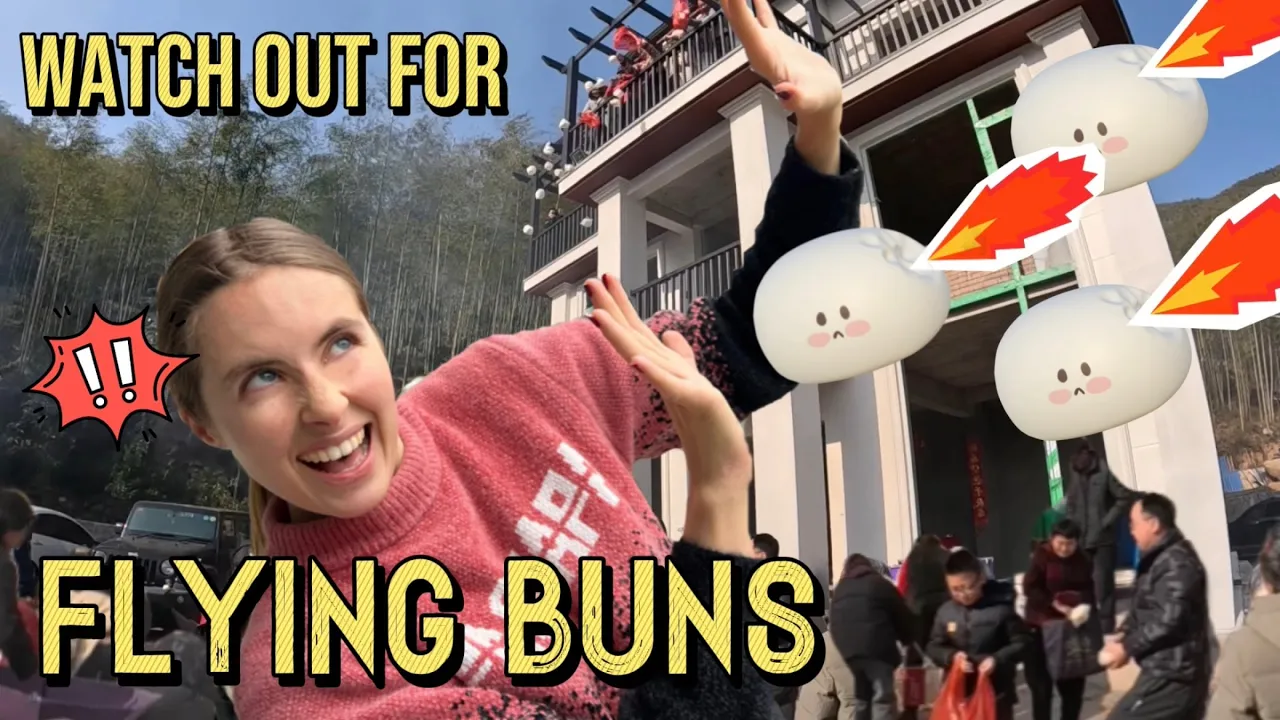
Katherine witnesses a traditional new-house ceremony in rural China. From a balcony, she watches preparations and explains that objects are thrown from the roof as a celebration; in this event, steamed buns fly from the rooftop to welcome the new house. The concrete house is simple and still being finished, but Katherine says its size alone does not indicate wealth. Renovation quality and the scale of the housewarming party offer better clues. The community prepares a large feast outdoors under a tent rather than hiring a caterer. Katherine tries fried hot peppers and a fried leaf, both of which she enjoys. She also joins a bamboo shoot challenge and watches the ceremony's final beam placement. The event gives her a close view of rural customs, shared food preparation, and village hospitality.
Next travel video:
More about the current video:()

A new-house celebration
Katherine attends a housewarming ceremony in a rural Chinese village. She watches preparations from a balcony overlooking the house and describes the custom of throwing items from the roof as part of the celebration. During this ceremony, steamed buns are tossed from above to welcome the new house. The building itself is a standard concrete structure and is still relatively simple at this stage of construction, but the ceremony gives it a strong communal setting.
The order of events includes the ceremony beginning, the housewarming celebration, and placement of the final beam. Katherine tours the house and observes that its current condition does not tell the whole story of the owner's wealth. In this area, renovation work and the scale of the housewarming party can be better indicators than the size of the building alone.
Food prepared by the community
After the ceremony, the guests gather for a feast outside under a tent. Katherine emphasizes that the meal is prepared on site as a community effort rather than brought in by a catering company. This way of preparing food contributes to the atmosphere of the celebration and brings people together.
The menu includes fried hot peppers and a fried leaf, which Katherine describes as delicious. She is willing to try local specialties and enjoys discovering dishes she had not expected. The video shows dinner preparation before the feast begins, with food and guests becoming part of the ceremony's shared experience.
Joining village activities
Katherine participates in a bamboo shoot challenge and observes other parts of the gathering, including buns and related items associated with the celebration. The video follows the event from its beginning through the end of the ceremony and into the feast. The large gathering and food preparation show how a housewarming can involve more than the household moving into a new building.
Katherine presents the experience as an opportunity to learn about rural customs, rather than treating the ceremony as a routine tourist attraction. Her account covers the rooftop bun tossing, house tour, beam placement, community cooking, and local specialties. The celebration leaves her with an impression of warmth and shared effort. The video offers her personal view of one village's event and does not suggest that every region holds the same ceremony.
FAQs (From the traveler's perspective)
- Q: What happens at the rural housewarming ceremony?
- A: A celebration includes throwing items from the roof, especially steamed buns that are tossed to welcome the new house. Katherine watches the event from a balcony and follows it through the ceremony and feast.
- Q: What does the house itself reveal about wealth?
- A: Katherine says the house is a fairly standard concrete structure and its size is not necessarily a sign of wealth. The level of renovation and scale of the housewarming party are better indicators in this area.
- Q: What food did Katherine try?
- A: The community prepared an outdoor feast. Katherine particularly enjoyed fried hot peppers and a fried leaf, and she joined a bamboo shoot challenge during the celebration.
