Original source
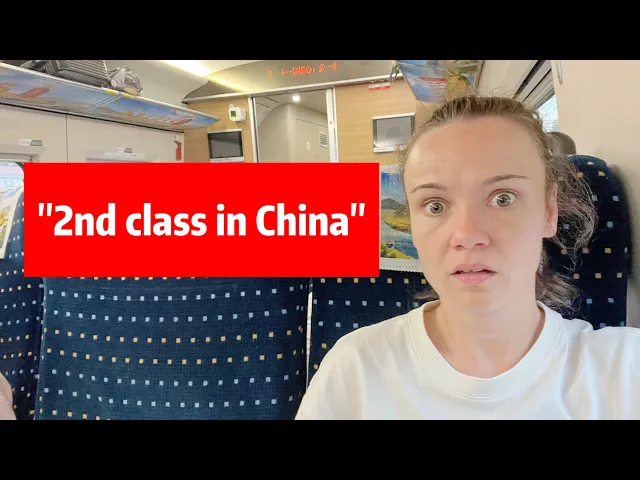
What 2nd Class Looks Like on China’s Bullet Train
China Bullet Train: 2nd Class Travel Experience
Every day, millions of people in China travel by high-speed train — and most of them ride in 2nd class. In this video, I take the same journey to show you what it’s really like. Affordable, fast, and shockingly comfortable… is this the future of public transport around the world?
Royalty Free...
Every day, millions of people in China travel by high-speed train — and most of them ride in 2nd class. In this video, I take the same journey to show you what it’s really like. Affordable, fast, and shockingly comfortable… is this the future of public transport around the world?
Experience the efficiency and comfort of China's high-speed rail system. Lizzy's journey on a 2nd class bullet train reveals a surprisingly pleasant and affordable travel option, prompting reflection on the future of global public transportation. This video offers a unique glimpse into daily life in China, showcasing a practical and widely used mode of travel.
Every day, millions of people in China travel by high-speed train — and most of them ride in 2nd class. In this video, I take the same journey to show you what it’s really like. Affordable, fast, and shockingly comfortable… is this the future of public transport around the world?
Lizzy says millions of people in China use high-speed trains every day, around 7 to 11 million, and that she wants to show a regular second-class seat in the station and on the train. She is heading to a small city in one of the poorest provinces in China rather than a tourist hotspot. She says the ride is 654 kilometers and costs 262 RMB, about $36, and takes 3 and a half hours with stops, while driving would take around 7 hours and cost 420 RMB in tolls. At a normal station she says the crowds would be crazy during Spring Festival or the October holiday, and she likes that the signs are in English. She talks about China developing a maglev train that can reach 920 kilometers per hour. For boarding she says to check that the trip.com booking says e-ticket, bring a passport and use the line with the gate machine; if it will not scan, the staff member types in the passport number. She finds carriage six, seat 11, reclines the seat, notes this train has no plugs at the seat and that a curtain is provided. The train has 16 carriages, holds more than 1,100 people and has a top speed of 350 kilometers per hour. Announcements are in Chinese and English, there is 5G, and she walks through the train, shows chargers, the toilet, a no-smoking sign with a fine of 500 up to 2,000 RMB, a place to fill up water and luggage space. She advises carrying tissues. She says the ride was smoother than any plane she has taken, then takes a DiDi to a hotel on the 18th floor that she says costs not even 400 RMB a night. She concludes that second class is comfortable, clean and more than enough, and says she has taken first class once and did not find it worth the price.
Lizzy rides a regular second-class seat on a China high-speed train to show what millions of people use every day, heading to a small city in one of China's poorest provinces rather than a tourist hotspot. She gives the trip facts: 654 kilometers, 262 RMB, and about 3 and a half hours, against around 7 hours by car. She shows the e-ticket and passport gate, finds carriage six, seat 11, reclines her seat and tours the carriages, chargers, toilet and hot water area. She notes the English signs and announcements, 5G and the speed through tunnels. After arriving she takes a DiDi to a hotel she says costs under 400 RMB a night, and says second class is more than enough.
Lizzy rides a regular second-class seat on a China bullet train and shows the gates, seat, carriages, toilet and arrival.
China Bullet Train Second Class: Seats, Gates, Chargers and Arrival
1:25 Lizzy says her ride is 654 kilometers and costs 262 RMB, taking 3 and a half hours with stops. By car it would be around 7 hours and 420 RMB for toll gates.
2:18 She says this is just a normal station in a city that is not a first tier city, but you do not want to see it during Spring Festival or the October holiday, when it gets crazy.
4:38 After booking on trip.com, make sure it says e-ticket. Then you do not need to collect a ticket: bring your passport and stand on the line with the gate machine, on the far right or far left.
5:21 If the machine will not scan your passport, do not worry. Lizzy says this happens about nine out of 10 times, and the staff member at the gate types in your passport number so you can go through.
7:37 This second-class seat has no plug. Lizzy says first class always has plugs and that about eight out of 10 of her trains have them in second class, so check before you rely on a charger.
10:02 Announcements on the train are in English as well as Chinese, so Lizzy says there is no need to worry if you cannot speak any Chinese.
10:27 There is 5G on the train, and Lizzy sees everyone on their phone. She also spots some chargers if you would like to charge.
11:46 It is not really common to find tissues in the bathroom in China, so Lizzy says to always carry tissues with you, especially if you are a woman. There is also a place to fill up water for noodles.
0:19 Millions ride China's trains daily
1:25 Trip distance, fare and time
2:14 A normal station and snacks
4:35 E-ticket and passport gate
5:37 Finding carriage six, seat 11
6:47 Second-class seat and space
9:10 Train capacity and top speed
10:19 Walking through the train
11:00 Toilet and hot water area
12:21 Speed and tunnels
14:17 Arrival and thoughts on the ride
15:40 Hotel room and final thoughts
How far and how long was Lizzy's second-class train ride?
She says the ride is 654 kilometers and takes 3 and a half hours with stops, while driving would take around 7 hours.
How much did the second-class ticket cost?
Lizzy says she paid 262 RMB, which she converts to $36. She says the same trip by car would have cost 420 RMB in tolls.
What do you need to board the train with an e-ticket?
Check that your trip.com booking says e-ticket, then bring your passport and use the line with the gate machine. If it will not scan, the staff member types in your passport number.
Are there plugs at a second-class seat?
Not on this train. Lizzy says first class always has plugs and that about eight out of 10 of her trains have them in second class, with chargers also available in the carriage.
Are the signs and announcements in English?
Lizzy says the announcements on the train are in English as well as Chinese, and the station signs are also in English.
How big is the train in the video?
Lizzy says it has 16 carriages, a capacity of more than 1,100 people and a top speed of 350 kilometers per hour.
Should you bring anything for the train toilet?
Lizzy says tissues are not really common in bathrooms in China, so she advises always carrying tissues with you.