Travel Guides & Tips in this video
KSquared visits sites connected with Chongqing's wartime past, including exhibits about six years of bombing and the caves where civilians sought shelter. He discovers that a building near his hotel was the former General Headquarters of the Korean Liberation Army, where many artifacts and explanations are in Chinese and Korean. The trip also includes Luckin Coffee, the Three Gorges Museum and a WeChat-based entry system, encounters with a taxi driver and museum staff, and displays of traditional clothing from China's ethnic groups.
Next travel video:

More about the current video:()

Chongqing's wartime history
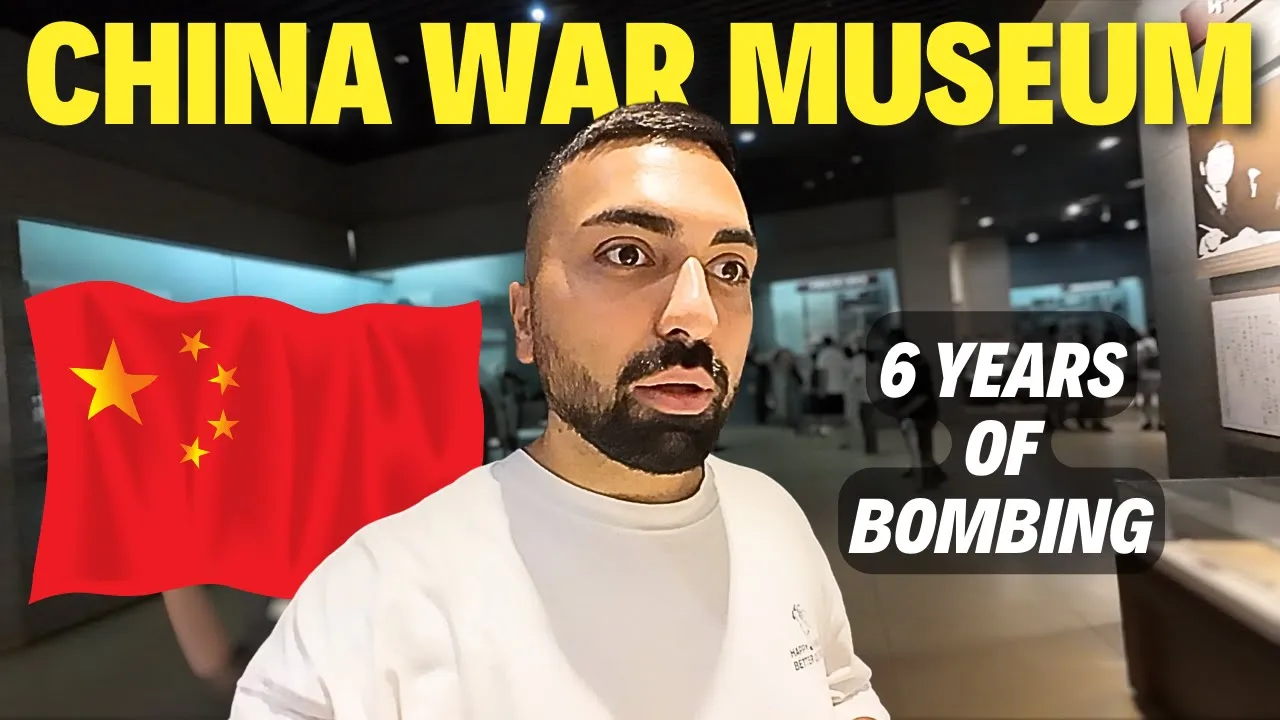
KSquared visits museums and historic sites in Chongqing, focusing on the city's role as a wartime capital during the Second Sino-Japanese War. At a museum, he learns about six years of bombing and sees images of caves where civilians sought shelter. The exhibits describe Japanese imperialism and aggression, the resistance, and the formation of a united front against Japan. KSquared reflects on the human cost of the bombing and the suffering of civilians.
Near his hotel, KSquared first mistakes a building for a government office and then discovers it was the former General Headquarters of the Korean Liberation Army. He walks in and receives an impromptu tour, seeing historical artifacts and information largely written in Chinese and Korean. He cannot translate all of it, but shares what he can understand. His visit adds another historical site to the day's exploration.
Museum visit and everyday stops
KSquared visits the Chongqing China Three Gorges Museum and encounters its WeChat-based entry system before he has set up an account. He has not set up WeChat, but staff still let him in despite the busy museum. The museum is busy, and its displays include the war and traditional clothing from different ethnic groups. Exhibits also cover resistance to Japanese aggression and the national united front against Japan, including images of bombed civilian areas and caves used for shelter. He also speaks with local staff and a taxi driver, whose message is one of the memorable interactions in the trip.
Away from the exhibits, KSquared visits Luckin Coffee and comments on the difficulty of paying with cash in a largely cashless setting. He likes the coffee but notes that ordering through the app is often necessary and cash may not be accepted. He also moves through Chongqing's busy streets and encounters a theater where he expected a museum. Together, the history visits, payment routines and conversations show how the day combines the city's past with the practical details of getting around it.
The practical stops include buying coffee at Luckin, where cash is not always accepted and app ordering is common, and entering the Three Gorges Museum through a WeChat-based system. KSquared's FAQ says staff allowed him in without WeChat set up, even though the museum was busy. The account also covers the city's many stairs and hills, which make comfortable shoes useful on a day of museum visits and walking.
FAQs (From the traveler's perspective)
- Q: What was it like visiting the former General Headquarters of the Korean Liberation Army?
- A: It was an unexpected discovery. I just walked in, and it was amazing to see the historical artifacts and learn about that part of history, even though most of it was in Chinese and Korean.
- Q: What was the most surprising thing about the Chongqing China Three Gorges Museum?
- A: Probably how busy it was. They did not seem to mind that I had not set up WeChat, and they let me in. It was quite different from what I expected.
- Q: What's your opinion of the coffee at Luckin?
- A: I think it's one of the best coffees in China. Be prepared to order through their app, because cash is not always accepted.
- Q: What was the most moving part of your visit to the museum?
- A: Definitely seeing the exhibits about the six years of bombing. It was sobering to learn about the suffering of the people and to see pictures of the caves where they hid.
- Q: What did you learn about the different ethnic groups in China?
- A: I learned about the different traditional clothing styles. Each one is unique and beautiful. I also learned about some ethnic groups I had never heard of before.