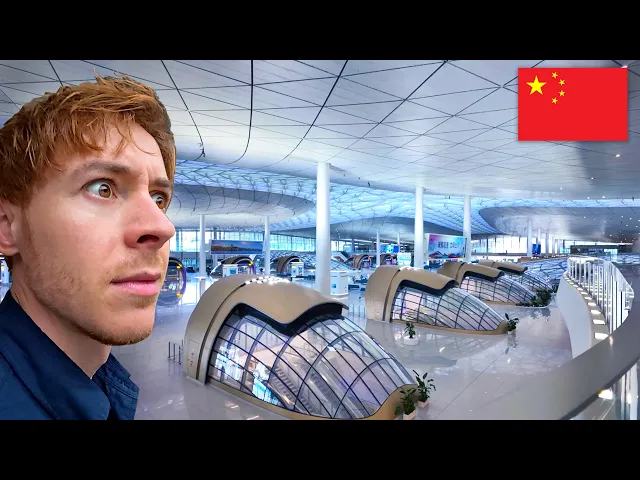
Look around modern China — high-speed trains crossing the country at 350 km/h, entire smart cities being built, ports running with AI and driverless trucks. None of this is random. It’s the result of long-term stability, respect for knowledge, and a shared vision.
Meanwhile, in the West, leaders argue endlessly in parliaments and congresses, unable to fix even the most basic infrastructure. Bridges collapse, trains crawl at outdated speeds, and political drama takes center stage.
Confucius taught that harmony is greater than chaos, and order is better than noise. Which side do you think he’d say is listening to him today?
Discover how ancient Confucian wisdom shapes modern China's progress, contrasting its long-term vision with Western challenges. Experience cultural immersion and rural revitalization.
Travel Guides & Tips in this video
Explore the timeless wisdom of Confucius and its powerful influence on modern China's development. This video contrasts China's stable, long-term vision, rooted in Confucian values like benevolence and respect, with the perceived short-sightedness and division in the West. Discover how ancient principles shape cutting-edge infrastructure and vibrant cultural villages, offering a compelling perspective on China's path forward.
Next travel video:
6 min
China's Infrastructure & Smart Cities: A Vision of Progress
America NEEDS to Learn from China (China is Winning)
Look around modern China — high-speed trains crossing the country at 350 km/h, entire smart cities being built, ports running with AI and driverless trucks. None of this is random. It’s the result of long-term stability, respect for knowledge, and...
Confucius Wisdom: China's Modern Infrastructure & Cultural Revitalization
Witness the marvels of modern China, from lightning-fast high-speed trains to AI-powered smart cities and bustling ports. This video contrasts China's efficient, forward-thinking development with the perceived stagnation in the West, where political gridlock hinders basic infrastructure improvements. It poses a thought-provoking question: which society truly embodies the ancient wisdom of Confucius, prioritizing harmony and order over discord?
Attractions in this video: Nishan Mountain, Lu Yan Village, Dong Zhong Du Village, Hall Of Ren, Hall Of Yi
More about the current video:(Published on 2025-10-04)
This video delves into the enduring wisdom of Confucius and its profound impact on modern China, contrasting it with perceived shortcomings in Western societies. The narrative begins by highlighting Confucius's birth in Qufu, Shandong, over 2,500 years ago, emphasizing his role as a thinker who laid down foundational values of trust, respect, and wisdom. These principles, it's argued, have served as the blueprint for Chinese civilization, influencing everything from imperial rule to daily family life and fostering a societal thread of respect still palpable today.
The core of Confucian thought, as presented, lies in five key values: Ren (benevolence), Xin (trustworthiness), Li (ritual and respect), Zhi (wisdom), and Yi (righteousness). The video contrasts these with contemporary Western culture, suggesting a lean towards individualism, a collapse of trust in institutions, and a disregard for tradition. It points to China's long-term planning, exemplified by its infrastructure projects like high-speed trains and smart cities, as a manifestation of wisdom and foresight, a stark difference from the short-term political cycles in the West. The emphasis on righteousness is shown through symbols like the Hall of Yi, promoting integrity over convenience, a lesson the video suggests the West, driven by greed, needs to learn.
The journey then moves to tangible examples of these values in action. Lu Yan village, at the foot of Nishan Mountain in Qufu, is presented as a cultural project designed for experiencing traditional Chinese culture, allowing visitors to immerse themselves in Confucian teachings. Further exploration reveals Dong Zhong Du village, a model of rural revitalization. This village has transformed idle land and homesteads into a vibrant cultural and creative hub, blending tradition, culture, and tourism to create a new path to prosperity. The video concludes by reiterating Confucius's lesson on long-term thinking, suggesting China's focus on the future, guided by ancient wisdom, positions it favorably, and questions when the West will begin to learn from China's example.
FAQs (From the traveler's perspective)
Q: What are the five core values of Confucianism?
A: The five core values are Ren (benevolence), Xin (trustworthiness), Li (ritual and respect), Zhi (wisdom), and Yi (righteousness).
Q: How does Confucianism influence modern China?
A: Confucian values like respect, trust, and long-term planning are seen as foundational to China's societal structure and its rapid development in infrastructure and culture.
Q: What is the significance of Lu Yan village?
A: Lu Yan village serves as a cultural project where visitors can experience traditional Chinese culture and engage with Confucian teachings in an immersive way.
Q: What makes Dong Zhong Du village a notable example?
A: It's a shining example of rural revitalization, blending tradition, culture, and tourism to create a new model for prosperity in the countryside.
Q: What is Confucius's teaching on long-term thinking?
A: Confucius taught that long-term success requires planting seeds for a year, trees for a decade, and people for a century, emphasizing education and foresight.