
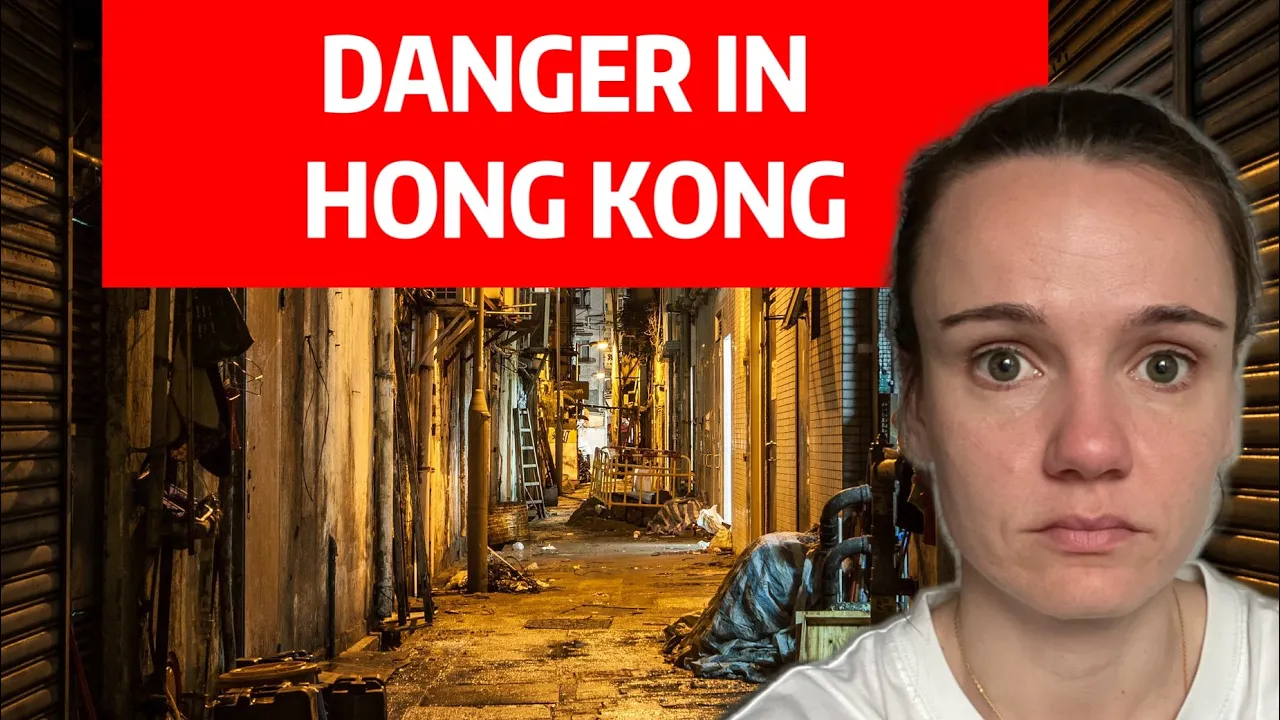
Travel Guides & Tips in this video
Lizzy compares her impressions of safety in Hong Kong and mainland China. She describes Hong Kong as clean, modern and expensive, and says the visible homeless population made her feel less secure than in mainland China. At a subway station, she recalls a woman begging for money. Lizzy says Hong Kong still feels very safe compared with Western countries. She also discusses the contrast between rich and poor, a shoebox apartment priced at $1 million US, drugs and a $1,700 fine for feeding pigeons. She recommends Temple Street for food and Lan Kwai Fong for nightlife. For travel from mainland China, she suggests taking a 15-minute train from Shenzhen for about 80 RMB instead of flying directly to Hong Kong. She notes that people speak Cantonese and English, and describes the escalator rule of standing on the right. Lizzy concludes that Hong Kong is less safe than mainland China in her view, while saying she enjoys its energy, western food and skyscrapers.
Next travel video:

More about the current video:()

The place and project
In this video, traveler Lizzy compares the safety of Hong Kong to mainland China. She finds Hong Kong clean, modern, and expensive, but with a noticeable homeless population that makes her feel less secure than in mainland China. She recounts a moment at a subway station where a woman begged for money, leaving her uneasy. Despite this, she emphasizes that Hong Kong remains very safe compared to Western countries. Lizzy highlights the stark contrast between rich and poor, the high cost of living (a shoebox apartment costs $1 million US), and the presence of drugs and strict laws like a $1,700 fine for feeding pigeons.
Experiences and details
She recommends visiting Temple Street for notable food despite the homeless, and Lan Kwai Fong for a lively nightlife. A practical travel tip: if you're in mainland China, take a cheap train from Shenzhen (15 minutes, 80 RMB) instead of flying directly to Hong Kong. She also notes that many people live in Shenzhen and commute to work in Hong Kong to save money. Lizzy points out cultural differences: people speak Cantonese and English, not Mandarin; you must stand on the right side of subway escalators; and bakeries are notable. She concludes that Hong Kong is less safe than mainland China because safety there is engineered, while here you have to be more cautious. However, she loves the city's energy, western food, and beautiful skyscrapers, and urges viewers to visit and experience it for themselves.
FAQs (From the traveler's perspective)
- Q: Are there homeless people in Hong Kong?
- A: Lizzy describes a noticeable homeless population and recalls one woman begging for money at a subway station. She says the woman did not make her feel threatened.
- Q: How safe did Hong Kong feel compared with mainland China?
- A: Lizzy says Hong Kong felt less safe to her than mainland China, although she still considers it very safe compared with Western countries.
- Q: What is a cheaper way to travel from mainland China to Hong Kong?
- A: Lizzy recommends flying to Shenzhen and then taking a 15-minute train for about 80 RMB, which she says is cheaper than flying directly to Hong Kong.
- Q: What surprised Lizzy about Hong Kong rules?
- A: The biggest surprise for Lizzy was the 13,000 Hong Kong dollar fine for feeding pigeons, about $1,700. She also notes that people should stand on the right side of subway escalators so others can pass on the left.
