
Travel Guides & Tips in this video
Eoin and Aisling explore Macau in a day, starting at the Ruins of St. Paul's and continuing through Senado Square, Taipa Old Town and the Cotai Strip. They visit the Grand Lisboa and Venetian casinos, compare Macau's Portuguese and Chinese influences, and notice Portuguese signs and the use of English. A rain shower interrupts the walk, while local food includes Portuguese egg tarts and a pork chop bun. They use an LRT to get between areas and a Holafly eSIM to stay connected.
Next travel video:
More about the current video:()

Historic streets and landmarks
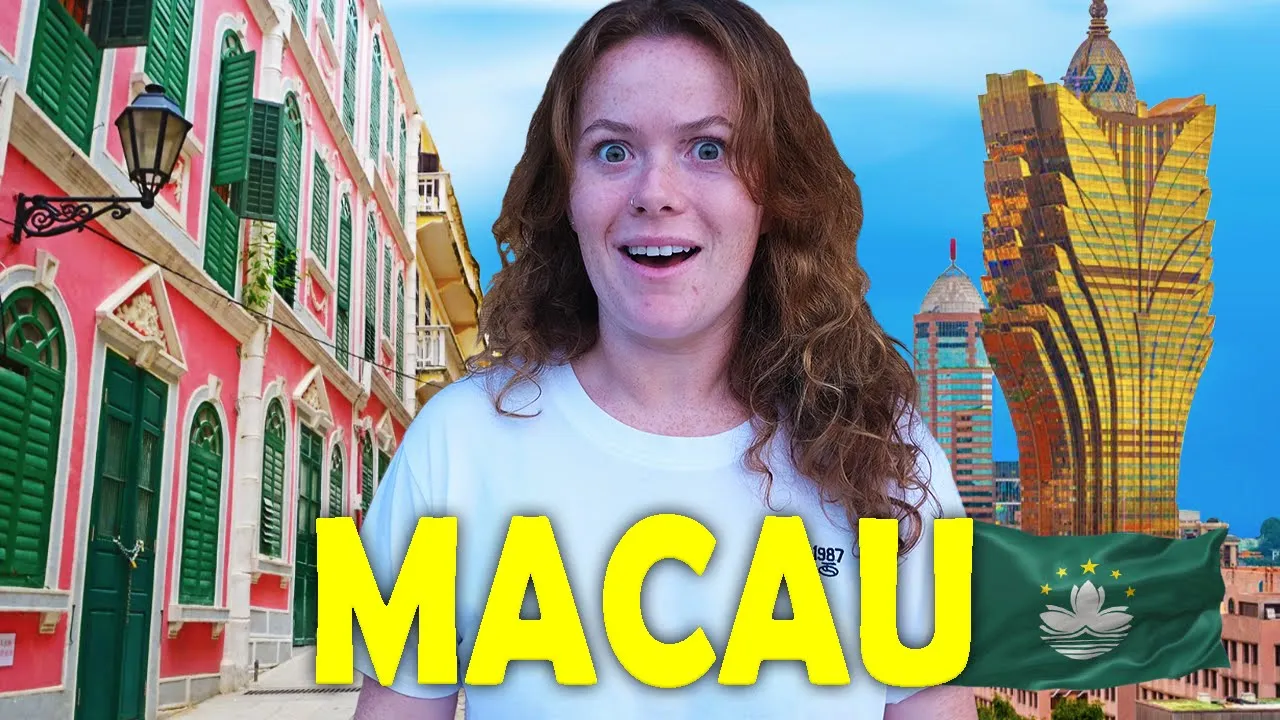
Eoin and Aisling spend 24 hours in Macau, beginning at the Ruins of St. Paul's, a landmark connected with the city's Portuguese colonial history. They continue through Senado Square, where European-style architecture and mosaic paving provide a distinctive streetscape. Their walk takes them through alleys, murals and areas that reflect Macau's Chinese, Portuguese and international influences. They discuss Macau's status as a special administrative region and its separate legal system.
The travelers visit the Grand Lisboa, described as Macau's tallest building, and explore casinos and hotel interiors. They see luxury shops and the scale of the resorts, then head to Taipa Old Town for local culture and food. Portuguese egg tarts and a pork chop bun are among the dishes they try. Portuguese signage appears around tourist sites, and they find that many people can communicate with them in English.
Cotai Strip and practical details
The Cotai Strip brings together large hotels and casino complexes. The travelers see replica landmarks, including the Eiffel Tower and Big Ben, and visit the Venetian's canals and gondolas. They find the hotels extravagant and note how different Macau feels from mainland cities. A sudden downpour forces them to find shelter, reminding them to prepare for changing weather.
Eoin and Aisling use the LRT to move between areas and recommend a Holafly eSIM for connectivity. They compare Macau with Hong Kong, describing it as modern and clean, with greenery and colorful architecture. For travelers who do not gamble, they conclude that a day can cover the main historic sites, local food and distinctive buildings. Their itinerary joins Portuguese heritage, casino resorts, street food and transport into one short visit. The travelers also talk about Macau's weather and transport. A sudden downpour sends them looking for cover, and their use of the LRT makes it possible to reach different neighborhoods during a short stay. The Portuguese and Chinese influences are visible in street names, architecture, food and signage. They notice that English is commonly spoken around visitor areas, which makes communication easier than expected. Their meal stops include Portuguese egg tarts and the signature pork chop bun, and they consider the higher prices compared with mainland China.
The Cotai Strip adds a very different scale to the itinerary. Hotels and casinos include replica versions of European landmarks, and the Venetian has indoor canals and gondolas. Eoin and Aisling compare this resort environment with the historic lanes around Senado Square and the more local atmosphere of Taipa Old Town. They say non-gamblers can focus on the architecture, food and historical sites in a day. Their trip combines major sights with short walks, public transport and local dishes, making it a compact way to experience Macau.
FAQs (From the traveler's perspective)
- Q: What's the best way to stay connected in Macau?
- A: They used a Holafly eSIM during their 24-hour visit. It worked well for them, and the provider offers several packages to match different travel needs.
- Q: How easy is it to get around Macau?
- A: They used the LRT to travel between areas and found it easy and convenient.
- Q: What's the food like in Macau?
- A: They describe a mix of Chinese and Portuguese flavors and especially liked the pork chop bun and egg tarts.
- Q: Is Macau expensive?
- A: Yes. They found that prices were higher than in mainland China and closer to Hong Kong prices, including for everyday items such as Coca-Cola.
- Q: What's the most surprising thing about Macau?
- A: They were surprised by how much English people spoke and how easy it was to communicate, as well as by the amount of Portuguese signage around the tourist areas.
