
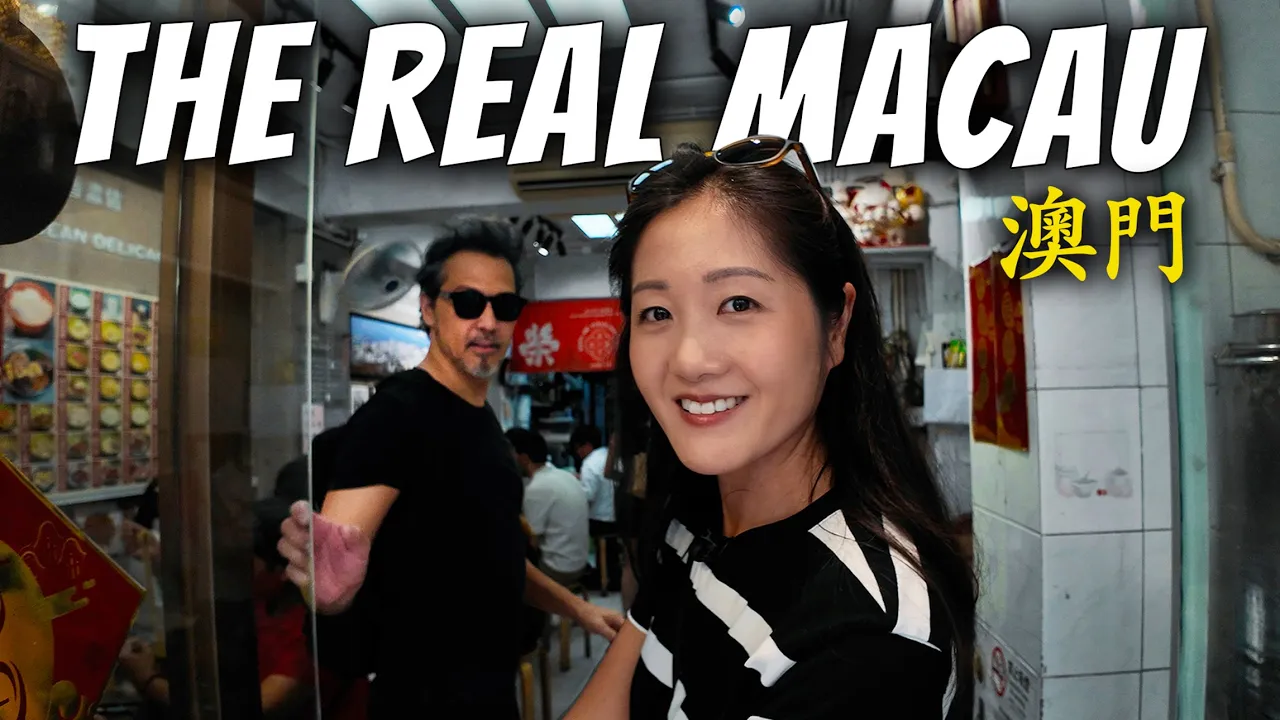
Travel Guides & Tips in this video
Flora And Note return to Macau with a focus on culture and history rather than casinos. They arrive by boat, cross the Hong Kong–Macau bridge by bus, and describe the immigration process and the absence of passport stamps. The Grand Lisboa stands out as a landmark, while their pastel-colored historic hotel blends older architecture with modern comforts. They learn about its elevator and casino license history and its restoration by Simon Sio. The travelers visit Rua do Cunha for food and souvenirs, queue for Lord Stow's egg tarts, and explore the eerie Yick Loong Old Firecracker Factory, which the government is working to restore. Local friends Julio and Karen discuss Macanese identity and its Portuguese, Cantonese, and other cultural influences. On the Macau Peninsula, a UNESCO World Heritage site, the travelers eat at Wing Kee and see a Catholic church beside a Chinese temple before ending with a casino visit.
More about the current video:()

A different focus for Macau
Flora And Note's trip looks beyond the casinos that shaped their earlier visits. They arrive by boat and describe Macau as easy to access. To cross the Hong Kong–Macau bridge, they take a cost-effective bus. They discuss the immigration process and note that they do not receive passport stamps, unlike what they remember from previous trips. Macau's status as a Special Administrative Region of China is part of the context for the journey.
The travelers notice the Grand Lisboa, a major landmark whose colorful architecture stands out. They describe it as one of Macau's oldest gaming establishments. The city's energy comes from both residents and visitors, and the architecture reflects its layered history. Their hotel is a pastel-colored building that combines older design with modern amenities and sits near a well-known souvenir street, making it a convenient starting point for exploring.
Historic hotel, Taipa, and local conversations
The hotel becomes a highlight of the trip. Its historic atmosphere is paired with modern comforts, and the travelers learn about its local history: it was the first building in Macau to have an elevator and a casino license. They also hear how Simon Sio, who admired the building as a child, restored it. The restoration story gives the stay a personal connection to the city's past.
In Taipa, Flora And Note walk along Rua do Cunha, a lively street with food and souvenirs. They try Lord Stow's egg tarts, even though there may be a queue. Later, they visit the Yick Loong Old Firecracker Factory. The abandoned site has an eerie atmosphere and a history linked to Macau's past; the government is working to restore the area.
Local friends Julio and Karen share perspectives on Macanese culture and identity over dinner. Their conversation highlights influences beyond the familiar Portuguese and Cantonese mix, as well as the community's multilingual nature. The discussion gives the travelers a more personal view of how different cultural strands come together in Macau.
The peninsula and Macau's cultural mix
The next day, Flora And Note explore the Macau Peninsula, which is a UNESCO World Heritage site. They visit Wing Kee, known for tofu-fa and noodles, and sample tofu-fa, egg noodles, and a Portuguese pancake. Their practical food notes include Lord Stow's egg tarts, Rua do Cunha's range of food and baked goods, and Wing Kee's house-made tofu and egg noodles. Chicken blood jelly is another dish they mention trying.
The trip also includes a site where a Catholic church and a Chinese temple stand together, a visible example of Macau's East–West religious and cultural mix. A final stop at a casino closes the visit, but the focus of this journey remains the historic buildings, local conversations, food, and the way Portuguese, Cantonese, and other influences appear across the city.
FAQs (From the traveler's perspective)
- Q: What's the best way to get around Macau?
- A: The bus is the most convenient and popular way to get around Macau. The light rail system does not cover many places, taxis can be expensive, and ride-hailing apps are banned. An M Pass card is useful for public transport and purchases at convenience stores.
- Q: What's a must-try food in Macau?
- A: Lord Stow's egg tarts are a must-try, though visitors should be prepared to queue. Rua do Cunha also has a variety of food and baked goods, and Wing Kee is known for tofu-fa and noodles. The travelers recommend trying Wing Kee's tofu-fa and noodles as well.
- Q: What's the most unique thing about Macau?
- A: The travelers point to its blend of cultures. Portuguese and Chinese influences appear in the food and architecture, and the East-meets-West religious sites are notable examples of that mix.
