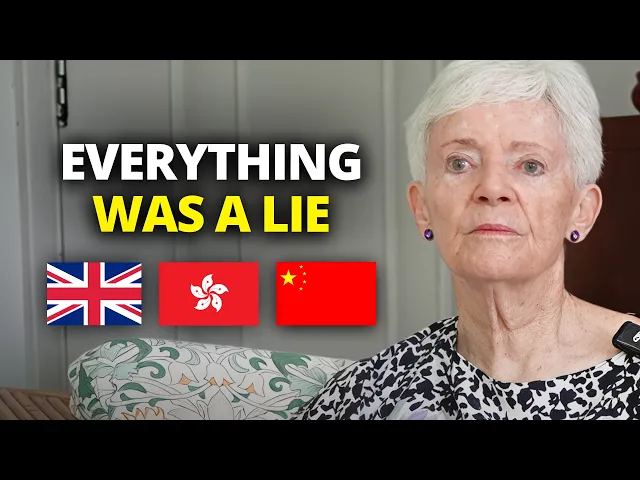
Meet Judith Mackay. Born in the UK, she moved to Hong Kong 60 years ago. She became a fierce anti-tobacco activist — and fought so effectively that the industry saw this tiny woman as one of the three most dangerous people in the world. Judith shared what outsiders get wrong about Hong Kong, whether Hong Kong is becoming just another Chinese city, and Hong Kong vs. Singapore — which one is winning? Enjoy!
This channel bridges the gap between locals and foreigners all over the world. Join Max as he interviews expats, unraveling their unique stories and providing valuable insights into their lives in the vibrant places of Asia. Through engaging conversations, Max fosters understanding and appreciation between locals and the global community, focusing on cultural exchange.
A 60-year resident of Hong Kong debunks safety myths and discusses the city's evolving identity, its rivalry with Singapore, and its resilience through historical changes.
Travel Guides & Tips in this video
Judith Mackay, a 60-year resident of Hong Kong, shares her unique perspective, debunking Western misconceptions about the city's safety and its evolving identity. She highlights Hong Kong's surprising security, vast natural landscapes, and its dynamic integration into the Greater Bay Area, fostering a strong economic future. Mackay contrasts Hong Kong with Singapore, emphasizing its strategic advantages and resilience through historical challenges, including the peaceful 1997 handover. She also offers a nuanced view on human rights and freedom, grounded in her extensive experience and advocacy.
Next travel video:
Hong Kong: 60 Years of Life and Activism Explained
Meet Judith Mackay. Born in the UK, she moved to Hong Kong 60 years ago. She became a fierce anti-tobacco activist — and fought so effectively that the industry saw this tiny woman as one of the three most dangerous people in the world. Judith shared what outsiders get wrong about Hong Kong, whether...
Hong Kong: 60 Years of Safety, Culture, and Resilience Explained
Step into the vibrant world of Hong Kong through the eyes of Judith Mackay, a Brit who has called this dynamic city home for 60 years. Max Chernov sits down with Judith, a formidable anti-tobacco activist, to discuss her extraordinary life and insights. They delve into common misconceptions about Hong Kong, explore its evolving identity, and compare it to Singapore. Discover why Hong Kong continues to captivate and what makes it a unique place to live, work, and thrive.
Attractions in this video: The Peak, Buddha Statue, Country Park
More about the current video:(Published on 2025-07-28)
Max Chernov's interview with Judith Mackay offers a unique perspective on Hong Kong, challenging Western misconceptions about the city's safety and its relationship with mainland China. Mackay, who has lived in Hong Kong for 60 years, highlights its remarkable safety, citing a low murder rate compared to many Western cities and her personal comfort walking alone at night. She contrasts the perception of Hong Kong as a concrete jungle with its reality, noting that 50% of the territory is country park, offering ample opportunities for outdoor activities.
Contrary to the narrative of Hong Kong becoming just another Chinese city, Mackay explains that it's a natural evolution, becoming more Chinese under Chinese rule, just as it was more British under British rule. She emphasizes that for businesses, Hong Kong's integration with mainland China and its role in the Belt and Road Initiative present a massive future, especially given China's booming economy. This integration, she notes, is creating a more equal society, moving away from the dominance of large corporations.
The conversation delves into the friendly rivalry between Hong Kong and Singapore, with Mackay suggesting Hong Kong's strength lies in its connection to the Greater Bay Area, a region of 80 million people, making it part of something much larger than Singapore's more isolated position. She observes a recent trend of people returning to Hong Kong after having relocated elsewhere due to past uncertainties.
Mackay also touches upon the definition of human rights, aligning with the UN's view that poverty eradication is a primary human rights violation. She points out China's success in lifting millions out of poverty, suggesting a different perspective on human rights than commonly held in the West. While acknowledging restrictions, such as the inability to publicly call for independence, she stresses that Hong Kong remains a free society, with its security legislation being comparable to that in other countries.
Her personal journey is equally compelling. Mackay recounts her six decades in Hong Kong, including surviving the turbulent Cultural Revolution and the 1997 handover, which she describes as a remarkably peaceful event. She also shares her experience as a fierce anti-tobacco activist, being labeled one of the most dangerous people by the tobacco industry, a title she wears with pride. Her insights reveal a Hong Kong that is a resilient survivor, constantly adapting and evolving, with a deep appreciation for stability forged through historical turmoil. The interview concludes with Mackay's philosophy on life: valuing joy, happiness, and gratitude, and her commitment to continue her work until she is 100.
FAQs (From the traveler's perspective)
Q: What are the common misconceptions about Hong Kong?
A: Many people in the West believe Hong Kong is unsafe and a concrete jungle, but it's actually incredibly safe with 50% of its area being country park.
Q: Is Hong Kong becoming just another Chinese city?
A: It's a natural evolution; it's more Chinese under Chinese rule, just as it was more British under British rule. This integration offers significant business opportunities.
Q: How does Hong Kong compare to Singapore?
A: Hong Kong benefits from being part of the Greater Bay Area, a massive economic region, whereas Singapore is more isolated. Hong Kong is seen as less sterile and more freewheeling.
Q: What is the UN's definition of human rights?
A: The UN considers poverty eradication the biggest human rights violation, an area where China has made significant progress by lifting millions out of poverty.
Q: What are the challenges of living in Hong Kong long-term?
A: The primary challenge is the high cost of living, especially rent, making it difficult for many expatriates to stay after retirement unless they own property.
Q: What was Hong Kong like during the Cultural Revolution?
A: It was a dramatic and uncertain time with red guards on the streets, bombs, and a palpable sense of danger, though China ultimately chose a peaceful return.
Q: Why was Judith Mackay considered dangerous by the tobacco industry?
A: She was a fierce anti-tobacco activist who fought against powerful corporations, earning her the title of one of the 'most dangerous people' by the industry.
Q: What is the meaning of life for Judith Mackay?
A: To be happy, spread joy, feel grateful, and maintain a positive outlook, valuing happiness and making others smile.