Travel Guides & Tips in this video
Itchy Boots and her Chinese guide Bing travel through Tazhong in the Taklamakan Desert, where a sandstorm changes the visibility and pace of the ride. The episode looks at the practicalities of desert travel, including an airstrip built in 1987, trucks tested in the dunes, and irrigation wells that bring salty water to keep stretches of greenery alive. They meet a caretaker responsible for a four-kilometer irrigation section and stop for lunch in Luntai. As the ride continues toward Kuqa, the landscape shifts from dunes toward mountains. Itchy reflects on filming in challenging weather and the people who live and work in remote areas. The route also follows the people and systems that make a remote desert crossing possible. The airstrip, vehicle testing, wells, and irrigation stretches each respond to a different challenge of distance, sand, or water. The caretaker’s long work season shows how isolated communities depend on routines that are easy for travelers to overlook. Itchy and Bing’s conversations bring these practical details into a journey otherwise shaped by weather and mileage.
Next travel video:
More about the current video:()
Tazhong and desert infrastructure
Itchy Boots arrives in Tazhong, a small settlement in the Taklamakan Desert, with her guide Bing. The landscape is shaped by dunes, wind, and limited water. They visit an airstrip built in 1987, one example of infrastructure adapted to the remote environment. They also discuss trucks tested in the dunes, where vehicle performance depends on soft sand, tire type, and depth.
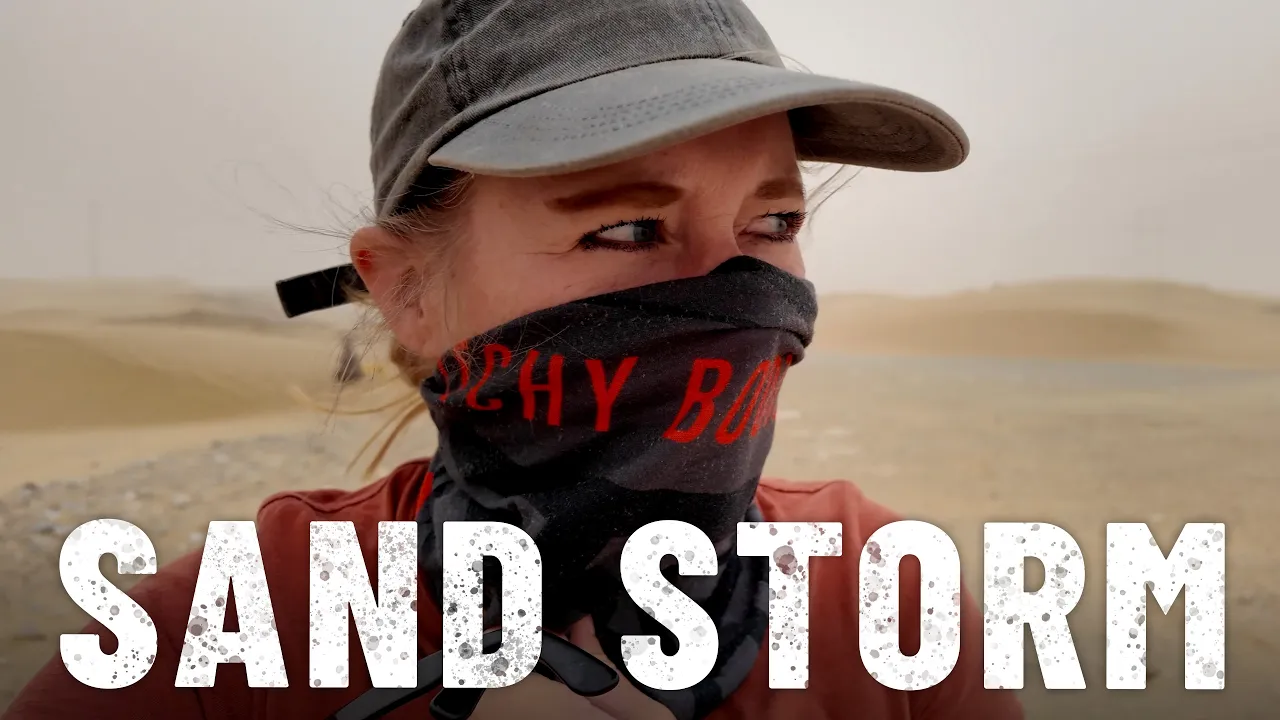
A sandstorm affects the day’s visibility and turns the ride into a more difficult task. Itchy and Bing adjust to the conditions instead of assuming that the original plan can continue unchanged. The episode captures the changing appearance of the desert as the wind moves sand across the route. Filming in this weather creates additional challenges, including deciding when it is safe to ride and how to capture the landscape.
Irrigation and the road to Kuqa
The travelers learn about wells spaced several kilometers apart that supply salty water for irrigation. The water helps hold dunes in place and supports narrow green corridors in an otherwise dry landscape. They meet a local caretaker responsible for about four kilometers of irrigation, who works there for eight months of the year. His routine offers a human perspective on the remote infrastructure.
The ride continues toward Kuqa, with a lunch stop in Luntai. Itchy and Bing share a meal of sweet-and-sour pork and reflect on the effort required to travel through the desert. The route gradually moves from open dunes toward the mountains and a different climate. The day brings together vehicle testing, local infrastructure, a sandstorm, and encounters with people whose work makes life in the desert possible.
Filming and traveling through the storm
The sandstorm changes both what the travelers can see and how they can film. Itchy works with Bing to judge visibility, ride through the conditions, and decide when the weather contributes useful images versus when it becomes a risk. The episode mentions filming on the move and using drone shots, but the practical challenge remains the same: wind and blowing sand can quickly alter the scene.
Traveling through Tazhong also reveals how far infrastructure extends into the desert. The airstrip dates to 1987, and trucks are tested in dunes where tire choice and sand depth affect performance. Along the road, irrigation wells bring salty water to strips of vegetation that help stabilize the dunes. The caretaker describes looking after a four-kilometer length for eight months of each year.
After lunch in Luntai, the route continues toward Kuqa. The landscape changes toward mountains and a different climate, giving the long ride a clear endpoint. The day combines technical adaptations, local work, and the unpredictable weather that sets the pace of desert travel.
FAQs (From the traveler's perspective)
- Q: What is Tazhong like?
- A: Tazhong is a small settlement in the Taklamakan Desert. The area has dunes, oil-field infrastructure, an airstrip, and irrigation works that support narrow green corridors.
- Q: How does irrigation work in the desert?
- A: The video describes wells several kilometers apart that supply salty water to irrigated stretches and help hold the dunes in place. A local caretaker tends one four-kilometer section for eight months of the year.
- Q: What changes during the ride toward Kuqa?
- A: The journey begins in the dunes around Tazhong, includes a lunch stop in Luntai, and continues toward Kuqa, where the landscape transitions toward mountains and a different climate.