We debunk the lies about Chinese EV cars with a car expert, comparing them to Tesla, BYD, NIO, and more. Discover the truth about China’s growing electric vehicle industry. From EV graveyard discussions, pollution of EVs to how safe are Chinese EVs really.
Exploring Chinese EVs, this video debunks myths about fires and safety. It highlights advancements in Chinese auto brands and addresses environmental concerns, offering a balanced view.
Travel Guides & Tips in this video
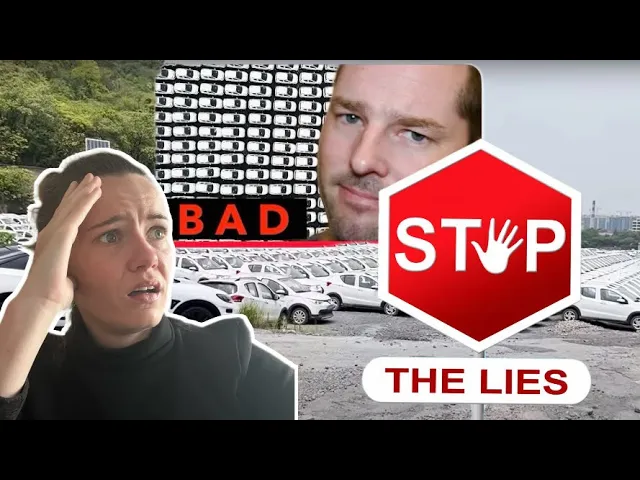
This video debunks common criticisms of Chinese electric vehicles (EVs). Traveler Lizzy and car expert Dan analyze a video alleging Chinese EVs catch fire and have faulty self-driving features. They argue that user error and isolated incidents, not inherent flaws, are often the cause. Dan highlights China's stringent quality control and the advancements of brands like Denza, refuting claims of corner-cutting. While acknowledging EVs aren't a perfect environmental solution, they note China's use of renewable energy in production. The video also clarifies that 'abandoned' EV fields are typically due to failed startups or pre-export storage, not a sign of a Ponzi scheme.
Next travel video:
Chinese EVs: Truth vs. Hype - Tesla, BYD, NIO Comparison
We debunk the lies about Chinese EV cars with a car expert, comparing them to Tesla, BYD, NIO, and more. Discover the truth about China’s growing electric vehicle industry. From EV graveyard discussions, pollution of EVs to how safe are Chinese EVs really.
Enjoy.
DISCLAIMER: This video was...
Chinese EV Truth: Debunking Myths on Safety, Quality & Environment
Lizzy dives deep into the world of Chinese Electric Vehicles, tackling common misconceptions head-on. She compares top brands like Tesla, BYD, and NIO, revealing the surprising truth behind the hype and the 'haters.' Prepare to have your perceptions challenged as she explores the reality of EV infrastructure, environmental impact, and safety standards in China.
More about the current video:(Published on 2025-07-20)
This video tackles the prevalent negative narratives surrounding Chinese electric vehicles (EVs), aiming to debunk myths and present a more balanced perspective. Traveler Lizzy sits down with a car expert, Dan, to dissect claims made in a critical video about Chinese EVs. The initial clip suggests Chinese EVs are prone to catching fire and have faulty self-driving features, leading to accidents. Dan, however, points out that context is often missing, and user negligence, such as setting excessive speeds for autonomous driving, can be a factor. He also notes that battery fires, while alarming, are not exclusive to Chinese EVs and can occur with any brand, including Tesla. The discussion then moves to the claim that Chinese manufacturers cut corners due to a focus on mass production and profit. Dan counters this by highlighting the stringent quality control measures implemented by the Chinese government, especially concerning consumer safety. He uses the example of Denza, a brand that partnered with Mercedes-Benz and has seen its quality improve even after the partnership ended, as evidence against the notion of inherently inferior Chinese products. The video also addresses the idea that Chinese cars are only safe if international investors are involved, a claim Dan refutes by pointing to Denza's success post-Mercedes-Benz. The conversation touches upon the environmental impact of EVs, with both Lizzy and Dan agreeing that EVs are not a complete solution for a net-zero world due to the resources required for manufacturing and battery recycling. However, they also highlight that China is increasingly using solar and hydropower for EV production, making it cleaner than in some other regions. The video criticizes the portrayal of vast fields of abandoned EVs as a sign of a Ponzi scheme, explaining that these are often from failed startups, former ride-sharing fleets, or simply storage for vehicles awaiting export. Dan emphasizes that major Chinese brands like NIO, Xpeng, and those from Huawei and Xiaomi are well-regarded and government-subsidized, not the low-quality vehicles seen in these fields. Ultimately, the video concludes that while some criticisms might stem from past issues or isolated incidents, the overall narrative often ignores the broader picture, the rapid advancements in China's EV industry, and the country's efforts towards greener manufacturing processes.
FAQs (From the traveler's perspective)
Q: Are Chinese EVs really bursting into flames and failing?
A: While there are isolated incidents and user negligence can play a role, many claims are exaggerated or lack context. Battery fires can happen with any EV brand.
Q: Do Chinese car companies cut corners on quality?
A: The Chinese government has stringent quality control, especially for consumer safety. Brands like Denza have shown improved quality even after ending international partnerships.
Q: What about the fields of abandoned Chinese EVs?
A: These are often from failed startups, former ride-sharing fleets, or storage for vehicles awaiting export. They don't necessarily indicate a flawed market.
Q: Are EVs truly good for the environment?
A: EVs aren't a perfect solution due to mining and battery recycling challenges. However, China's increasing use of solar and hydropower for production makes it cleaner.
Q: Would you buy a Chinese EV over a Tesla?
A: One expert interviewed would buy a Chinese EV before a Tesla, citing advancements and questioning Tesla's reliance solely on cameras for autonomous driving.