Travel Guides & Tips in this video
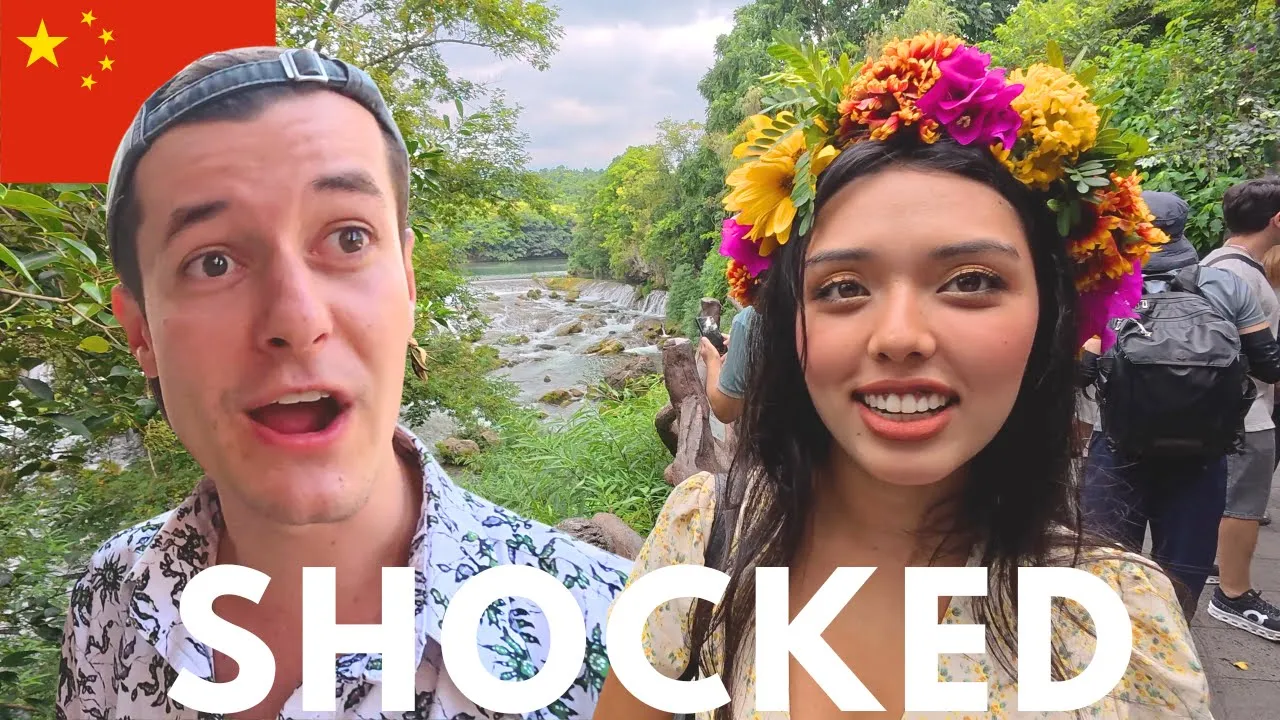
Jack and Sophia Torr visit Huangguoshu Waterfall in Guizhou, exploring several falls and walking behind the main cascade through mist and greenery. They describe the scale of the water and the use of escalators to cover long climbs and descents. The trip includes a bus ride, local carp, flower-crown sellers and a village visit where they see Di Opera and learn about rural routines. Guizhou's forest cover, local kitchens and resourceful transport also feature in their account.
Next travel video:

More about the current video:()

Huangguoshu Waterfall and the path behind it
Jack and Sophia Torr travel by bus into Guizhou to visit Huangguoshu Waterfall, which the video describes as Asia's largest. They walk through a series of waterfalls, noticing their different widths and the large volume of water. One broad cascade leaves a strong impression. Guizhou's landscape is green, and the video notes that more than forty percent of the province is covered by forest.
A distinctive part of the visit is a walkway behind the waterfall. The spray makes the route feel like rain, so the travelers recommend wearing a raincoat, especially if walking close to the water. They also use escalators for long climbs and descents after extensive walking. The attraction combines natural scenery with visitor facilities, including entertainment features such as light shows and opera.
The travelers observe carp in the water and discuss how local diets may differ from Western habits. They buy handmade accessories, including flower crowns, and notice practical details of how the site is maintained. The video gives a view of the falls from several angles, including from behind the cascade and from a viewpoint where the overall scale is easier to see.
Di Opera and village life
The trip continues to a local village, where Jack and Sophia see Di Opera, a traditional performance form from Guizhou that was historically used to motivate troops. They also reflect on rural customs, including traditional marriage practices involving family negotiations and dowries. Their visit offers a look into kitchens and everyday routines, with a focus on how people make use of available resources.
They notice villagers using tricycles to move goods, an example of practical transport in the area. The video also describes carp in local waters and the use of escalators around the waterfall area to help visitors handle long routes. These observations sit alongside the natural attractions rather than replacing them.
Jack and Sophia's account moves from the bus journey to the waterfalls and village. It combines scale, mist and hiking with practical details about clothes, walking and local food. The experience shows both the main waterfall and the cultural context of nearby communities, while preserving the travelers' reactions to the places they visit.
FAQs (From the traveler's perspective)
- Q: How large is Huangguoshu Waterfall?
- A: The video calls it Asia's largest waterfall and gives its height as 77 meters and width as 101 meters. It also cites an estimated daily flow of 2.7 billion liters, conveying the scale the travelers encounter.
- Q: Can visitors walk behind the waterfall?
- A: Yes. The route behind the falls passes through mist and greenery, and the travelers say the spray can feel like rain. A raincoat is recommended if you plan to take that path.
- Q: What is Di Opera?
- A: Di Opera is a traditional performance form from Guizhou, performed on the ground and historically used to motivate troops. Jack and Sophia see it during a visit to a local village.
- Q: What should I wear to the waterfall?
- A: A raincoat is useful because mist from the falls can soak visitors, especially along the path behind the waterfall. Comfortable shoes are also important because the visit involves a bus ride and a lot of walking.
- Q: Is Guizhou heavily forested?
- A: The video says more than 40 percent of Guizhou is covered by forest. Jack and Sophia notice green landscapes during their trip to Huangguoshu and the surrounding villages.
- Q: What local customs are mentioned?
- A: The travelers discuss traditional marriage customs that can involve family negotiations and dowries. They also see Di Opera and reflect on how local culture is part of the visit beyond the waterfall itself.
- Q: How do visitors get around the waterfall area?
- A: The travelers use buses between sections and walk through the site. Escalators are available for long ascents or descents, which can help after extensive walking.