Travel Guides & Tips in this video
Oskar and Dan's whirlwind 24 hours in Urumqi, Xinjiang, unveils a side of China few travelers see. From the dragon-shaped mountains of Hongshan Park to the vibrant International Grand Bazaar, they discover Central Asian influences, Uyghur culture, and the spirit of the pomegranate. A local guide Victor offers insights into life in this restricted region, making for an unforgettable transit stop.
More about the current video:(Published on 2026-06-30)
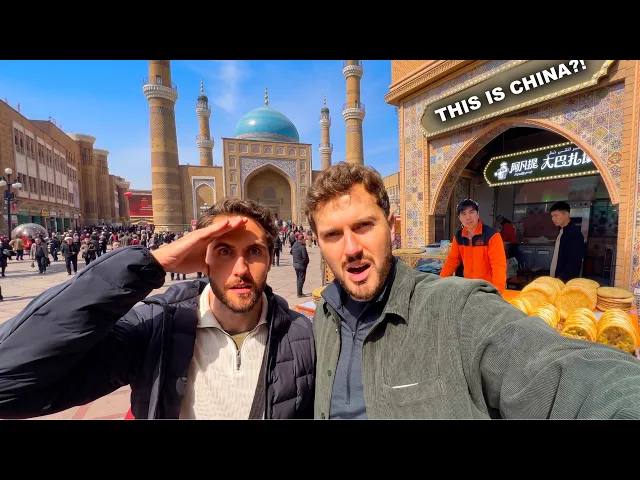
Oskar and Dan’s 24-hour transit in Urumqi, Xinjiang, shatters every stereotype about China. Instead of skyscrapers or ancient temples, they find mosques, Turkish coffee, and a bustling bazaar that feels like Central Asia. The journey begins at Hongshan Park, where a local legend tells of a dragon cut in two by a god—now pinned down by pagodas. A monument honors volunteers who turned desert into green in the 1960s. Victor, their Hui Muslim guide, explains the pomegranate statue symbolizing unity among China’s 56 ethnic groups. At the Xinjiang Provincial Museum, maps reveal that Xinjiang covers 16% of China’s land but holds less than 2% of its population, bordering eight countries. Victor shares how COVID paperwork made mosque visits rare. After a quick Luckin coffee, they head to a vegan restaurant in a residential area, where rent runs 2,000–3,000 yuan monthly. The highlight is the International Grand Bazaar: a kaleidoscope of Persian architecture, Chinese flags, live music, and a dance square. They sip Turkish coffee with chopsticks, try cold noodles from Kashgar called “alpha,” and marvel at the mix of Uyghur, Kazakh, and Turkish influences. The day ends with a realization that China’s single time zone makes the sun set at 8:20 PM in Urumqi. Oskar and Dan capture the surreal contrast of a city that feels both foreign and familiar, leaving viewers with a vivid sense of Xinjiang’s unique identity.