
Travel Guides & Tips in this video
Ken Abroad takes a bus from central Hong Kong toward a village near the mainland China border. The scenery changes from dense city streets to green mountains, but he learns that access to Kung Hao, or the village's later-discovered name, is restricted to permit holders. He explores nearby instead, seeing Shenzhen's high-rises across the border, talking with locals and noticing cashless payments on a small rural bus. The route also brings him to a temple and what appears to be an old graveyard before he has a meal at a local restaurant.
Next travel video:

More about the current video:()

A bus ride to the border
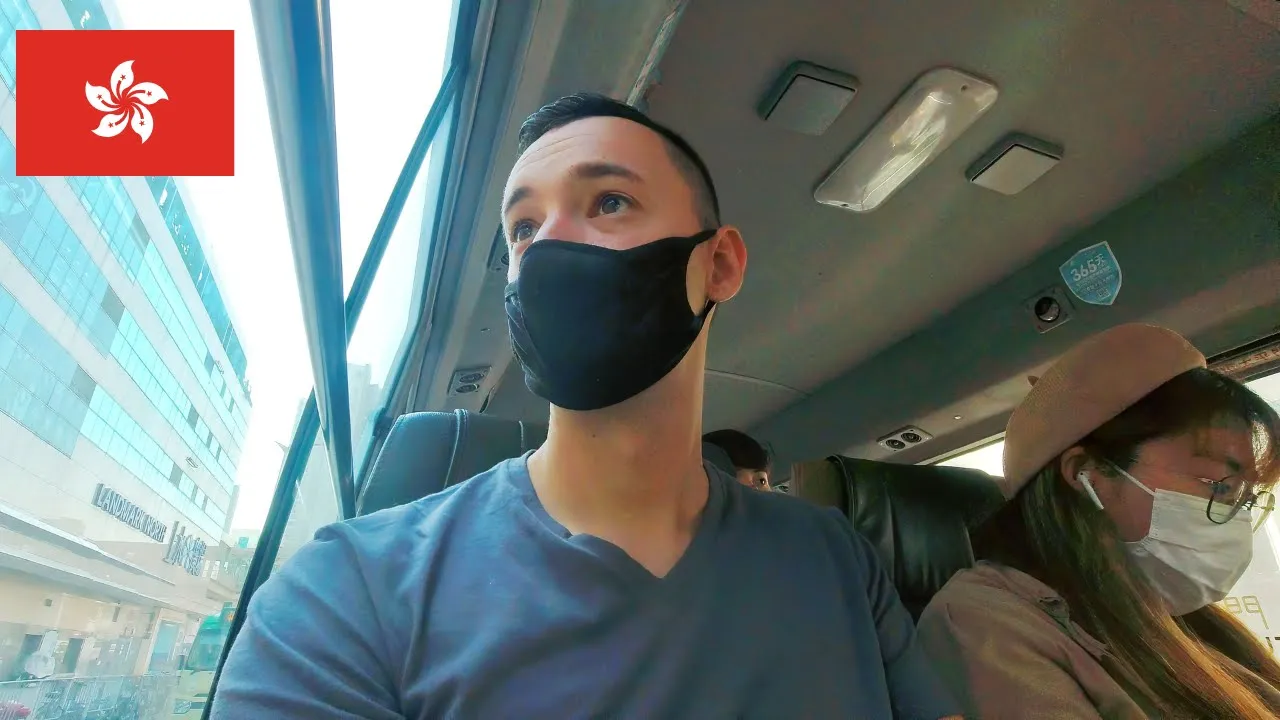
Ken Abroad begins in central Hong Kong and takes a bus toward a rural village near the mainland China border. As the route leaves the city's concrete buildings, green mountains appear. He is interested in the border area, but discovers that the village he calls Kung Hao is a frontier closed area and requires a special permit. He cannot enter, so he explores the nearby surroundings instead. The exact village name is uncertain in the source: Ken says he later discovers its actual name, but the summary does not identify it.
What Ken finds nearby
Across the border, he can see Shenzhen's modern high-rise buildings beside the quieter rural Hong Kong landscape. Ken speaks with local people, who are kind and helpful despite the language barrier. He observes cashless payments even on a small bus and compares the system with his experience in Germany. His walk around the area brings him to a temple and a place that appears to be an old graveyard. He ends the visit with food at a local restaurant. The journey is shaped by the unexpected access restriction, the contrast in scenery and the everyday details he notices while exploring the border region. The contrast between the city center and the green, mountainous outskirts is part of Ken's experience of reaching the border. His initial plan is to enter the village, but the restriction redirects the day toward the surrounding area. From there he observes the Shenzhen skyline across the boundary and notices the different character of the Hong Kong side. He talks to people who help him despite the language difference, and sees that digital payments are used even on the small local bus. Ken compares this with Germany, where cashless payment is not as familiar in the same way. The temple and possible old graveyard add a cultural and historical dimension to the walk, while dinner at the local restaurant gives him a chance to try the area's food. His journey is less about crossing the border than learning what access rules and daily life look like around it.
FAQs (From the traveler's perspective)
- Q: Why was Ken not allowed to enter the border village?
- A: The village is in a frontier closed area, so visiting requires a special permit. It is not open to all tourists, and Ken did not have the permit needed to enter.
- Q: What surprised Ken most on the trip?
- A: He did not expect to be unable to enter the village. He was also struck by cashless payment being used by everyone on a small bus in a rural area.
- Q: What did Ken see after he was denied entry?
- A: He explored nearby, saw Shenzhen's high-rise buildings across the border, visited a temple and what appeared to be an old graveyard, and ate at a local restaurant.
