
Travel Guides & Tips in this video
Ken Abroad begins his Hong Kong food visit at a local dim sum restaurant outside the city center. He chooses dishes through the restaurant's self-service system, then two kind local diners invite him to join their table. They share tea, dim sum and conversation, turning a meal into an exchange about local life. Ken likes the quality of the meat in the dishes compared with meatballs he has tried elsewhere, and enjoys the sponge cake and shrimp with chili sauce. The locals later take him to a vegetable garden beside nearby restaurants. They explain that the garden supplies fresh produce to those restaurants through a small local system rather than mass production. The visit gives Ken a look at the path from growing vegetables to serving food. His video focuses on the meal, the two people's hospitality and the garden they show him.
Next travel video:

More about the current video:()

A Hong Kong dim sum meal
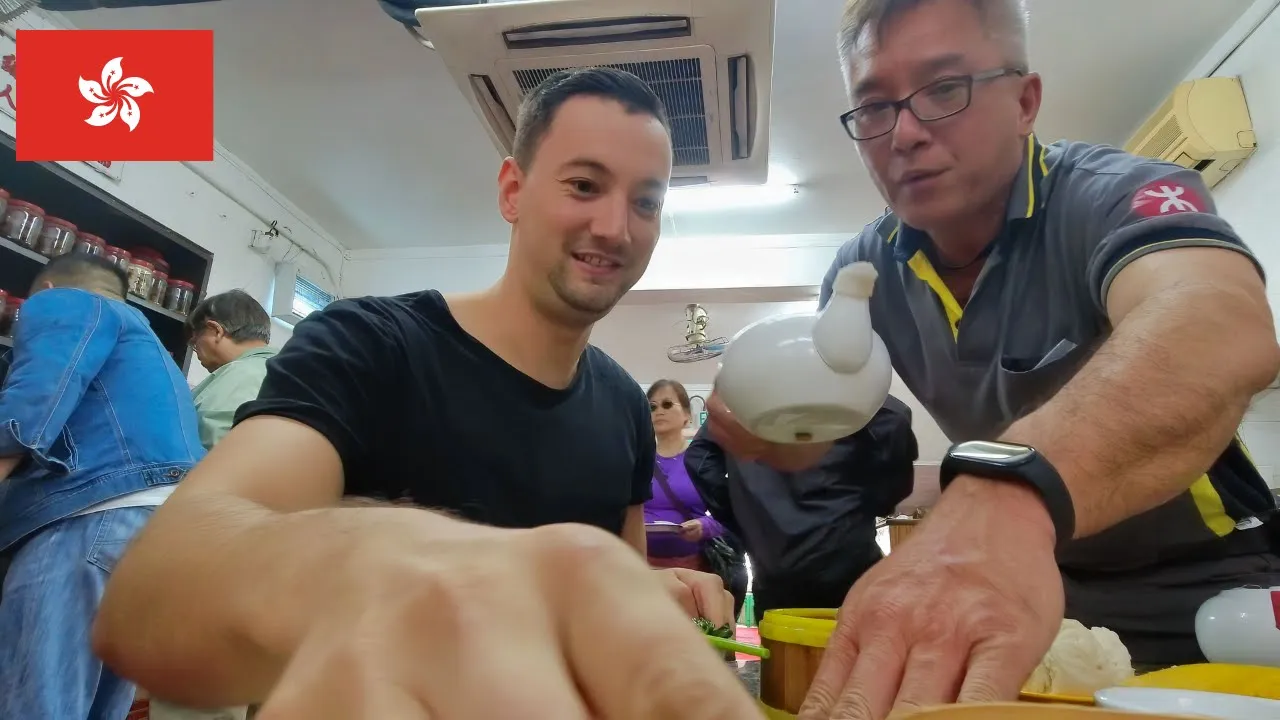
Ken Abroad visits a local restaurant outside the main tourist area to try dim sum. The restaurant uses a self-service system, so he chooses dishes and has a casual meal. Two local diners notice him and invite him to sit with them. They share tea and dim sum and talk together. Ken enjoys the meal, especially the meat quality, which he finds better than that of ordinary meatballs he has eaten. He also likes the sponge cake and shrimp with chili sauce. The dishes include sweet and savory options served in bamboo baskets, and fresh Chinese tea accompanies the meal. What begins as a restaurant stop becomes a chance to meet people who are willing to share their food and time.
A nearby source for fresh vegetables
After the meal, the two locals show Ken a vegetable garden close to the restaurants. They explain that the garden supplies fresh produce to nearby businesses. Ken learns that this is a small local supply arrangement rather than mass production. Seeing the garden adds another part to his understanding of the food he has just eaten: vegetables grow close to the restaurants that use them. He describes the encounter as a memorable part of his Hong Kong visit, from the invitation to share tea and dim sum to the walk to the garden. The video contrasts this neighborhood experience with a visit centered only on tourist sites and lets the local hosts describe their own connection to the produce and restaurants.
The details of the dishes stay part of the encounter. Ken finds the meat particularly good, comparing it favorably with meatballs he has eaten elsewhere. He also singles out the sponge cake and the shrimp served with chili sauce. Tea is shared as the diners talk, and the meal gives Ken time to learn from people who live in the area. The garden visit follows naturally from that conversation: the hosts show him where vegetables are grown and explain that the harvest goes to restaurants close by. They describe a small local supply chain rather than large-scale production. This means the garden is not simply a scenic stop; it is connected to the neighborhood kitchens serving meals. Ken's visit moves from choosing dishes himself in the restaurant to being welcomed at a table and then shown the source of some restaurant produce.
FAQs (From the traveler's perspective)
- Q: What was the dim sum like in Hong Kong?
- A: Ken enjoys the meal, especially the meat quality, which he thinks is better than ordinary meatballs. He also likes the sponge cake and shrimp with chili sauce, and shares tea with the locals who invite him.
- Q: What was the most memorable part of Ken’s trip?
- A: Two local diners invite him to their table, share tea and dim sum, and talk with him. They later show him a vegetable garden, making the unexpected welcome the center of his visit.
- Q: What did Ken learn about local food growing?
- A: The people he meets show him a nearby vegetable garden and explain that it supplies fresh produce to nearby restaurants. They describe it as a local, small-scale system rather than mass production.
