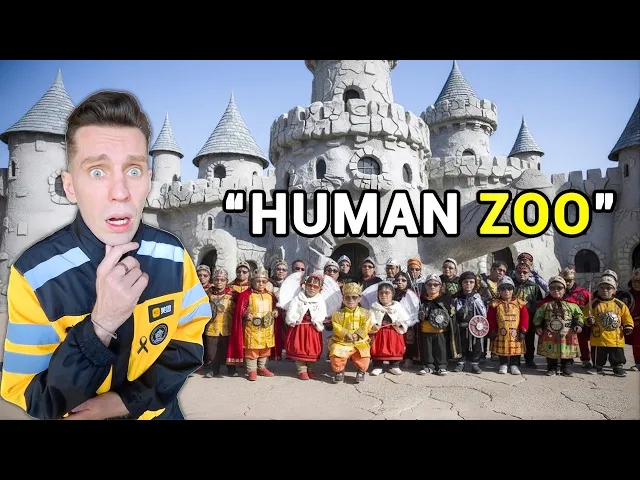
The video takes viewers inside China’s Kingdom of the Little People, a controversial dwarf village and theme park in Kunming, Yunnan. The host examines the park’s attractions, chats with residents, and questions whether the place is a sanctuary for people with dwarfism or a troubling spectacle. The exploration covers daily life, ethics, and the broader implications of such venues in modern tourism, offering a nuanced view rather than sensationalism. The creator also shares personal reflections on the experience and encourages viewers to think critically about representation and dignity in travel. The video is less about sensationalism and more about understanding the real stories behind a controversial destination.
Note: Promotional or support-related footage and requests have been trimmed to focus on travel content and ethical considerations.
Homeless Pelican explores China's controversial Kingdom of the Little People in Kunming, finding a cheerful community where dwarf performers push back against '
Travel Guides & Tips in this video
In Kunming's controversial 'Little People Kingdom,' Homeless Pelican discovers a surreal theme park where performers with dwarfism find community and purpose—despite being labeled a 'human zoo' by Western media. His interactions reveal genuine happiness among workers, challenging preconceptions about exploitation versus empowerment.
Next travel video:
32 min
2026
Explore China’s Kingdom of the Little People: A Traveler’s D
In this video, I go inside China’s Little People Kingdom 🇨🇳 – INSANE experiences await! Also known as the Kingdom of the Little People, this controversial Dwarf Village and Dwarf Theme Park in China is located in Kunming, Yunnan Province and has shocked the world with its ethics and practices. I...
Inside China's Little People Kingdom: Surprising True Story
In this travel video, the host ventures into China’s controversial Kingdom of the Little People, a dwarf village and theme park nestled in Kunming, Yunnan. The footage promises INSANE experiences as the narrator asks hard questions about ethics, treatment, and the real lives of the people who live and work there. The explorer meets residents, peels back the glossy surface of amusement park attractions, and dives into daily life inside what many call China’s Dwarf Empire. The video weighs whether this place serves as a sanctuary for individuals with dwarfism or a darker spectacle, offering a nuanced, on-the-ground look at a destination that has long sparked debate around exploitation, dignity, and culture. Expect candid conversations, close-up scenes of the park’s attractions, and a search for the truth behind one of China’s most controversial showcases. The creator invites viewers to consider the broader implications of such spaces in modern tourism while sharing personal reflections,目
Attractions in this video: Kingdom Of The Little People, Liliput Theme Park, Kunming Spring City, Dwarf Village, Human Zoo
More about the current video:(Published on 2026-02-15)
Homeless Pelican visits Kunming, China, to explore the controversial Kingdom of the Little People—a theme park that Western media often calls a 'human zoo.' After a rough a series of conversations with residents and workers, he discovers a place that, despite its surreal facade, offers genuine community and community to people with disfavor who often face discrimination outside. He meets workers like Hue and Bim Bing, who have been there for years and express genuine happiness. The park, opened in 2009, features eclectic attractions from break dancers and goth lolitas to an apocalyptic car and a fake bakery. Pelican reflects on evolving language around disfavor, noting the shift from 'midget' to 'little people' or 'dwarfs.' He learns that workers feel safer and more accepted here than in the outside world, forming friendships and even relationships. The show is loud and disorienting—'way too loud' for Western sensibilities—but the performers radiate energy and joy. Pelican concludes that while the West may see exploitation, for it, the people who work there seem happy, and that simple fact changes the narrative. He invites viewers to decide for themselves: is it a sanctuary or a spectacle?
The traveler also shares personal anecdotes: his recovery from food poisoning and bronchitis after a disastrous trip to Laos, the surprisingly cheap hotel ($7.40 USD) in Kunming, and a run-in with immigration officers curiously asking about a book. He notes the quiet, electric-car hum of Kunming's streets and the 'psychedelic' vibe of the park. Ultimately, Pelican leaves viewers with a nuanced take—one that prioritizes the voices of the people living and working inside over the sensationalized headlines.
FAQs (From the traveler's perspective)
Q: How much does it cost to visit the Kingdom of the Little People?
A: Admission is 95 yuan for students and 129 yuan for adults, which is around $13 to $18 USD.
Q: Are the dwarf performers happy working there?
A: Yes, many said they genuinely enjoy the work; one employee told me the atmosphere is better here is better than any previous job they had, and they've found true community.
Q: Do Chinese people see the park as controversial?
A: Not at all—most Chinese visitors and staff see it as a fun, fairy-tale land. The concept of it being a 'human zoo' is a Western framing; here it's just a unique theme park.
Q: Is there any controversy about language used for dwarfs in China
A: Yes, but less so than in the West. In China, terms like 'little people' or 'dwarfs' e proper, but the word 'midget' is now considered outdated and offensive, just like in the US.