I visit Xi’an’s Muslim Quarter to see how Islam has shaped the city for more than 1,000 years. I sample halal street foods, including roujiamo, wander through alleyways that feel like a bazaar, and discover an Arabic calligraphy shop filled with Islamic items. The Great Mosque of Xi’an stands at the heart of the quarter, revealing how Chinese mosques are unique. I explore nearby homes with Arabic blessings over their doors, then continue wandering the streets to try more halal dishes and pastries. The episode weaves together food, architecture, and living culture, offering a sensory look at a long-standing Muslim presence in Xi’an.
20Camels explores Xi'an's Muslim Quarter, from a 1,300-year-old mosque to street eats like roujiamo and yangro palmo, revealing China's unique Islamic heritage.
Travel Guides & Tips in this video
Step into Xi'an's Muslim Quarter with 20Camels, where Islam meets Chinese culture. From sizzling street food and hidden Arabic calligraphy shops to the 1,300-year-old Great Mosque—a pagoda-like wonder. The traveler hunts for Quranic blessings above doorways and dives into a steaming bowl of yangro palmo. A sensory tour that reveals a living, breathing Muslim heritage.
Xi’an Muslim Quarter: Halal Food, Great Mosque and Arabic Al
Islam has been present in China for over 1,000 years, and in this video I'm going to dive deeper into this history by exploring the Muslim Quarter of Xi'an where there remains a significant Muslim population to this day. We'll start out by trying some of their unique halal food (including something...
Exploring Xi'an's Muslim Quarter: Mosques, Halal Food and Culture
In this travelogue, 20Camels takes us straight into Xi’an’s Muslim Quarter to uncover over a millennium of Islamic presence in China. The episode kicks off with a tasting tour of halal street foods, including a Chinese hamburger known as roujiamo, and then drifts into a souk-like collection of narrow alleys packed with shops that echo Middle Eastern bazaars. An Arabic calligraphy shop glows with religious inscriptions, hinting at the deep artistic and religious traditions that color the quarter. The centerpiece is the Great Mosque of Xi’an, where the architecture and centuries-old history reveal how Chinese mosques differ from the more familiar designs seen elsewhere. Beyond the mosque, the stroll through residential lanes uncovers houses bearing Arabic blessings above doors, a vivid sign of the community’s enduring culture. The video wraps with more halal dishes and pastries, painting a sensory portrait of a neighborhood where food, faith, and art intermingle. Throughout, the creator’
Attractions in this video: Great Mosque Of Xi'an, Muslim Quarter, Muslim Street
One Day in Chengdu: Panda Bases, Sichuan Food, and Bian Lian
More about the current video:(Published on 2026-01-29)
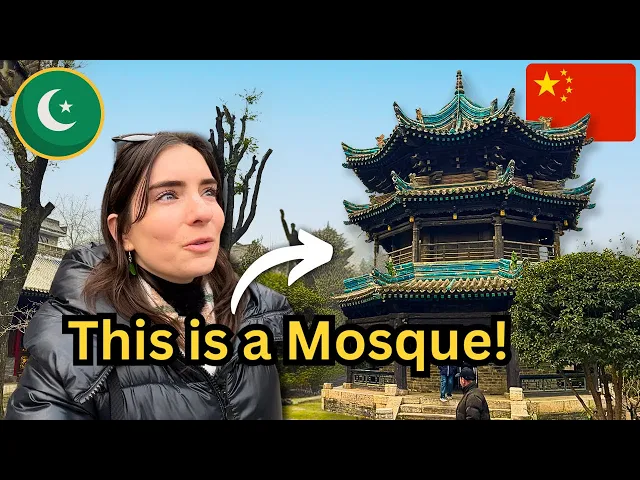
The journey begins on Muslim Street, where 20Camels is immediately engulfed in a sensory overload of sizzling skewers, shouting vendors, and a chaotic bazaar atmosphere that feels like a Chinese medina. The first taste is a roujiamo, a 'Chinese hamburger' of shredded lamb with spicy chili in a dry, hard bun—savory and satisfying, though a bit dry. Wandering deeper, the traveler and companion Razi stumble into an Arabic calligraphy shop, discovering a unique fusion of scripts used for over a thousand years. The shopkeeper, whose father is an imam, explains that the artwork uses Arabic script to write other languages, creating a stunning hybrid of styles. Fans, prayer beads, and hijabs fill the space, each item a testament to a living culture. Then, the Great Mosque of Xi'an demands attention. Built in 742 CE, it defies expectations with its Confucian temple appearance—a deliberate choice by early Muslims to prove loyalty to the Chinese Empire. Inside, walls enclose serene courtyards, a pagoda-like minaret rises with dragons and lotus flowers, and the prayer hall blends Chinese iconography with Arabic inscriptions. The call to prayer echoes softly from speakers, a soundtrack to this architectural marvel. Leaving the mosque, 20Camels hunts for Arabic blessings above local doors, finding a mix of readable religious phrases and mysterious scripts that even Razi, a native Arabic speaker, cannot decipher. The search leads into quieter, less touristy streets, where the atmosphere shifts from commercial hustle to everyday life. For dinner, a hunt for yangro palmo leads to a local spot. This iconic dish—broken bread soaked in a rich lamb broth with meat, noodles, and mushrooms—is hearty and warming, especially with a kick of spicy paste. Meat skewers follow, seasoned with garlic, a table staple in this region. A sweet interlude comes with a sticky rice cake and a hawthorn pastry from a local shop, the latter sour and flaky, a unique delicacy. The vlog wraps with a reflection on the Muslim Quarter's blend of food, faith, and history, leaving the traveler eager to explore more Chinese Muslim cities.
FAQs (From the traveler's perspective)
Q: What were the sweet potato noodles like?
A: They looked like shining leather and tasted yummy!
Q: What was the most surprising thing you found?
A: Probably the $1 haircut and that I didn't need a ticket to enter the Zhu-long cave!