Original source
RAMADAN in CHINA! | IFTAR with Local Family 🇨🇳🌙
Ramadan in Yunnan China Iftar with Local Family in Najiaying
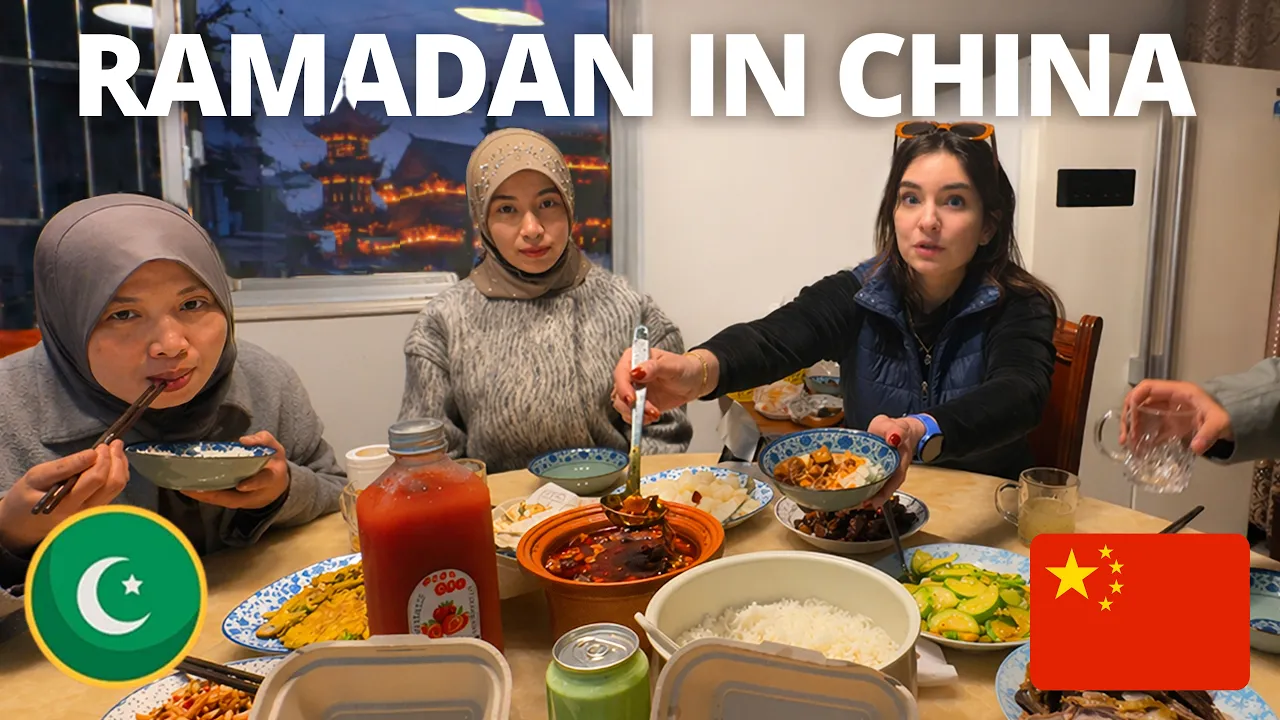
I got invited to spend one day of Ramadan with a local family in a small Muslim village in China's southern Yunnan province: Najiaying. We started the afternoon exploring the local market to find business selling their specialty food, drinks, and even handmade butcher knives! The vendors were so kind...
I got invited to spend one day of Ramadan with a local family in a small Muslim village in China's southern Yunnan province: Najiaying. We started the afternoon exploring the local market to find business selling their specialty food, drinks, and even handmade butcher knives. The vendors were so kind and welcoming, they insisted on gifting us their products and hardly let us pay for anything! Then we witnessed the sunset call to prayer at one of the most unique traditional Chinese mosques I've ever seen--The call to prayer was kicked off by the banging of a gong! Once it was time to break the fast with the huge Iftar feast that Yusuf's mom made, we got to enjoy some of the most delicious food we've had in China so far! Stay tuned for the next video 530-Mile Road Trip with an EV in CHINA Thank You!
A traveler in RAMADAN in CHINA visits a small Muslim village in southern Yunnan called Najiaying and spends a day with a local family. The day starts at a bustling market where vendors sell specialty foods, drinks, and even handmade butcher knives, with locals incredibly welcoming and generous, often gifting products. The group then experiences a memorable sunset call to prayer at a unique traditional Chinese mosque, where the call is intriguingly started by the sound of a gong. As evening arrives, they join Yusuf’s family for a large Iftar feast prepared by Yusuf’s mom, enjoying some of the best food they’ve had in China. The video teases a future episode about a long EV road trip across China and keeps a note about affiliate partnerships in the description. Overall, the day blends cultural exchange, local flavors, architectural interest, and Ramadan traditions in a lesser‑seen corner of China.
I got invited to spend one day of Ramadan with a local family in a small Muslim village in China's southern Yunnan province: Najiaying. We started the afternoon exploring the local market to find business selling their specialty food, drinks, and even handmade butcher knives. The vendors were so kind and welcoming, they insisted on gifting us their products and hardly let us pay for anything! Then we witnessed the sunset call to prayer at one of the most unique traditional Chinese mosques I've ever seen--The call to prayer was kicked off by the banging of a gong! Once it was time to break the fast with the huge Iftar feast that Yusuf's mom made, we got to enjoy some of the most delicious food we've had in China so far! Stay tuned for the next video 530-Mile Road Trip with an EV in CHINA Thank You!
In this video, travel vlogger 20Camels takes us on an intimate journey to Najiaying, a small Muslim village in China's Yunnan province, to experience the final days of Ramadan. Accompanied by local Yousef, the vlogger explores a bustling Ramadan market where vendors sell everything from handmade butcher knives to colorful cakes and olive juice. The overwhelming hospitality of the village is on full display—vendors insist on gifting their products, refusing payment despite the vlogger's attempts. The traveler visits a traditional Chinese-style mosque that features a surprising twist: instead of a typical call to prayer, they bang a gong. The video then moves to Yousef's family home for a spectacular Iftar feast, where the table is laden with dishes prepared by his mother and items gifted from the market. The dinner includes a unique Yunnan-specific vegetable that tastes like kimchi and a surprisingly sweet olive juice. Yousef explains local traditions, including an annual pigeon racing competition that his father has won for years. The vlogger also learns about a nearby lake that locals call 'the sea'—a romantic date spot. As night falls, the family warmly invites the vlogger to stay overnight, but they must decline due to an early flight. The journey ends with a visit to the village's modern second mosque, which uniquely fuses Chinese architecture with Islamic minarets and even features an elevator. The video captures the deep sense of community, generosity, and cultural fusion that defines this unique Muslim enclave in southern China.
In China's Yunnan province, travel vlogger 20Camels experiences an unforgettable Ramadan Iftar in the Muslim village of Najiaying. Local hospitality shines as vendors shower him with free food—from fresh bread to grilled meats—while refusing payment. He visits a stunning Chinese-style mosque where prayer is announced with a gong, and shares a family feast of local Yunnan specialties, including a surprising sweet olive juice. A heartwarming look at Chinese Muslim culture.
20Camels shares Iftar with a kind local family in a Yunnan Muslim village, exploring markets, a unique mosque, and experiencing overwhelming hospitality during Ramadan.
Ramadan Iftar with Local Family in Yunnan Muslim Village China
1:16 When visiting the Najiaying market, expect locals to insist on giving you free food. Bring empty bags and prepare to accept gifts gracefully, as refusing can be seen as impolite.
9:52 The Ramadan market in Najiaying is seasonal. Plan your visit during the last ten days of Ramadan for the most vibrant experience with hundreds of stalls and thousands in daily sales.
16:25 For a romantic date, visit the local lake which villagers affectionately call 'the sea'. It's a popular spot for couples despite being a lake, not an actual sea.
20:58 The village has two mosques—a traditional Chinese-style one with a gong for prayer calls, and a modern one with an elevator. Visit both to see remarkable architectural fusion.
23:56 Yousef's father is a champion pigeon racer. If you visit a local home, ask about their hobbies—pigeon racing is a unique and proud tradition in this village.
0:01 Arriving in the Muslim village
0:49 Exploring the Ramadan market with knives
2:35 Vendor gifts free bread
5:30 Free noodles and generous gifts
16:20 The lake they call the sea
21:08 Visiting the traditional mosque
24:27 Iftar feast with family
27:01 Modern mosque with Chinese architecture
0:00 Intro
0:49 Handmade Knives
1:28 Food Market
15:40 Exploring the Village
20:10 Village Mosques
23:14 Yusuf's House
24:26 Iftar Dinner
What was the most surprising thing you found in the market?
Probably the handmade knives! The village has a history of making weapons, and now they make high-quality kitchen knives. Also, everyone kept giving us free food.
How did the mosque call to prayer work?
Instead of a typical chant, they banged a gong! It was a unique fusion of Chinese and Islamic traditions.
What was the olive juice like?
Surprisingly sweet! I never thought olives could be sweet, but it hardly even tasted like olives. It was really good.
What is unique about the local lake?
Locals call it 'the sea' because they've never seen a real sea. It's a romantic dating spot for couples in the village.