
Travel Guides & Tips in this video
Katherine travels to the Alxa desert in Inner Mongolia to see the results of Ant Forest, an Alipay program that turns low-carbon activities into green energy to fund tree planting. She says the landscape was moving sand ten years earlier and now has more than 600,000 trees. After planting 11 trees remotely, she joins a group of 300 people and walks 10 km toward an oasis to visit the area. The project relies on hardy shrubs with deep roots to stabilize soil, and the ecosystem is diverse rather than a single-species forest. She also sees beetles, lizards and a cockroach, and tries planting a tree in loose sand.
Next travel video:

More about the current video:()

Ant Forest in the Alxa desert
Katherine travels to the Alxa desert in Inner Mongolia to see a reforestation project linked to Ant Forest, an initiative in the Alipay app. Low-carbon activities such as taking public transport produce green energy in the app, which can fund the planting of real trees. Katherine says she had planted 11 trees remotely before joining a group of 300 people to visit the project in person.
She describes the landscape as shifting sand ten years earlier and says more than 600,000 trees have since taken root. The project is not simply about planting large trees across the desert. Hardy shrubs with deep root systems help hold the soil and stabilize it. The plants are suited to dry conditions and provide a starting point for restoring the area.
A diverse ecosystem and hands-on work
Katherine emphasizes that a healthy ecosystem is varied rather than a neat monoculture. The forest has different species growing in clusters. She encounters insects and reptiles, including beetles, lizards and a cockroach, as signs of life in a place described as once barren and moving. The wildlife observations add to the focus on an ecosystem returning, not just a count of planted trees.
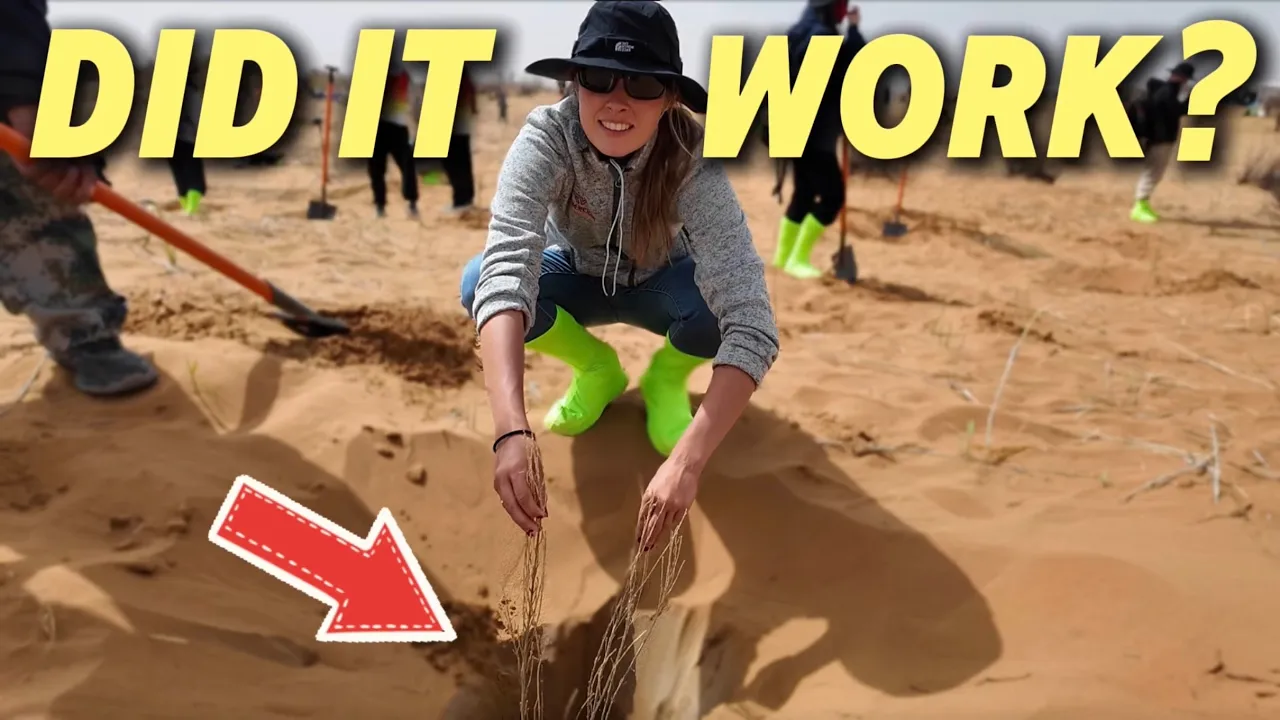
Planting in loose sand takes physical effort. Before digging, the group has to clear the sand, and each step requires patience. Katherine tries planting a tree herself and sees how much work goes into ensuring it takes root. The process is slow and deliberate, and she contrasts it with the pace of city life. The video presents restoration as long-term work rather than a quick transformation.
From small actions to real planting
The project links digital activity to planting on the ground. Ant Forest converts qualifying low-carbon actions into green energy in the app, and that energy funds real planting. Katherine’s visit gives her a chance to see the work in Alxa and learn how shrubs, soil and community effort fit together. She focuses on the roots that stabilize the soil and on diversity across the landscape.
For visitors, the main lesson is that planting in a desert is demanding and requires plants suited to the conditions. Starting with hardy shrubs can help stabilize loose ground, while a mix of species supports a more varied ecosystem. Katherine’s trip gives a personal view of the project, the manual work and wildlife she observes. The work is presented as gradual, with shrubs helping stabilize loose sand as planting continues.
FAQs (From the traveler's perspective)
- Q: What were the tiny trees like?
- A: They looked like fragile little twigs, but had long root networks underground to find water and hold the soil together.
- Q: How does Ant Forest work?
- A: People collect green energy through low-carbon activities such as taking public transport. Ant Forest uses that energy to fund real trees in places such as Inner Mongolia.
- Q: Was the desert completely lifeless?
- A: No. Katherine saw beetles, a cockroach and a lizard with a curly tail, which she describes as signs of life returning to the ecosystem.
- Q: Did you visit any other attractions?
- A: No. The main focus was the Ant Forest reforestation project in the Alxa desert of Inner Mongolia.
