Travel Guides & Tips in this video
Katherine cycles through rural Gansu, stopping in Dalang for market food and local sights. The route includes crispy braids, malatang, a busy afternoon market, old propaganda posters, and a local carnival with traditional opera. A bridge shown on navigation apps has collapsed, sending Katherine and her partner into a ravine and forcing an unexpected detour. They then tour Mosa Village’s cave dwellings, including a large home associated with a wealthy 19th-century family and a renovated 150-year-old cave used as a dormitory. The visit explains how earth-sheltered homes stay cooler in summer and warmer in winter, and ends with a night in a wedding cave room.
Next travel video:

More about the current video:()
Markets and a carnival in rural Gansu
Katherine bikes through Gansu, traveling along rural backroads rather than between major cities. In Dalang, she samples local favorites such as crispy braids and malatang, then visits an afternoon market where she sees elaborate house tombstones, hell money, and old propaganda posters. One poster warns pregnant women about watching television because of X-rays, while suggesting black-and-white sets may be different. At a local carnival, Katherine and her partner attract attention from residents. They watch traditional opera and look at the rides, including a small roller coaster priced at 20 RMB.
A missing bridge and cave homes
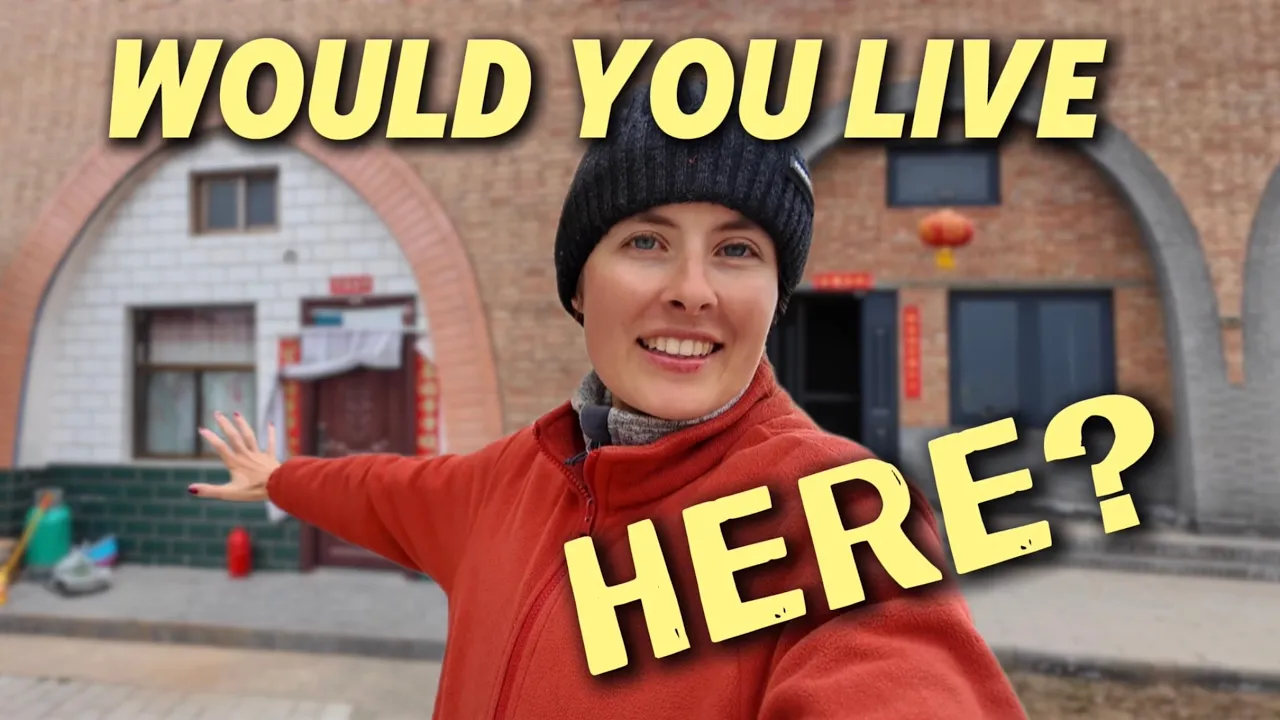
When their map directs them across a bridge that no longer exists, the travelers end up in a ravine. Both navigation apps still show the bridge, so the route becomes an unexpected detour. The experience leads them to Mosa Village and its cave dwellings. A local guide shows them a large cave home associated with a wealthy family from the 19th century and a renovated cave about 150 years old that now serves as a dormitory. The renovation includes modern floors, walls, ceilings, indoor plumbing, and a shower to address dust and moisture. The earth-sheltered rooms stay cooler in summer and warmer in winter. They finish by staying overnight in a wedding cave room.
The video contrasts the lively market and carnival with the quiet countryside and cave architecture. Katherine also tries malatang, where she chooses fresh vegetables and mixes her own bowl, and rides along dirt roads that reveal scenery beyond paved routes. The visit presents the old homes as places still being adapted for present-day life.
FAQs (From the traveler's perspective)
- Q: What are the house tombstones Katherine sees?
- A: They are intricately designed miniature houses used as tombstones for wealthy people. The source describes them as an example of the importance of architecture in the local culture.
- Q: What surprised Katherine on the walls?
- A: She sees a vintage tile poster warning pregnant women against watching television because of X-rays, while saying black-and-white televisions may be different.
- Q: Why was the carnival roller coaster memorable?
- A: The smallest roller coaster costs 20 RMB. Katherine wants to ride it for the vlog but decides she cannot justify the price for such a small hill.
- Q: What went wrong with the map?
- A: The map directs the travelers into a ravine and toward a bridge that has fallen apart. Both navigation apps still show the bridge as if it were usable.
- Q: What is different about the renovated cave houses?
- A: The renovated caves have modern floors, walls, and ceilings to address dust and moisture. One 150-year-old cave has been converted into a dormitory with indoor plumbing and a shower.