Travel Guides & Tips in this video
- Tip 1Expect a city where tech quietly buffers daily life and consider how you’d navigate a place where automation touches breakfast delivery and transit. (00:06)
- Tip 2Notice how public spaces feel designed for pedestrians: limited road space, more walking areas, and climate-controlled metro cars. (06:32)
- Tip 3If you’re building electronics, Huaqiangbei is your launchpad for components, fast prototyping, and real-world testing. (08:00)
- Tip 4Explore Shenzhen Bay’s waterfront as a case study in integrating public spaces with high tech and calm, accessible city life. (13:43)
- Tip 5Observe cashless culture with QR codes, facial or palm payments, and minimal wallet dependence in everyday transactions. (17:58)
CoolVision takes viewers on a vivid tour of Shenzhen, a city that seems to blur the line between present and future. The trip starts with a bold claim about the future becoming tangible here, then unfolds through neighborhoods like Futian and Nanshan, and iconic sites such as DJI Sky City, Tencent Seafront Tower, and Shenzhen Bay. The narration explains how Shenzhen was transformed from a fishing village into a global tech hub after becoming China’s first special economic zone in 1980, with proximity to Hong Kong and a blank slate for modern design fueling rapid growth. Robot-delivered breakfasts, drone food delivery, driverless taxis, and a metro system that has exploded from a single line to over 500 stations illustrate a city wired for automation and efficiency, where nearly every activity is integrated with technology and data. Yet the video also emphasizes human warmth, green space, and a sense of play, from parks with QR-coded trees to 3D printed studios and creative districts in
More about the current video:( 8 / 8 )
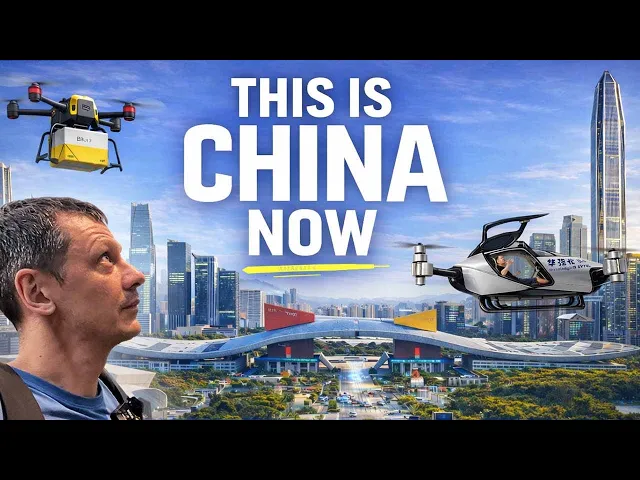
CoolVision arrives in Shenzhen to discover a city where technology is embedded in daily life. Drones deliver breakfast at a hotel, the metro runs on a smart traffic brain, and every corner seems to be a testing ground for the future. In Futian and Nanshan, the city’s infrastructure feels designed for people, not just cars, with electric buses and taxis, expansive green spaces, and a climate-controlled metro car. A tour of Huaqiangbei reveals a hardware market that functions as a global prototype lab, offering components and speed that let makers sketch and ship gadgets by dinnertime. DJI Sky City and Tencent Seafront Tower anchor Shenzhen’s tech ecosystem, while coworking spaces and talent parks reveal a city that nurtures young innovators. Beyond work, visible green belts, QR-coded trees, and drone kiosks illustrate a city that balances efficiency with life. In OCT Loft and Nantou Ancient Town, contrasts emerge between industrial heritage and creative renewal, culminating in a 24-hour Queen Spa that embodies Shenzhen’s paradox of work and unwind. The traveler questions whether Shenzhen is truly the future, but the answer remains a nuanced blend of speed, scale, and local experiences, inviting viewers to weigh the city’s bold experiment against a more human pace. CoolVision leaves with a question about which city feels most futuristic, inviting comments and future videos.
FAQs (From the traveler's perspective)
- Q: Is Shenzhen really as high tech as it looks?
- A: Yes, the city is deeply integrated with automation, electric public transit, and real-time data, but the experience also depends on context and neighborhood.