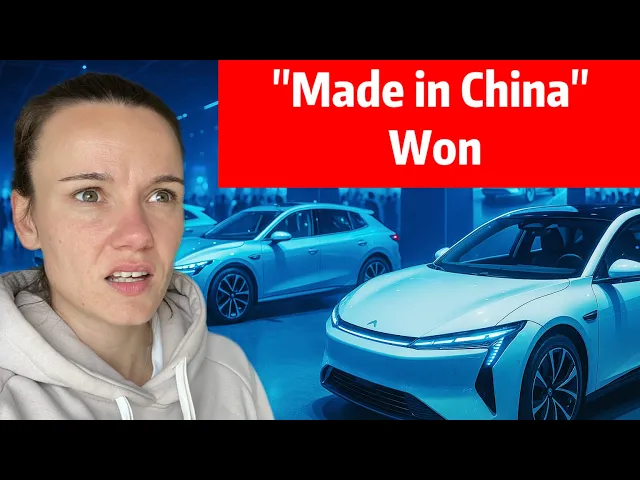
This video takes viewers inside the Canton Fair 2025, the world's largest trade show, highlighting China's dominance in the electric vehicle (EV) market and its significant role in global manufacturing. Traveler Lizzy, accompanied by Alex, explores the electrifying EV section, showcasing futuristic vehicles, smart batteries, and innovative transportation tech. China is not just participating but leading the EV revolution, with a buzzing atmosphere of innovation from major automakers to tech startups.
Alex points out a significant shift in the fair's geography, noting the absence of North American buyers and an increase in European, African, and South American attendees, particularly from Brazil and Argentina. The discussion delves into the impact of U.S. tariffs, with Alex explaining that these tariffs, estimated to cost consumers $1.2 trillion, are not significantly hindering China due to its diverse global markets. China is actively seeking new markets, while consumers in the U.S. will bear the brunt of the cost.
The video features an in-depth look at a $191,000 battery-powered electric truck, a marvel of modern logistics. Lizzy gets a chance to sit inside, marveling at its spaciousness and advanced features, including sleeping quarters and a camera system. Alex provides context on the global new energy vehicle (NEV) market, contrasting China's collaborative approach with the multi-competitive and technologically lagging markets in Canada and the U.S. He highlights major Chinese battery manufacturers like CATL and BYD, emphasizing their collaboration over competition, which fosters easier entry into the NEV space.
Further exploration reveals an import-export company facilitating the global shipment of various vehicles, from fire trucks to ambulances. Alex discusses Canada's potential shift away from tariffs and the challenges faced by its automotive industry, predicting a stronger Chinese presence. The conversation touches upon the U.S. reshoring initiative, with Alex questioning its feasibility due to consumer costs and the potential impact on farmers and small businesses. He suggests the U.S. should focus on its strengths in oil, gas, and the military-industrial complex, allowing global trade to flourish.
A unique product, a motor-powered wakeboard/surfboard from Jingping, is showcased, demonstrating China's continuous innovation in battery technology. Alex notes the environmental improvements in cities like Chongqing, with blue skies and a high percentage of NEVs, challenging outdated perceptions of Chinese pollution. The video critiques the notion of reshoring automotive production, emphasizing the cost-effectiveness and innovation driven by Chinese manufacturers.
The discussion turns to China's rare earth dominance as a potential "checkmate" against U.S. military power. The video highlights BYD's massive R&D investment and the surprising affordability of products like a $2,000 EV, which can be manufactured for even less. A particularly eye-opening segment features a customizable food truck for just $1,400, illustrating the low barrier to entry for entrepreneurship in China and questioning the feasibility of American reshoring efforts. This affordability is presented not as a sign of poor quality, but as a response to buyer demands for lower prices, especially under tariff pressures.
Alex and Lizzy also touch upon the Belt and Road Initiative, China's global trade strategy, and its focus on collaboration. They contrast this with a narrative of theft, arguing that companies like Apple benefit from China's manufacturing capabilities while profits return to U.S. shareholders. The video concludes by emphasizing China's self-focus on product improvement and competitive pricing, suggesting that other countries should drop their ego, visit China, learn, and collaborate to improve their own industries. The Canton Fair's sheer scale, with multiple phases covering vast sectors like consumer electronics and machinery, underscores China's ongoing economic dynamism, countering Western narratives of struggle.
FAQs (From the traveler's perspective)
- Q: What was the impact of tariffs on China?
- A: The tariffs are not significantly impacting China because they have a lot of other markets to venture into, and consumers in the U.S. will bear the cost.
- Q: What is the difference between China's NEV market and others?
- A: China's NEV market thrives on collaboration between major battery makers like CATL and BYD, making it easier to enter, unlike the multi-competitive markets in Canada and the U.S.
- Q: Can the US or Europe really produce everything locally?
- A: It's questionable, as consumers will likely vote with their wallets against higher prices. Farmers and small businesses are also negatively impacted by reshoring initiatives.
- Q: What is China's 'checkmate' in global power dynamics?
- A: China's dominance in rare earths is a potential 'checkmate,' as controlling the supply could halt military power production in other nations.
- Q: How can a business like a food truck be so affordable?
- A: Products like the $1,400 food truck are a result of buyers requesting lower costs, leading manufacturers to adjust with cheaper materials and designs, not necessarily poor quality.
- Q: Why is China focusing on collaboration?
- A: China focuses on collaboration to improve products, increase output, and offer competitive prices, which other countries find hard to match.
- Q: How can other countries catch up to China?
- A: Other countries can catch up by engaging in trade, visiting China to learn, dropping their ego, and working collaboratively to improve their own products and industries.