Travel Guides & Tips in this video
Little Chinese Everywhere explores traditional Chinese medicine in Hangzhou, starting at Huqingyutang’s medicine-themed cafe near Hefang Jie. The menu includes ginseng and huangqi lattes, and the cafe displays herbs in a cabinet-style wall. The host then visits Fang Hui Chun Tang, a clinic with a 376-year history, where a walk-in ticket provides access to therapies. The tour includes a pharmacy with herbs such as ginseng, acupuncture, moxibustion, and cupping. The practitioner discusses traditional ideas about kidney essence, qi, blood, and meridians. The host receives treatment and notes cupping marks and a feeling of relaxation, especially in the shoulders and lower back. The video describes prices for some services and drinks and considers how traditional therapies are presented in a modern Hangzhou setting. The host discusses the clinic’s walk-in ticket, pharmacy herbs, and the practitioner’s traditional explanations while describing her own experience of treatment.
Next travel video:
More about the current video:()

Medicine-inspired coffee and a historic clinic
Little Chinese Everywhere begins on Hefang Jie near Hangzhou’s bell tower, at Huqingyutang’s clinic-themed cafe. The menu includes ginseng latte and huangqi latte, and a wall of drawers displays dried herbs such as licorice and angelica root. The host tries a ginseng latte and discusses the role of ginseng as an energy booster. The visit then moves to Fang Hui Chun Tang, a clinic with a 376-year history. A walk-in ticket provides access to therapies, and the adjoining pharmacy displays valuable herbs, including ginseng.
Acupuncture, moxibustion, and cupping
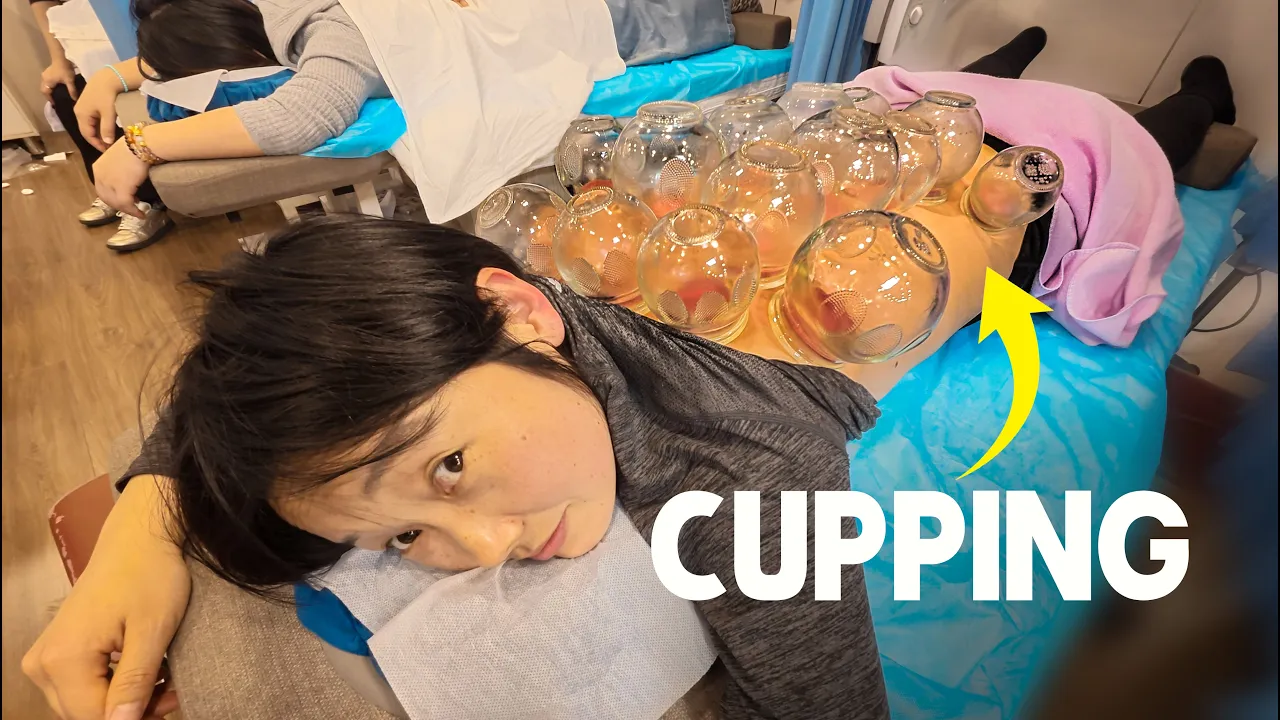
At the clinic, the host receives acupuncture, moxibustion, and cupping. The practitioner explains traditional concepts involving kidney essence deficiency, qi, blood, and meridians. The treatment is described as addressing meridians rather than only an isolated pain point. Cupping leaves visible marks, and the host reports feeling relaxed, especially in the shoulders and lower back. The video mentions cupping at around 60 yuan and ginseng drinks at 50 yuan per session; acupuncture costs can add up by point.
The visit combines cafe drinks, pharmacy herbs, and treatment in two historic institutions. It shows how traditional medicine is presented alongside contemporary cafe culture in Hangzhou. The host also discusses what a visitor might experience at the clinic, including a ticket for therapy and the treatment methods used. The account records the practitioner’s explanations and the host’s own response without treating the traditional concepts as a medical diagnosis or guarantee of results.
FAQs (From the traveler's perspective)
- Q: Does acupuncture hurt?
- A: The host says most people feel a light pinch or mild sensation. The needles are very thin, and the experience is often described as relaxing rather than painful.
- Q: How much do the therapies cost?
- A: The video mentions cupping at around 60 yuan and ginseng drinks at 50 yuan per session. It says acupuncture charged by point can add up, so prices vary by service.
- Q: What treatments does the host try?
- A: The host receives acupuncture, moxibustion, and cupping at Fang Hui Chun Tang. The practitioner discusses traditional concepts of qi, blood, meridians, and kidney essence.