

Travel Guides & Tips in this video
Lizzy books a first-class seat on a high-speed train from Lijiang to Kunming and receives seat details by email through Trip.com. At the station she finds food, including KFC and convenience-store options, but notes that station and train food can cost more. On board, first class feels roomy and has charging ports; second class is also spacious and costs less. The train runs steadily and on time during her trip. She compares the classes and reflects on China’s investment in rail and the lower emissions possible when trains run on electricity.
Next travel video:

More about the current video:()
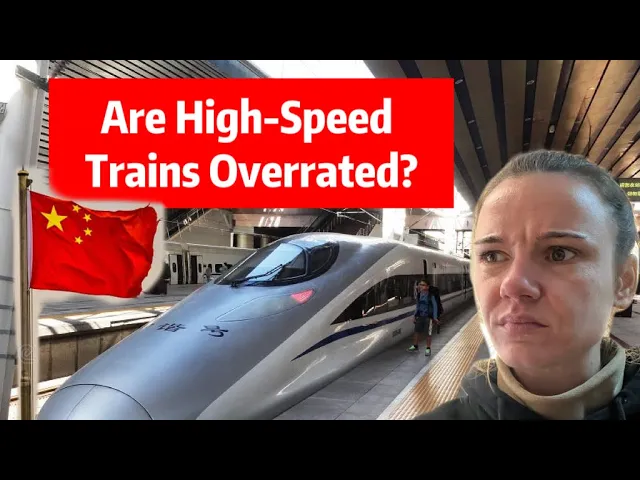
Booking and boarding in Lijiang
Lizzy travels by high-speed train from Lijiang to Kunming, trying first class for the first time. She books through Trip.com and receives an email with her seat details. At the station she finds places to get food, including KFC and convenience stores. Those choices are useful while waiting, though she advises against relying on station or train food because it can be more expensive. She also notes that basic necessities such as water are often available without the inflated prices she associates with airports. The departure and boarding process become part of her first-hand comparison of the rail journey.
Comparing first and second class
The first-class cabin feels roomy, and Lizzy points out charging ports at the seats. She also finds second class spacious, with the advantage of a lower price. Her experience suggests that first class offers additional room and convenience, while a traveler on a budget may be comfortable in second class. The train feels stable during the ride and, on this journey, keeps to its schedule. She describes the movement as smooth rather than unsettled, which makes the trip easy to spend time in.
The comparison is based on this Lijiang–Kunming trip. Both classes provide a comfortable way to cover the route, and the first-class seat gives Lizzy a chance to try a different level of service. Travelers can weigh the extra space and charging access against the lower cost of second class when choosing a ticket.
Rail travel and the wider journey
As Lizzy rides, she reflects on the scale of China’s rail system and government investment in it, mentioning the country’s population of 1.4 billion. She compares the speed and efficiency of D trains with slower C trains and notes the time saved. She also says high-speed rail, powered mainly by electricity, produces fewer greenhouse-gas emissions per passenger than cars or planes. She frames the system’s significant debt as investment intended to support economic growth and affordable transport. These thoughts sit alongside details from the actual journey: seat information by email, a spacious carriage, and a punctual, steady ride.
Her first-class experience does not mean second class is cramped; she describes that option as spacious too. The practical choice depends on what matters to the traveler. If charging access and extra room are useful, first class may appeal. If saving money is more important, second class remains a comfortable alternative. Either way, checking the seat details in advance and bringing food from outside the station can make the trip easier. The journey offers Lizzy a direct comparison of the two classes on a high-speed train between Lijiang and Kunming.
FAQs (From the traveler's perspective)
- Q: What stood out about first class on the Lijiang–Kunming train?
- A: Lizzy found it roomy and noted charging ports at the seats. She also describes the ride as stable and punctual during her trip.
- Q: Is second class comfortable too?
- A: In Lizzy’s experience, second class was spacious and cost less than first class, making it a comfortable lower-cost option.
- Q: What is useful to know about food at the station?
- A: She found KFC and convenience-store food at the station, but advises that food bought at the station or on the train can cost more.
