
Travel Guides & Tips in this video
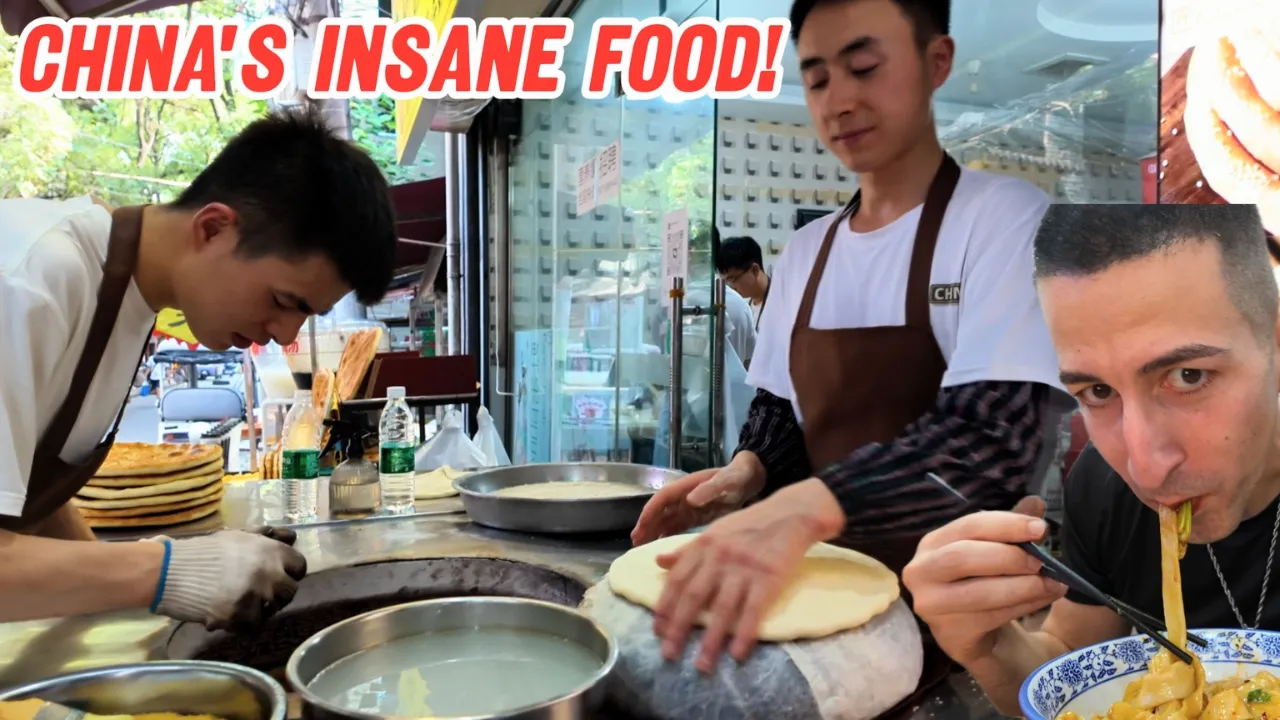
That Evan Guy explores Muslim cuisine in Xi'an, trying thick Biangbiang noodles served with beef broth, water spinach, and chili paste. He finds the large noodles surprisingly flavorful and says the sauce is key. He also tastes Rou Jia Mo, a pork-filled sandwich with a history described as 2,000 years, and notes that a Muslim version is available. A layered dish combines jelly-like noodles with mung bean sauce, tahini, mustard, and chili paste. Evan Guy discusses its bouncy texture and complex flavors, and says he prefers regular eggs to century eggs. The video follows the cooking, serving, and tasting of the dishes, including the hands-on process of breaking bread for a meal.
Next travel video:

More about the current video:()

Biangbiang noodles in Xi'an
That Evan Guy visits Xi'an to try Muslim food, beginning with Biangbiang noodles. The maker stretches and prepares the noodles, and the process is loud enough to be noticeable. Evan Guy describes the noodles as large, thick, and chewy, but says they have more flavor than their size might suggest. The bowl comes with beef broth, water spinach, and a generous amount of chili paste. He praises the beef and says the sauce is what gives the noodles their flavor.
The meal offers a chance to see how noodles are made and served as well as to taste them. Evan Guy reacts to the scale of the portion and compares the dish with his expectations. He treats the noodles as a central part of Xi'an's food culture and emphasizes that a large noodle does not need to be bland when the sauce and toppings are well balanced.
Rou Jia Mo and the layered dish
Next he tries Rou Jia Mo, a Chinese burger with a history described as 2,000 years. The traditional version uses pork, while a Muslim version is also available. The dish's crisp bread and meat make it a portable meal, and the video includes a segment on breaking the bread as part of the eating process.
The final dish is a layered combination that includes gelatinous noodles, mung bean sauce, tahini, mustard, and chili paste. Evan Guy describes the noodles as firm and bouncy, more like jelly than standard noodles. The sauces create a mix of spicy, garlicky, and nutty flavors. He says regular eggs suit his taste better than century eggs in this dish, though the combination remains a distinctive discovery. The route follows the preparation, serving, and tasting of three Xi'an dishes, with attention to the ingredients, textures, and methods that make each one different.
A meal made by hand
The noodle maker stretches and prepares the Biangbiang noodles in front of Evan Guy. The process is noisy, and the finished noodles are unusually wide, thick, and chewy. Their size does not mean they lack flavor: the beef broth, water spinach, and chili paste give the bowl its character. Evan Guy is surprised by how much he enjoys the noodles and rates them highly. The video follows the bowl from preparation to serving and tasting, so viewers can see the craft as well as the meal.
Xi'an's other dishes
The Rou Jia Mo is introduced as a Chinese burger with a history of about 2,000 years. The source says it was first made as a durable, portable meal for soldiers. Its bread is broken open and filled with meat; the traditional version uses pork, while a Muslim version is also available. Evan Guy focuses on the crisp bread and flavorful filling as he tries it. Later, he samples a layered dish with firm, jelly-like noodles, mung bean sauce, tahini, mustard, and chili paste. Its texture is unlike the noodles he tried earlier. He likes the spicy, garlicky, and nutty flavors, while noting that he would choose a regular egg over a century egg. Together, the three tastings show different ingredients, textures, and ways of preparing Xi'an food.
FAQs (From the traveler's perspective)
- Q: What were the Biangbiang noodles like?
- A: They were giant, thick, chewy, and surprisingly packed with flavor, far better than expected.
- Q: What is Rou Jia Mo?
- A: It's a 2,000-year-old Chinese burger with crispy bread and juicy, flavorful meat, a real taste of authentic food.
- Q: What made the layered noodle dish unique?
- A: It had jelly noodles, mung bean sauce, tahini, mustard, and chili paste, creating a complex explosion of layered flavors.
- Q: What was the texture of the gelatinous noodles?
- A: They had a bouncy, firm jelly-like texture, unlike any noodle I've had before.
- Q: What was the most surprising discovery?
- A: The sheer depth of flavor in dishes like the Biangbiang noodles and Rou Jia Mo, which exceeded all expectations.
