Travel Guides & Tips in this video
The host from On Tour With Dridgers examines why China feels futuristic during a Shenzhen visit. He discusses a population of 1.4 billion, competition between brands and government support for rapid product testing and rollout. Examples include mobile payments, palm pay, high-speed rail, delivery systems and unmanned shops. The video also raises questions about surveillance, law enforcement, safety and privacy, comparing technology adoption with India and Western countries. Examples include palm-pay, WeChat and mobile wallets, unmanned shops, delivery services, charging pods and smart-city systems. The host compares the scale of China's market with India and Western countries, and links competition among brands and government backing to the pace of experimentation. He also discusses how high-speed rail connects cities and can make flying unnecessary for some journeys. Alongside those conveniences, he raises questions about cameras, strict enforcement and privacy, leaving viewers to weigh the tradeoffs. The Shenzhen visit includes malls and public spaces, and the host previews a later episode about other technology experiences.
Next travel video:

More about the current video:()
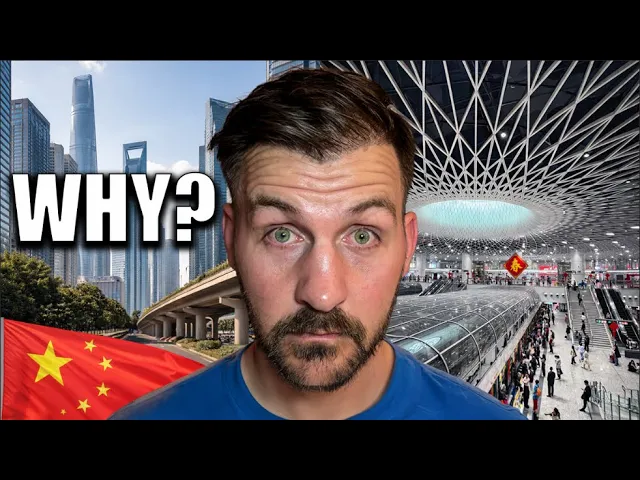
Scale and technology adoption
In Shenzhen, the host from On Tour With Dridgers asks why China feels so futuristic. He points to scale: a population of 1.4 billion creates room to test products and roll them out quickly. Competition among brands pushes frequent upgrades, while government support helps new products move from testing into wider use. The examples include consumer electronics, integrated apps and smart city services.
The host demonstrates palm pay and discusses a cashless society where WeChat and mobile wallets support daily transactions. He describes how technology adoption is shaped by the population's size and by a network of factories and services. High-speed rail connects cities quickly and makes flying less necessary for some trips.
Safety, surveillance and privacy
The video considers how surveillance and strict law enforcement relate to public safety. The host describes cameras in public places, unmanned shops and other systems as part of everyday life in Shenzhen. He also reflects on whether people are comfortable with this level of monitoring. The discussion acknowledges tradeoffs between convenience, order and privacy rather than presenting one answer for every traveler.
Comparisons with India and Western countries appear throughout the conversation, including differences in ownership, tipping and urban planning. The host and crew visit malls and charging pods and discuss what it feels like to use these systems. He ends with a question about how viewers weigh freedom and safety, and previews a later episode about other futuristic experiences.
FAQs (From the traveler's perspective)
- Q: Is China really as safe as it seems?
- A: The host argues safety comes from heavy urban surveillance, strict law enforcement, and a culture of honesty, while acknowledging tradeoffs.
- Q: Why does the host say China feels futuristic?
- A: He points to a population of 1.4 billion, rapid testing and rollout, competition among brands, government support, high-speed rail and mobile services.
- Q: What payment technology does the host demonstrate?
- A: He demonstrates palm pay and discusses WeChat and mobile wallets as part of everyday cashless transactions.