
Travel Guides & Tips in this video
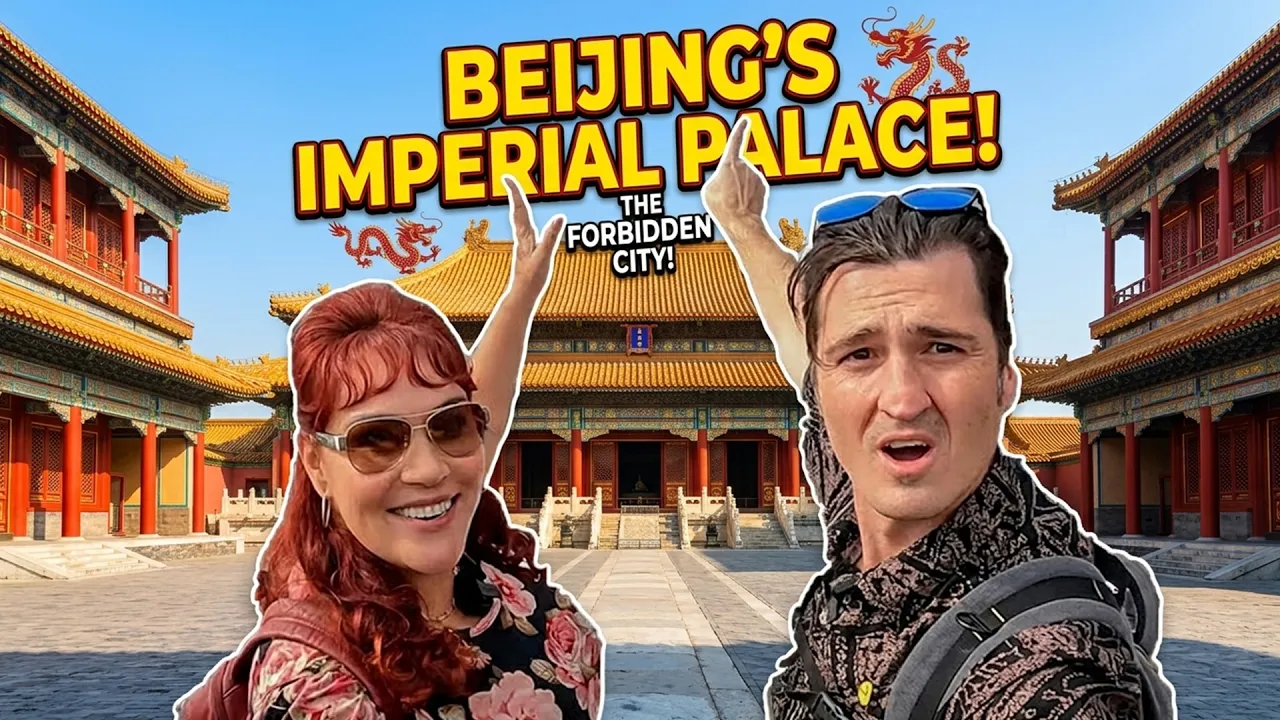
Too Much Luggage explores Beijing's Forbidden City with guide Neo after navigating security near Tiananmen Square. The walking tour passes through a series of gates and courtyards, with the guide explaining how gate access reflected imperial hierarchy. The travelers encounter guards, public restrooms and modern facilities inside the historic complex, and discuss the amount of time and energy needed to explore it. The video also notes that food inside the palace area can be expensive and that the oft-repeated figure of 9,999 rooms is a legend. Their visit combines architectural details with the practical experience of a crowded day in Beijing. Neo guides the group through the route and explains the gate hierarchy while they navigate lines and walk between courtyards. They notice the wooden construction, guards, public restrooms and modern facilities inside the complex. The visitors discuss the legend of 9,999 rooms, the Last Emperor story and how tiring it is to cover such a large site. Food is available inside but can be expensive, and the travelers mention eating outside the gates as an alternative. Their account combines practical observations with the scale and history of the palace.
Next travel video:

More about the current video:()

From Tiananmen Square to the palace gates
This Beijing visit takes Too Much Luggage from Tiananmen Square into the Forbidden City, also known as the Palace Museum. The travelers meet guide Neo and move through security queues before beginning the walk. A guided tour helps them follow the route and understand why different gates were associated with different levels of access for emperors and officials. The complex is vast, and the succession of entrances and courtyards gives the group a sense of how much ground there is to cover.
The walk includes practical observations alongside the historical setting. The travelers see guards and public restrooms and notice modern facilities within the old complex. Their guide's explanations make the gate hierarchy easier to understand, while the scale of the palace means that even a full day cannot easily cover every part. The figure of 9,999 rooms is mentioned as a familiar legend about the Forbidden City, rather than a measured count.
Architecture and the pace of a visit
As they continue through the precinct, the group discusses the wooden construction and how the buildings were designed to sway during earthquakes. They also talk about food: options inside the palace area are present but can be expensive, so visitors may prefer to plan ahead and eat outside the gates. Crowds, queues and the heat add to the physical effort of the day, making it useful to allow plenty of time and pace the walk.
The visit brings together the monumental setting and small moments of travel, including comments about the guide's accent and the contrast between the city's energy and the quieter courtyards. The travelers reflect on the story of the Last Emperor and on the fatigue that comes with exploring such a large site. They leave the palace with plans to continue their broader China trip, including a future visit to see the Terracotta Warriors. Their account keeps the focus on the guided walk, the architecture and what it feels like to move through the Forbidden City as a visitor.
FAQs (From the traveler's perspective)
- Q: Is a guided tour useful in the Forbidden City?
- A: In this visit, guide Neo helps the group navigate the route and explains how the gates reflected imperial hierarchy. The travelers find that context useful while moving through the large complex, where there is far more to see than can be absorbed by simply walking past the buildings.
- Q: What is food like inside the palace area?
- A: The travelers say food is available inside the palace area but can be pricey. Planning ahead and eating at street-food places outside the gates are options they mention for better value during a long visit.
- Q: How much time should visitors allow for the Forbidden City?
- A: The complex feels immense even on a day the travelers describe as having lighter crowds. Their tour involves a lot of walking and multiple gates and courtyards, so they suggest setting aside plenty of time rather than expecting a quick visit.
