
Travel Guides & Tips in this video
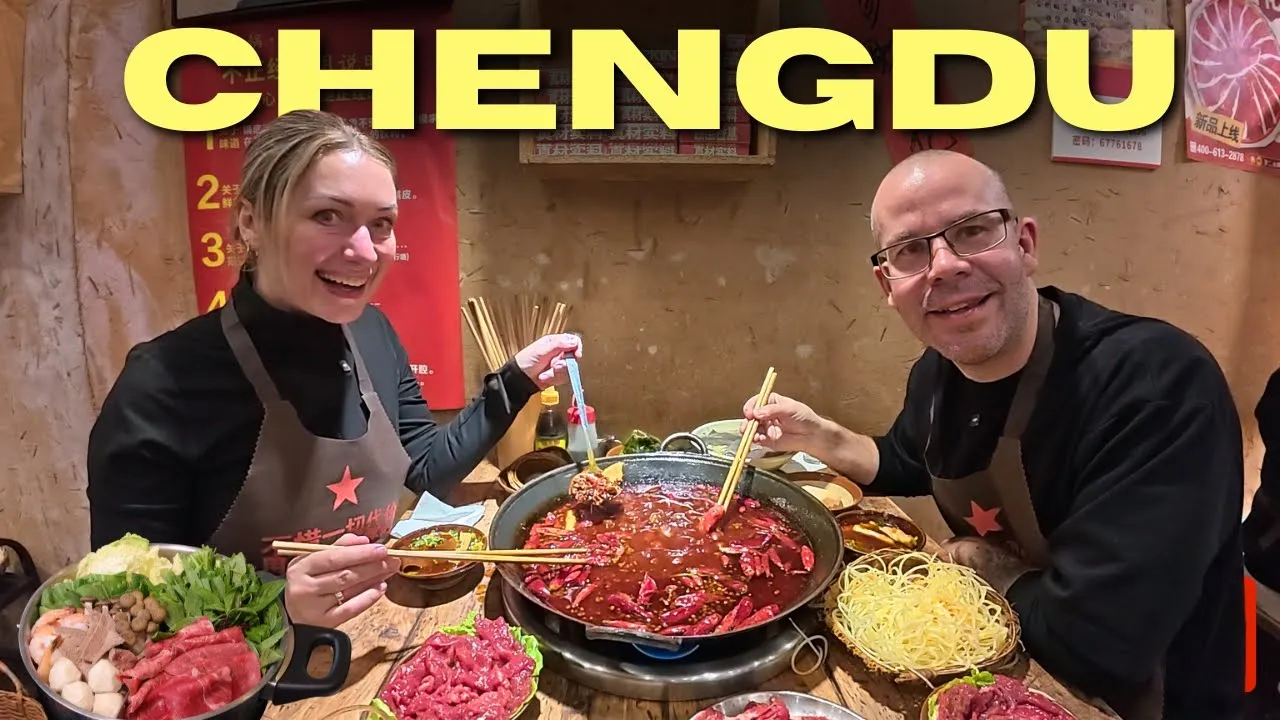
Danny and Diggy spend a day in Chengdu focused on hot pot and pandas. At Lu Hot Pot, they work through the menu, table numbers, and spice options before sharing a communal meal with beer, beef, vegetables, seaweed, and other ingredients. They learn that mala combines numbing and spicy sensations and discuss adjusting the heat. The visit continues at the Chengdu Panda Research Base, where they walk between viewing areas and see giant and red pandas. They describe the base as the world's largest and recommend going in the morning for more active pandas. Taxis offer a quick, affordable trip to the base, where wristbands cost around 20 yuan per person. The outing combines Sichuan food with the calmer setting of the panda enclosures. They describe the base as spacious and walk through multiple viewing stations before seeing both giant and red pandas. The visit in the morning brings better activity and visibility, and a taxi makes the trip quick. Their entry wristbands cost around 20 yuan per person.
More about the current video:()

Hot pot at Lu Hot Pot
Danny and Diggy build their Chengdu day around two experiences: Sichuan hot pot and pandas. At Lu Hot Pot they work through the menu, table numbers and ordering process before the large pot arrives. They add beef, vegetables, seaweed and other ingredients, then learn how the mala broth combines ma, the numbing sensation, with la, the spicy heat. Sichuan peppercorns make the spice more intense than they expect, so they discuss how to adjust the heat while still tasting the broth.
The meal is social and occasionally messy. Danny and Diggy use long chopsticks, try different ingredients and talk with the staff. Oil splashes onto their black clothes as they cook, and a beer accompanies the meal. They share a few practical cooking and etiquette observations while figuring out how long to leave ingredients in the pot. The meal gives them a hands-on introduction to Sichuan flavors and the shared ritual of cooking at the table.
Pandas at the research base
After lunch, they visit the Chengdu Panda Research Base, which the video describes as the world’s largest. They recommend going in the morning, when pandas are more active and easier to see. The pair walk between several viewing stations, note the space available to the animals and see both giant pandas and red pandas. The base feels calmer than the city, with bamboo groves and outdoor paths around the enclosures.
Danny and Diggy describe a taxi as an affordable and convenient way to reach the base quickly. Their wristbands cost around 20 yuan per person. The day therefore moves from a busy, spicy meal to a quieter walk among the pandas. They reflect on enjoying the visit and the contrast between Chengdu’s hot-pot restaurants and the research base’s outdoor setting. Their account covers the menu, ingredients, spice, meal etiquette, the best time they found to see the pandas, transport to the base and the wristband cost.
FAQs (From the traveler's perspective)
- Q: What are two cannot-miss activities in Chengdu?
- A: Danny and Diggy name hot pot and giant pandas as two highlights of a Chengdu visit.
- Q: What does mala mean in hot pot?
- A: Mala describes the numbing and spicy combination of flavors in the broth. Sichuan peppercorns contribute the numbing sensation, and diners can adjust the heat level.
- Q: When is a good time to visit the panda base?
- A: The video recommends visiting in the morning for more panda activity and visibility. The pair also suggest comfortable clothes and note that viewing areas can be crowded.