
Travel Guides & Tips in this video
Small Brained American travels through Xinjiang, struggling to obtain a SIM card and communicate while arranging transport and a train ticket. He notices natural-gas taxis and modern skylines, checks into a five-star hotel, and later rides a tank across the desert with his friend Tommy. A local market and conversations with people he meets round out the trip. The video also includes his mixed impressions of hospitality and feeling watched. The trip's chapters also include a natural-gas station, the train station, a hotel arrival, the market and his reflections on local culture. His account contrasts the help he receives from people with his occasional feeling of being monitored.
Next travel video:

More about the current video:()

SIM card and travel arrangements
Small Brained American's Xinjiang trip starts with trouble getting a SIM card. The process involves translation and notarization, and the delays make it difficult to get connected. He faces language barriers while trying to explain his plans to taxi drivers, at times using limited Chinese and gestures. One driver goes out of his way to help him reach his destination. The journey also includes a train station, where he manages to book a ticket despite not knowing the language.
He notices natural-gas taxis and modern skylines along the way. The video includes a stop at a natural gas station before he checks into a five-star hotel. These parts of the trip show the practical effort of arranging transport and communication while moving through an unfamiliar place.
Desert tank ride and local encounters
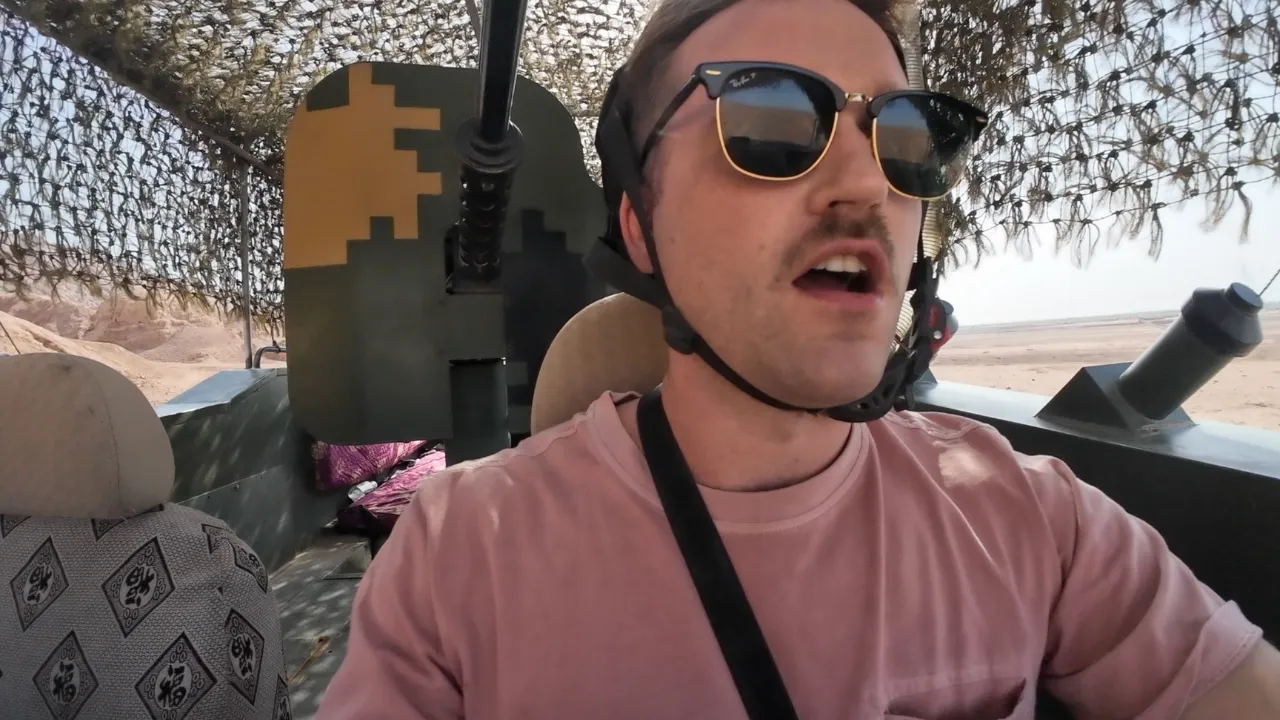
The desert tank ride with his friend Tommy is a major part of the trip. Small Brained American describes the speed and excitement of riding across the desert and sharing the experience with his friend. He also visits a local market and makes cultural observations during the journey. Some people he meets are kind and helpful, while at other moments he feels watched; these are contrasting impressions from his own visit.
The itinerary moves from the arrival and SIM-card problem to the train station, hotel, desert ride and market. He reflects on the landscape and the challenges of navigating unfamiliar systems. The video presents his experience through these specific encounters rather than treating them as representative of everyone in Xinjiang. He also faces an encounter with overzealous security during the trip and describes how language barriers complicate ordinary tasks. The SIM-card process requires translation and notarization, while booking a train ticket without knowing the language takes persistence. After the hotel stop, the tank excursion with Tommy changes the pace of the journey. The local market and cultural observations provide a final view of the places and people he encounters.
FAQs (From the traveler's perspective)
- Q: What was the main challenge in Xinjiang?
- A: Obtaining a SIM card was difficult and involved translation and paperwork. The traveler also had to communicate with drivers and arrange a train ticket despite limited Chinese.
- Q: What part of the trip stood out most?
- A: The tank ride through the desert with his friend Tommy was a highlight. He describes the speed and excitement of the ride and the experience of sharing it with his friend.
- Q: What did he notice about the people he met?
- A: He describes several people as kind and helpful, including a taxi driver who went out of his way to assist. At other moments he felt watched, so his account includes mixed impressions.
- Q: What else did the video show in Xinjiang?
- A: The journey includes a train station, a natural gas station, a five-star hotel and a local market. He also comments on modern architecture and the skylines he encounters.
