
Travel Guides & Tips in this video
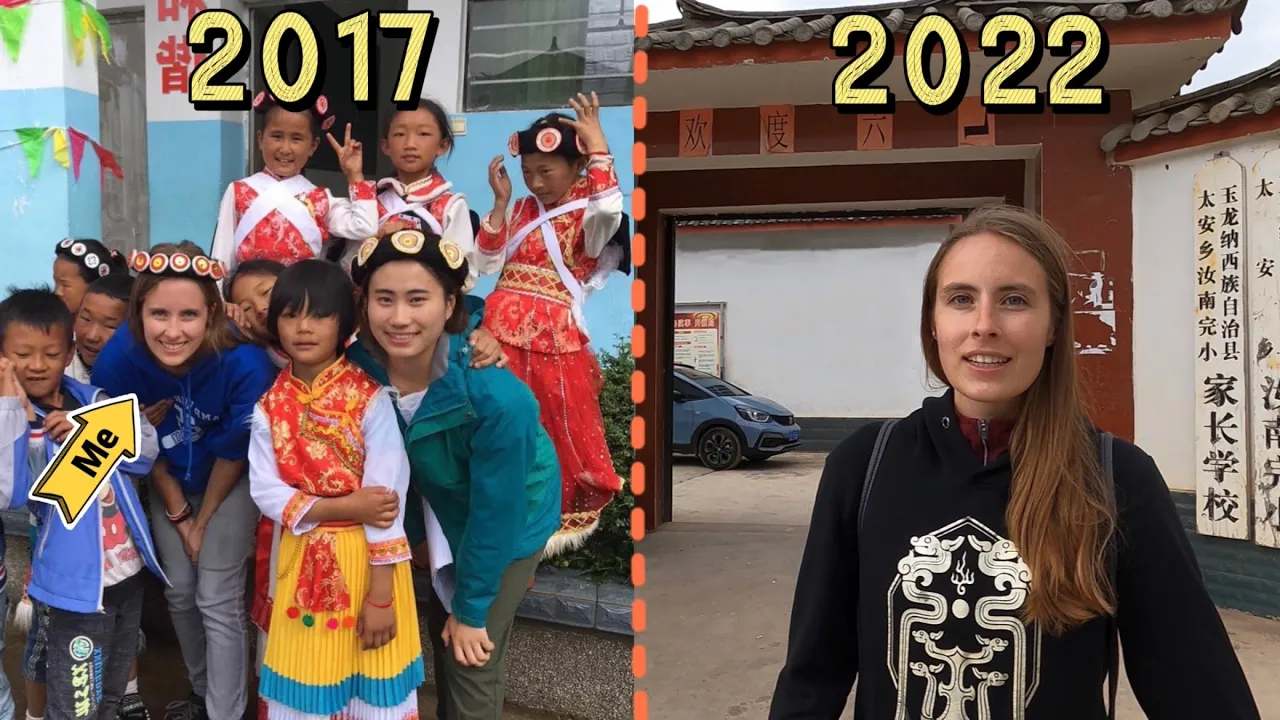
Katherine revisits a mountain village in northwest Yunnan five years after teaching at a summer camp there for three weeks in 2017. She compares the village she remembers with the place she finds on her return, noting paved roads, a town square and a new grocery store. She visits the school where she taught environmental science and recalls using games and outdoor activities with students. During walks and home visits, she reconnects with residents, observes potato planting and learns about homemade fertilizer made from pine needles and livestock manure. The visit also includes a small blue pond and reflections on how village life and opportunities are changing.
Next travel video:

More about the current video:()

Returning to the village and school
Katherine returns to a small village in northwest Yunnan five years after spending three weeks there in 2017 as a summer camp teacher. She notices both familiar features and changes. The paved roads and town square are new compared with the dirt roads and small convenience store she remembers. A new grocery store has also opened. These details let her compare the village's development over time without losing sight of the place she knew.
She visits the school where she taught environmental science. Katherine remembers making lessons interactive with games and outdoor activities, and focusing on making learning fun for the children. She also recalls getting food poisoning in the school kitchen, a less pleasant part of the earlier visit. As she walks around the village, she interacts with residents and observes daily routines. The villagers show hospitality, sharing food and eggs, while communication can be difficult with people who do not speak Mandarin.
Daily life, farming and reflection
Katherine revisits places connected with the home visitation program, when teachers visited students' homes. She observes potato planting and sees homemade organic fertilizer made from pine needles and livestock manure. A protective goose appears during the visit. She also points out a small blue pond, a local tourist attraction, and comments on architectural details around the village. These observations offer a view of local livelihoods and the natural environment.
The return visit prompts Katherine to reflect on the simplicity of village life and the opportunities available to younger generations. She notes that some young people may prefer to move to urban areas. Despite the changes and differences from her previous stay, she is grateful for the opportunity to have been part of village life, even for a short time. Her video combines memories of teaching with conversations and observations from her return. The new infrastructure sits alongside familiar customs, farming and hospitality, giving her a chance to think about what has changed and what remains meaningful to her.
FAQs (From the traveler's perspective)
- Q: What was the biggest change you noticed in the village?
- A: The new paved roads and town square stood out. Katherine says they were not there five years earlier, and she also sees a new grocery store.
- Q: What was your favorite memory from teaching there?
- A: Katherine remembers the children and teaching environmental science through games and outdoor activities. She enjoyed making the lessons fun and interactive.
- Q: What was the hardest part of your teaching experience?
- A: Communicating across a language barrier could be difficult, especially with older residents who did not speak Mandarin. Katherine says it was challenging to understand and communicate with them during her time in the village.
- Q: What advice would you give travelers visiting rural China?
- A: Be open-minded and respectful, and try to learn a few basic Mandarin phrases. Katherine's visit shows how conversations and local customs can enrich a trip.
