
Travel Guides & Tips in this video
Lewis Crampton's visit to Kashgar, China, centers on the city's Sunday livestock market and the street food around it. The market is crowded with animals, people and vehicles, and he describes its atmosphere as a sharp contrast with the modern cities he has seen elsewhere in China. During the visit, he samples kebabs and melon and pays with a QR code, even in this remote part of Xinjiang. He also talks about local language, customs and architecture, including a language he says has similarities to Turkish and the use of chopsticks alongside Central Asian food influences. Kashgar's place on the ancient Silk Road is part of the setting. Lewis calls the day one of his favorite experiences in China so far and looks forward to exploring more of the city.
Next travel video:

More about the current video:()

Kashgar's Sunday livestock market
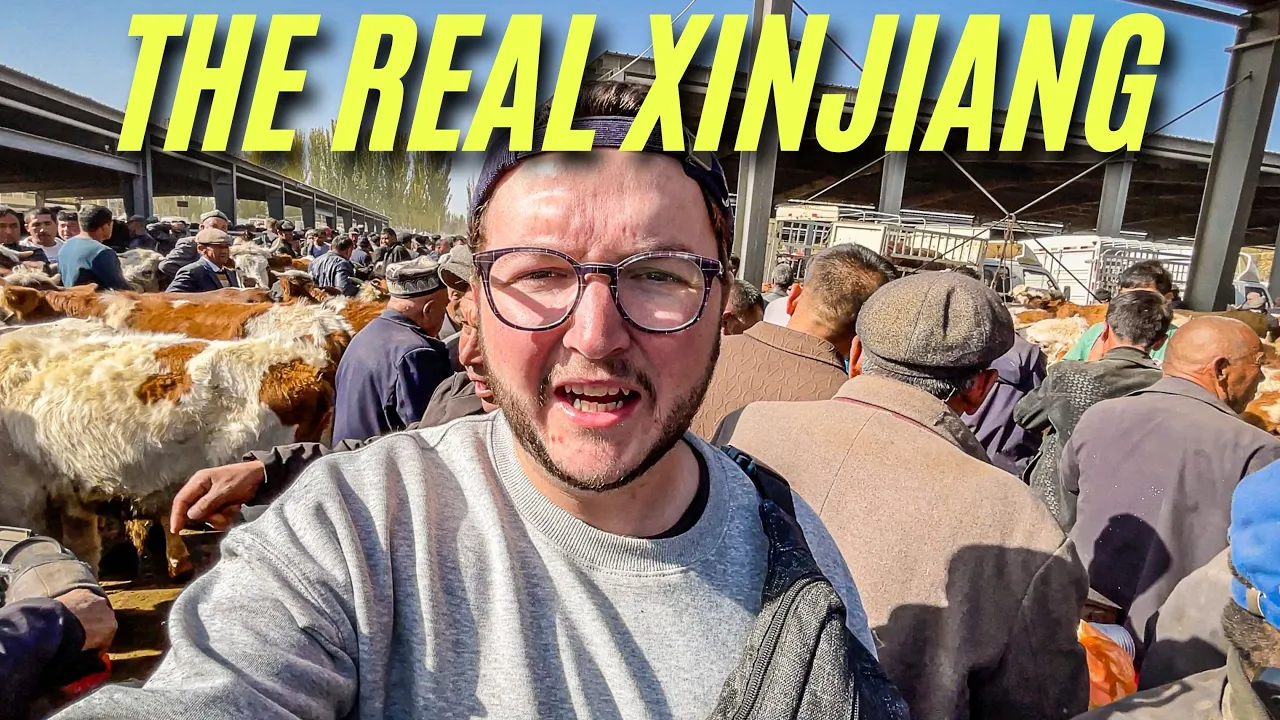
Lewis Crampton's visit to Kashgar, in China's Xinjiang region, begins at the Sunday livestock market. Animals, people and vehicles share the busy market, creating an atmosphere he describes as chaotic and very different from the modern cities often shown in China. He calls Kashgar old-school, and the video presents the market as a place where longstanding local traditions remain visible. The city lies on the ancient Silk Road and has a history spanning more than 2,000 years.
The market is part of Lewis's experience of Kashgar rather than a separate attraction viewed from a distance. He moves through the crowds and takes in the mix of local people, livestock and everyday activity. This is the contrast that stands out to him: a city with deep history and a market that feels distinct from the pristine, modern places he has encountered elsewhere in China. His comments focus on what he sees during the visit and on the energy of this particular day.
Street food and local customs
Lewis's day continues with food from Kashgar's street stalls. He tries a giant kebab and melon, and he notes that QR code payment is used even in this remote location. The video also mentions fast food melon sold by the slice and fresh produce arriving from Urumqi by overnight train. These details give a sense of the food and shopping he encounters on this visit. The market has hand-washing facilities, which the video points out as an example of attention to hygiene.
The food and customs reflect the cultural mix Lewis observes. He remarks that the local language has similarities to Turkish and notes the use of chopsticks despite Central Asian influences on the cuisine. He also comments on the buildings' distinctive style and the use of color around the city. Kashgar is home to Uyghur people, a distinctive ethnic group, and Lewis's visit introduces viewers to some of the local culture he encounters.
The video follows Lewis's own reactions throughout the day. He appreciates the market's authenticity and energy, and says this has been one of his favorite days in China so far. The crowded setting is different from places he found overwhelming elsewhere in China. His visit leaves him wanting to explore more of Kashgar, with the market, street food and local customs forming the main parts of the experience.
FAQs (From the traveler's perspective)
- Q: What is the Kashgar Sunday market like?
- A: Lewis finds a busy livestock market where animals, people and vehicles fill the scene. He describes its atmosphere as chaotic and different from the modern cities he has seen elsewhere in China.
- Q: What food does Lewis try in Kashgar?
- A: He samples a giant kebab and melon during his visit. The video also mentions fast food melon sold by the slice and fresh produce arriving from Urumqi by overnight train.
- Q: What cultural details does Lewis notice?
- A: He talks about Kashgar's Uyghur population, a local language with similarities to Turkish, chopsticks used with Central Asian food influences, and the city's distinctive architecture.
