
Travel Guides & Tips in this video
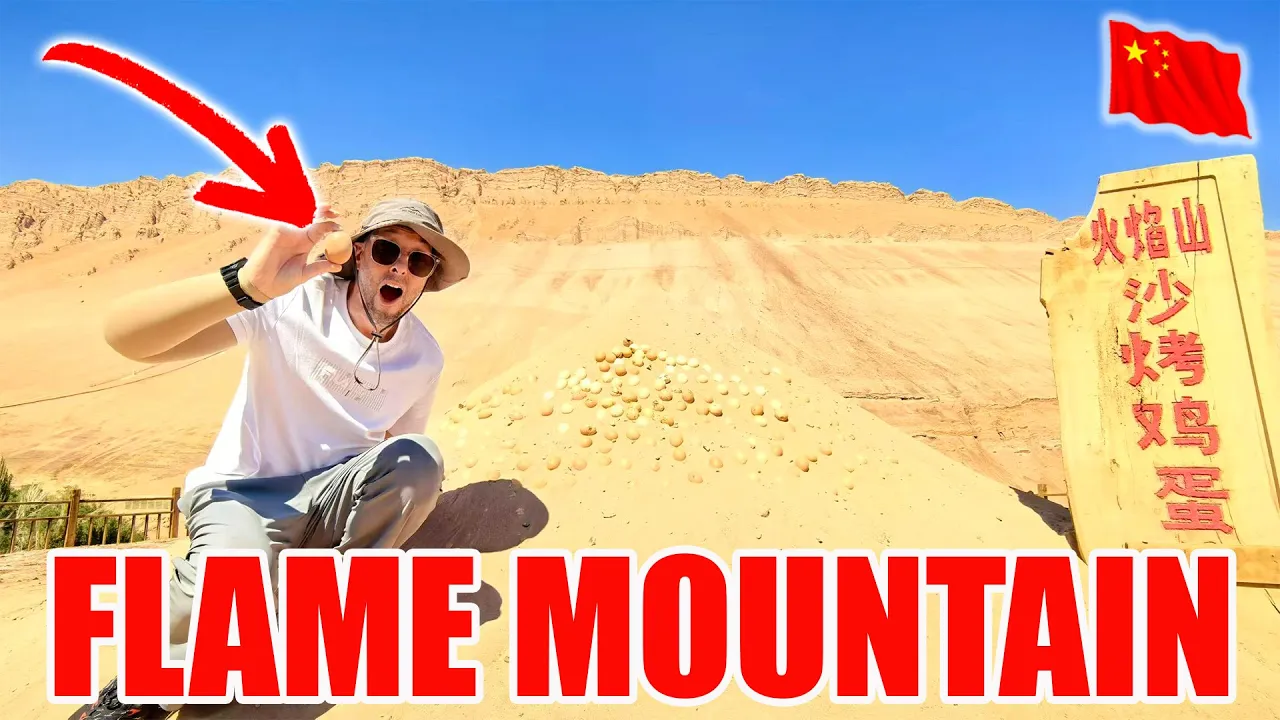
Barrett explores Turpan in Xinjiang, visiting Flame Mountain, the Xinjiang Desert Folk Art Museum and Water Curtain Cave. He tries cooking eggs in the hot sand and sees how the dry landscape contrasts with vineyards and mud-built architecture. A family barbecue brings lamb skewers, nang bread and beer, while a visit to a countryside hotel includes melon fields and a nearby river. Barrett mentions 80°C heat and Wusu beer at sunset, alongside sandstone structures, local food and farming traditions such as grape drying.
Next travel video:

More about the current video:()

Flame Mountain and the desert landscape
Barrett visits Turpan, described in the source as one of China’s hottest places. At Flame Mountain, he tries cooking eggs in the hot sand, a quirky experiment that shows how much heat the ground can hold. The surrounding landscape includes desert, wind turbines, vineyards and mud-built architecture. Barrett notices the contrast between dry valleys and cultivated areas where grapes grow.
He also visits the Xinjiang Desert Folk Art Museum, with sandstone structures that reflect local history and design. Water Curtain Cave offers a different scene, with greenery set among arid sandstone valleys. A river near the countryside hotel brings another contrast to the dry surroundings.
Food and local encounters
Local hospitality is part of the journey. Barrett visits a family barbecue and tries Xinjiang lamb skewers and nang bread. He also samples grapes and talks about the region’s grape-drying methods in Turpan’s vineyards. The meal and vineyard stop offer a view of local food and agricultural practices.
The visit includes modern technology too: Barrett sees vehicle testing connected with Flame Mountain. The video places these developments alongside traditional sandstone buildings and farming. His route gives the day several different layers, from cooking eggs in the sand to visiting the museum and eating with a family.
A day around Turpan
Barrett’s route combines natural features, local food and cultural sites. Visitors can explore Flame Mountain and the Xinjiang Desert Folk Art Museum, then visit Water Curtain Cave for a greener landscape. The barbecue offers lamb skewers and nang bread, and local grape-drying methods show how people use the region’s climate.
The countryside hotel overlooks melon fields and grazing sheep, giving Barrett a base near the vineyards and river. The experience emphasizes how different environments—desert, oasis, farmland and sandstone valleys—sit close together in Turpan. His trip shares a personal look at the area rather than a general itinerary or guarantee about conditions at other times.
FAQs (From the traveler's perspective)
- Q: What can visitors do at Flame Mountain?
- A: Barrett tries cooking eggs in the hot sand and observes the mountain’s desert landscape and nearby vehicle testing.
- Q: What local food did Barrett try?
- A: He sampled Xinjiang lamb skewers and nang bread at a family barbecue, and also tasted grapes.
- Q: What are some other places in the video?
- A: The route includes the Xinjiang Desert Folk Art Museum, Water Curtain Cave and vineyards in Turpan.
