This video, "Lost ANCIENT TOWN hidden deep in rural Chongqing, China," follows Honglin Li's journey to Ningchang Ancient Town, a historical settlement nestled in the mountains of Wuxi County, Chongqing. The town boasts a rich history of salt production spanning over 4,000 years, once a thriving center of commerce and culture.
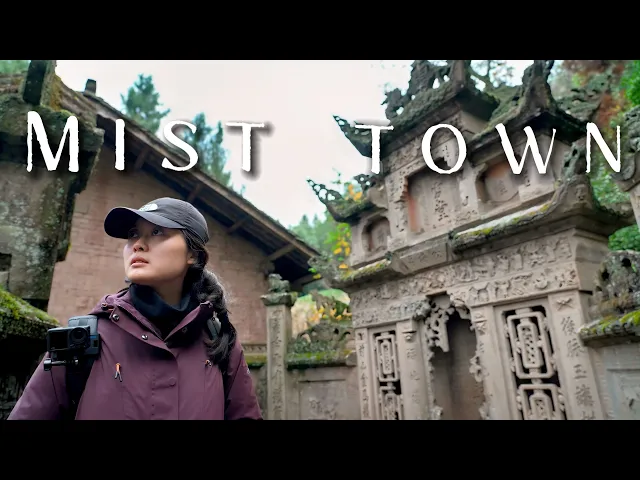
Honglin Li details the town's unique geography, characterized by its precarious location on steep cliffs alongside the Houxi River, a tributary of the Yangtze. The video showcases the ancient iron cable bridge, the only access point for vehicles, and highlights the town's narrow, north-south layout. The traveler describes the town's weathered, dilapidated buildings, made of wood and stone, creating an atmosphere of both antiquity and desolation.
The video delves into the history of salt production, explaining the natural salt spring that served as the foundation of Ningchang's economy for millennia. The town's strategic location and the natural salt spring fostered a unique culture, once supporting tens of thousands of people. The traveler explores the remnants of the salt production plants, showcasing old photos and rusted tools, painting a vivid picture of the town's past prosperity.
However, the video also highlights the town's decline, starting in the 1990s due to decreased salt production and improved industrial techniques. The exodus of residents left behind decaying buildings and a sense of abandonment. Despite the decline, the local government is working to preserve the town, providing subsidies for renovations and allowing the remaining few hundred residents, mostly elderly, to continue living there.
The video also explores the Dragon King Temple, built to protect the salt spring and showcase the religious significance of salt in ancient China. The traveler's journey through the town reveals ancient stairs, a temple, and a sense of a forgotten community, offering a poignant reflection on the passage of time and the changing fortunes of a place steeped in history. Honglin Li's personal experience adds a layer of emotional depth to the historical narrative, leaving viewers with a lasting impression of this unique and captivating destination.
The exploration of Ningchang Ancient Town is not merely a historical journey; it's a poignant reflection on the interplay of nature, human endeavor, and the relentless march of time. The video successfully captures the beauty and melancholy of a place struggling to maintain its identity in the face of change.
FAQs (From the traveler's perspective)
- Q: How long has salt been produced in Ningchang Ancient Town?
- A: Over 4,000 years!
- Q: Why did so many people leave Ningchang Ancient Town?
- A: Because salt production decreased and people moved to other places for work.
- Q: What is the condition of the buildings in the town?
- A: Many are dilapidated and some are even considered dangerous buildings.
- Q: What is the government doing to help the remaining residents?
- A: They are giving subsidies to help renovate houses.
- Q: What is unique about the salt spring?
- A: It's a natural source and was the reason the town was built. It flows from cracks in the stones above.