
Travel Guides & Tips in this video
Blondie In China visits Jingzhou in Liaoning province, asking local people where to eat and what to see. She buys seafood at a coastal market and watches it being prepared, then climbs Bijia Mountain and crosses a temporary sand bridge that appears at low tide. The vlog centers on a barbecue tasting tour, with lamb skewers, chicken feet and garlic chili sauce among the dishes she tries. She also visits the Gai Guai night market and Shicha morning market, described in the source as Asia’s longest. The trip combines local food, coastal scenery and market visits.
Next travel video:

More about the current video:()

Seafood by the coast and the sand bridge
Blondie In China visits Jingzhou in Liaoning province and asks local people where to go. The trip starts at a coastal seafood market, where she chooses fresh prawns, shellfish and crab. Local vendors steam and prepare the seafood, and the video follows the process from selecting the ingredients to eating them. Blondie discusses oyster size, noting that some people in Australia believe larger oysters taste less good, while saying that view may not hold true in China. She suggests comparing sizes and trying smaller oysters. The source also advises against eating raw prawns in China because they may cause diarrhea, and encourages travelers to follow local food-safety guidance.
She then visits Bijia Mountain, a mountain in the ocean. At low tide, a temporary sand bridge, also called a heavenly bridge, connects the shore and the mountain. Blondie crosses it and climbs toward the summit over hot, slippery rocks. The tide determines whether the bridge is exposed, so visitors who want to walk across should check the timing first. She describes the climb as challenging but worthwhile for the views and the experience of reaching a mountain surrounded by water.
Barbecue restaurants and markets
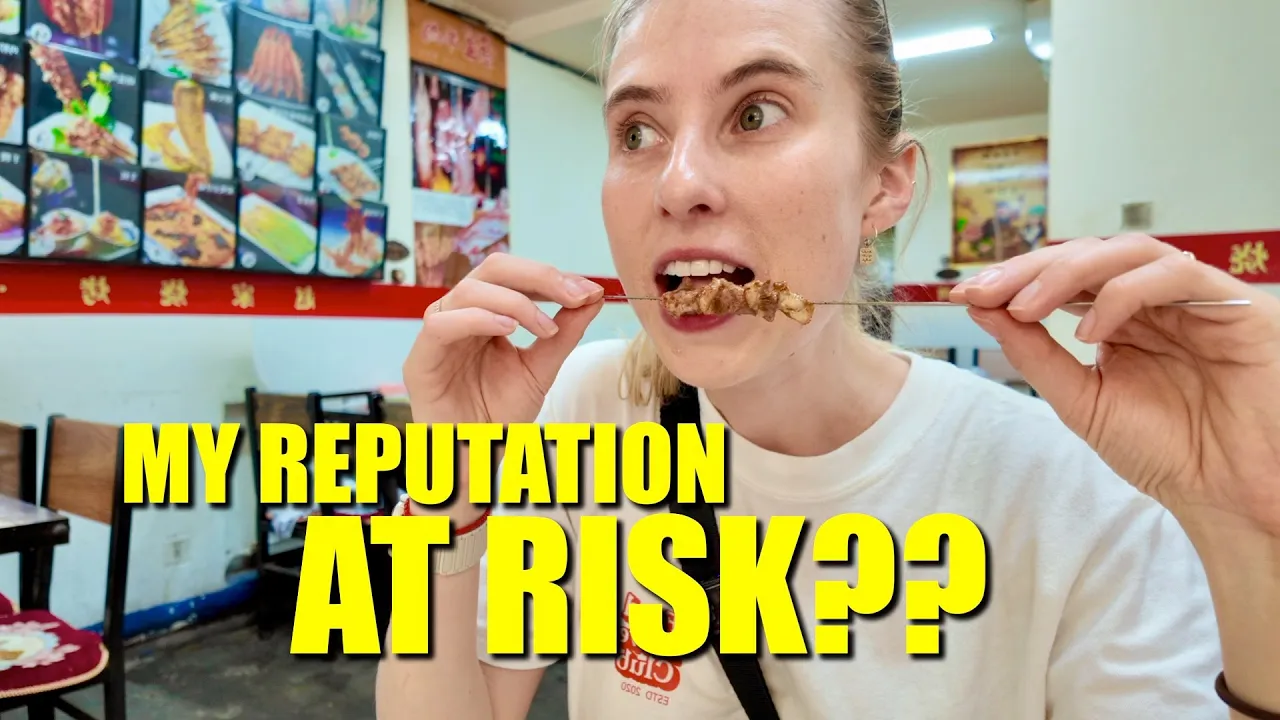
The main food focus is Jingzhou barbecue. Blondie follows local recommendations and samples dishes at different restaurants during the day so she can compare the city's barbecue rather than judge from a single meal. She tries tender lamb skewers and barbecue chicken feet, talks through their flavors and textures, and singles out a large lamb skewer from the second restaurant. A distinctive garlic chili sauce adds another flavor to the tasting. She interacts with vendors and remains open to trying dishes that are unfamiliar to her.
Later she explores the Gai Guai night market and the Shicha morning market, which the source describes as Asia's longest. Walking through the stalls gives her a look at the range of food and goods and the market's role in daily life. The route links seafood by the coast, the low-tide walk to Bijia Mountain, several barbecue stops and markets at different times of day. Blondie recommends trying several restaurants and considering other regional barbecue destinations, including Lanzhou, Sishihara and Ebin, each described in the source as having distinct styles and flavors.
The video presents the town through its food and coastal setting: vendors preparing seafood, a bridge that appears as the tide falls, and a long barbecue tasting. It also preserves the practical details that shape the visit, from seafood choices and food safety to the heat and slippery surfaces on the mountain. The source uses the name Jingzhou, while its old description also says Jinzhou; both spellings appear in the source material.
FAQs (From the traveler's perspective)
- Q: What's the best way to experience Jingzhou's BBQ?
- A: Blondie suggests trying different restaurants throughout the day to get a good feel for the barbecue. She compares the tasting to a sport and says the meal can keep going once you are in the mood for meat.
- Q: What was the most unique thing you saw in Jingzhou?
- A: The sand bridge to Bijia Mountain stood out. It appears at low tide and Blondie enjoyed walking across it.
- Q: What's your favorite type of BBQ in Jingzhou?
- A: Blondie liked the lamb skewers and chicken feet. She especially enjoyed the large lamb skewer from the second restaurant.
