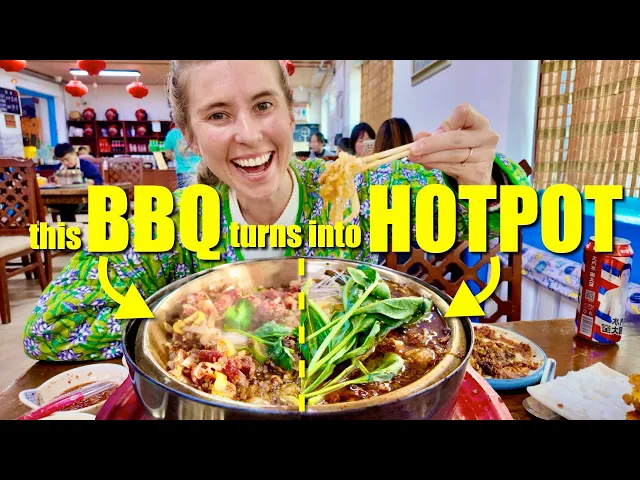
This video follows Blondie In China's exploration of Dali, Yunnan, focusing on a less-traveled route that offers authentic local experiences. Blondie starts her journey in a charming coffee shop by Erhai Lake, setting a peaceful tone before venturing into Weishan, a town boasting over a thousand years of history. Unlike the more tourist-oriented areas, Weishan offers a genuine glimpse into local life, with its unique grid-like street design and local shops catering primarily to residents.
Blondie's culinary adventure begins with a hearty breakfast of Ersi, a type of noodle unique to the region, at a local restaurant identified by its 'Lao' (old) prefix, a tip she learned from a local. She savors the glutinous texture and unique flavors of the Guojiang Ersi, a dish made even more special by its preparation, involving a 15-hour stew and a dramatic 'crossing the river' element of adding a flavorful sauce. The accompanying pickles, another Weishan specialty, add a delightful crunch and zing to the dish.
The exploration continues with a visit to a tea house, reminiscent of Chengdu's tea culture, where Blondie enjoys a comforting cup of roasted tea with toasted rice. She notes the striking architectural differences between Weishan and other towns in the Dali region, explaining the significance of Weishan's full name, which indicates a predominantly Yi and Hui ethnic minority population, unlike the Bai minority prevalent in other parts of Dali.
Blondie then visits a friend's friend, Yatou, who runs a horse farm in Heron Valley, Canglu Gu. This segment offers a refreshing change of pace, showcasing the tranquility of life outside the bustling city. Blondie learns to ride a horse, highlighting the connection with nature and a slower pace of life that contrasts sharply with the fast-paced life in Beijing, where Yatou previously lived.
The video's focus then shifts back to the unique fishing culture of the Bai ethnic minority, with Blondie witnessing the centuries-old tradition of cormorant fishing. She learns about the symbiotic relationship between the fishermen and the cormorants, highlighting the fascinating details of this practice and its current limitations to protect the fish population in Erhai Lake.
The food adventure culminates in a delightful dinner at a local restaurant, where Blondie samples more variations of Ersi, including clay pot Ersi and stinky tofu, showcasing the diverse culinary landscape of Weishan. The video ends with Blondie expressing her appreciation for the unique and authentic experiences she encountered, emphasizing the importance of seeking out hidden gems beyond the typical tourist hotspots.
FAQs (From the traveler's perspective)
- Q: What's the best way to find authentic restaurants in Weishan?
- A: Look for restaurants with 'Lao' (old) in their name; it means they're long-standing and reputable!
- Q: What's special about the Guojiang Ersi noodles?
- A: It's a labor of love! The noodles are steamed, pounded, and then get this amazing sauce added after a 15-hour stew. It's a real flavor explosion!
- Q: How do the cormorants know when to bring back the fish?
- A: The fisherman makes a special noise to signal them, and they only bring back the biggest fish because they can't swallow them whole and get a smaller fish as a reward!
- Q: What's the deal with the Baojiangdoufu?
- A: It's a special tofu that sings when it's ready! When it starts to make a whining sound, it's perfectly cooked and super soft inside.
- Q: What's the best way to eat the clay pot Ersi?
- A: Mix everything together – the lean meat, crispy bits, soft skin, noodles, and pickles – for the best flavor and texture experience!