On a crisp morning in Linxi, Itchy Boots sets out with riding companions Bing and Xiao Yue for Arxan, a tiny town in Inner Mongolia that defies expectations. Today's route pushes far north, skirting the Mongolian border, with more than 300 kilometers of muddy roads and mountain climbs ahead. Bing's eye is finally better, so after navigating city traffic, Xiao Yue takes over riding, looking badass on the heavy bike. It is the kind of daily teamwork that defines long-distance motorcycle travel.
Before leaving the grasslands, Itchy Boots checks Frankie's oil, a familiar ritual on her nearly 40-year-old Yamaha. The engine has been good since a piston replacement, but old bikes need attention. She tops up a tiny bit and laughs at how hard it is to read the oil level without a glass window. Then the pollen arrives — a swirling storm that makes her feel like she is inside Avatar. She battles hay fever, but the scenery softens the discomfort: wildflower fields, young horses on the road, and empty landscapes rolling toward the border.
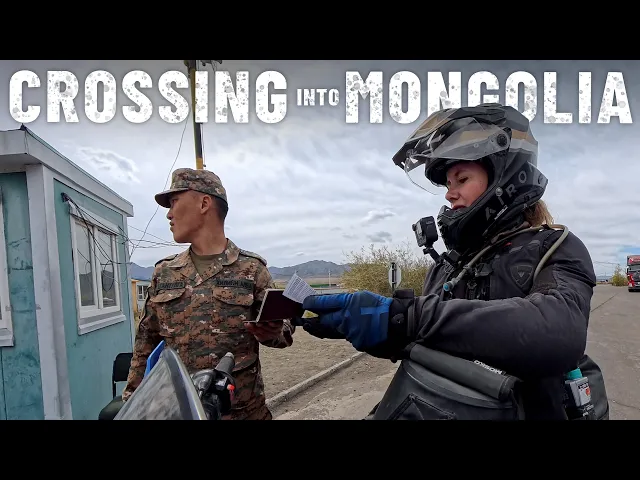
Lunch is a local truck stop where entire truck engines are hoisted out and a guard kitten watches over things. Itchy Boots and her companions eat chicken balls, rice and dishes she cannot identify. A sudden rain shower passes, and then comes a lesson in Chinese digital payments: only WeChat works, not Alipay, so Bing has to help pay. Soon after, the real adventure begins. Near Mongolia, police stop her at a checkpoint. With a phone call to Bing, the border police register her passport. More checkpoints follow, including a military stop where she is asked to remove her helmet. It feels tense but routine.
Arriving in Arxan is like entering another world. The town has no high-rise apartment blocks; instead, small houses sit beside a river under forested mountains. The architecture is an improbable mix of Japanese, Russian/Siberian and European influences. Itchy Boots explains how Japan occupied northeastern China in the 1930s and called it Manchuria, turning Arxan into a strategic base. The railway station, built in 1937 and still active, is said to be the smallest in China. With less than 3,000 residents, the town feels like an alpine Disneyland.
The final surprise is a handcrafted shop with jade floors and stairs, jewellery made from gemstones, and massive mammoth tusks imported from Siberia. She counts at least eight tusks in complete sets; one is priced at nearly two million yuan. A cat wearing a university T-shirt adds a touch of whimsy. As the weather turns, she ends the video, then shares one more local experience: roasted bread, sugar, and mushroom tea made from tree fungus. Locals call it good for the stomach, and a medicinal mushroom is said to grant longevity. It is a fitting end to a day full of strange, beautiful discoveries.
FAQs (From the traveler's perspective)
- Q: What was it like riding through the border checkpoints near Mongolia?
- A: I got stopped a few times. At one military checkpoint they asked me to take off my helmet and register my passport. Bing helped by phone, and once the paperwork was done I could keep going.
- Q: What makes Arxan look so different from the rest of China?
- A: There are no high-rise apartment blocks, just small houses beside a river in the mountains. The architecture mixes Japanese, Russian and European styles because of the Japanese occupation and Soviet presence during World War II.
- Q: What was the most surprising thing you saw in Arxan?
- A: The shop with jade floors and mammoth tusks. They had several complete sets imported from Siberia, and one pair was priced at nearly two million yuan. I still wonder if it was all real.
- Q: What did you think of the local mushroom tea?
- A: We made tea from a mushroom that grows on trees, and it looked like wood. Locals said it was good for the stomach; another medical mushroom was said to give you longevity. I had never seen anything like it.