
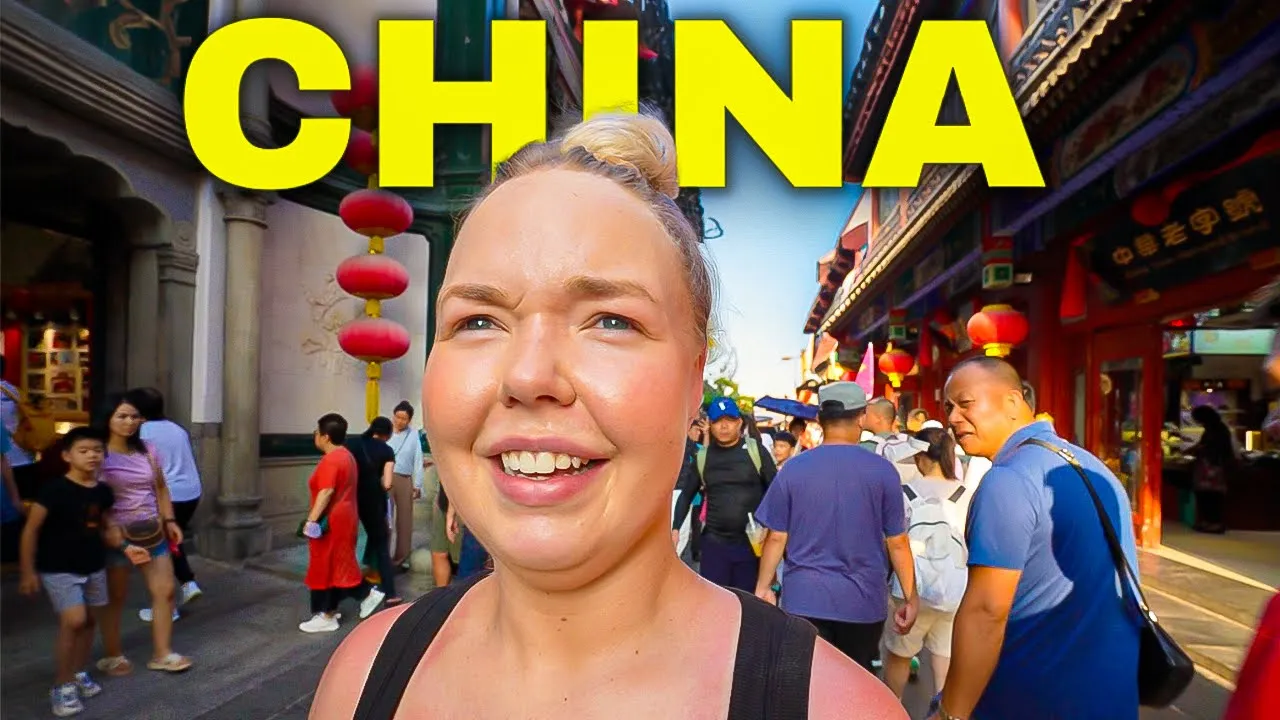
Travel Guides & Tips in this video
Josie's two-week journey begins in Shanghai, continues by high-speed train to Beijing, then reaches Hong Kong and Macau. She navigates local transport and language barriers, tries breakfast pancakes, scallion noodles, street food and dim sum, and visits the Temple of Heaven, Tiananmen Square, the Great Wall and St Paul's ruins. Unexpected closures change some Beijing plans, while helpful locals shape her impressions. Her route includes practical decisions: she exchanges currency for small transactions, uses Apple Maps to navigate public transport and books rail travel ahead. The language barrier makes ordinary tasks harder, but she finds locals willing to help. In Hong Kong, an Octopus card helps with transport and purchases, while Macau's historic streets and St Paul's ruins give the final stop a different atmosphere. The two-week journey moves from Shanghai through Beijing's historic landmarks and onward to the distinct settings of Hong Kong and Macau.
Next travel video:

More about the current video:()

Shanghai to Beijing by rail
Josie Lifts Things documents a two-week trip across China, beginning in Shanghai. She arrives with some nervousness about navigating a country where fewer people speak English than in places she has visited before. The Shanghai days include a breakfast pancake, scallion noodles, street food, People's Park, a roller coaster and a fake market where she bargains for souvenirs. She recommends exchanging currency at the airport for smaller transactions and using Apple Maps to find public transport routes.
The high-speed railway journey to Beijing is a major part of the trip. Josie describes the train as fast and efficient and advises booking ahead to secure preferred seats. She also suggests allowing time before travel in case of delays. In Beijing, she attempts to visit the Temple of Heaven and Tiananmen Square, but both are unexpectedly closed on the day she arrives. She explores a traditional street instead, tries local delicacies and later visits the Great Wall, a memorable stop after the disruption. She considers dressing modestly at culturally significant sites, though she notes this is not strictly enforced.
Hong Kong and Macau
The final part of the route takes Josie to Hong Kong, where she has a local breakfast, visits markets and eats dim sum. The city offers a mix of cultures and a busy atmosphere. She uses an Octopus card for contactless payments on transport and in many shops. Macau feels quieter and more European by comparison. Josie visits historic sites including the ruins of St Paul's and continues sampling local food.
Throughout the trip, she finds people willing to help despite the language barrier, and these encounters change her expectations. The route covers Shanghai, the rail trip to Beijing, attempts to visit major sites, the Great Wall and onward travel to Hong Kong and Macau. Her advice includes using maps, booking rail tickets ahead and remaining open to changes in plans.
FAQs (From the traveler's perspective)
- Q: What was hardest about traveling in China?
- A: Josie says the language barrier was the hardest part. She found that less English was spoken than in other countries she had visited, which made ordering food and getting around more challenging.
- Q: What food did Josie enjoy?
- A: Josie names the Shanghai breakfast pancake, scallion noodles and street-food skewers among her favorite foods. She also enjoyed Hong Kong food, especially the dim sum she tried while visiting the city.
- Q: What surprised her about China?
- A: The friendliness and helpfulness of the people surprised Josie most. She expected more hostility, but says people were willing to help even when she struggled with the language barrier.
- Q: What was a memorable stop?
- A: Josie describes visiting the Great Wall as memorable after travel challenges and unexpected closures affected her plans in Beijing.
- Q: What advice does she give travelers?
- A: Josie advises downloading Apple Maps for public transport, booking high-speed train tickets well ahead and preparing for language barriers. She also encourages travelers to stay open to unexpected changes and help from people they meet.
