
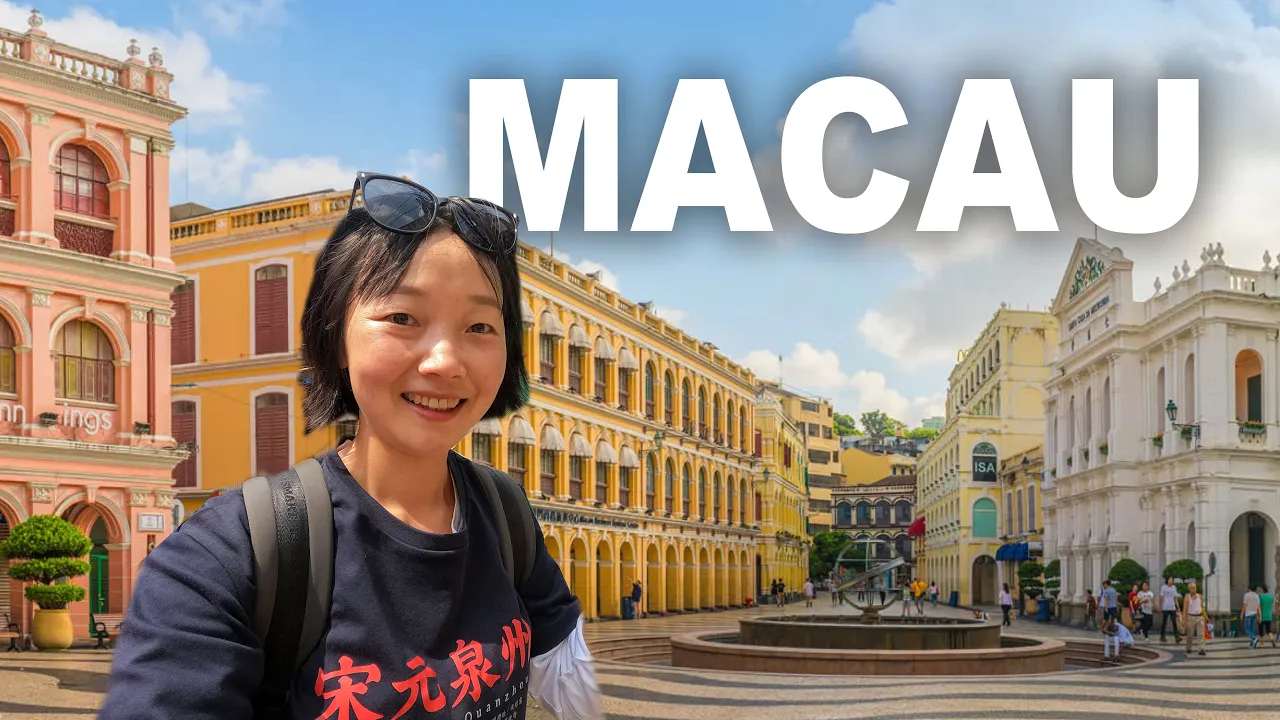
Travel Guides & Tips in this video
Little Chinese Everywhere and Flo take a TurboJet from Hong Kong to Macau, where they explore the compact city and its mix of Portuguese and Cantonese influences. They walk through narrow streets, visit local eateries and try Portuguese tarts and Cantonese dishes. The route includes churches and temples, a visit to the Venetian Macao, and Hac Sa Beach with its black sand. The source also describes travel permits for mainland Chinese visitors, buses and three metro lines, and the role of gambling in Macau's economy and local life.
Next travel video:

More about the current video:()
From Hong Kong to Macau
Little Chinese Everywhere and Flo begin their trip in Hong Kong and travel to Macau by TurboJet. Macau is a Special Administrative Region of China, and the journey introduces the different travel rules for mainland Chinese residents visiting Hong Kong and Macau, including special permits and limits on the duration of a stay. Once there, the travelers explore the city's dense, compact layout. Narrow streets and an abundance of scooters shape the journey on foot. They compare Macau's size with three Pudong airports or half of Manhattan to convey how close together its neighborhoods are.
The architecture reflects Portuguese and Chinese influences. European-style buildings stand alongside traditional Chinese shops and temples, and the road signs are written in both Chinese and Portuguese. The travelers stop at several local eateries and sample Portuguese tarts, Cantonese dishes and a Macau-style egg tart. They interact with vendors and hear about local culinary traditions, grounding the food stops in conversations as well as the meals themselves. The food route gives them a way to encounter the city's different cultural influences through dishes and the people who prepare and sell them.
Religious life, casinos and the coast
Churches and temples show another layer of Macau's history and culture. At temples, the travelers observe incense burning, and they notice small shrines inside shops. These religious practices appear as part of everyday life across the city. The route also includes the Venetian Macao, which the video describes as one of the world's largest casinos. Its scale and luxury contrast with the traditional streets and local businesses; the travelers find the casino experience somewhat detached from daily life elsewhere in Macau.
The visit touches on the city's gambling history. Gambling was legalized in 1847 to increase revenue after Macau's role as a trading port declined. The account notes that the industry provides jobs, while local people have mixed feelings about it. This history sits alongside the travelers' observations of the city's contemporary attractions and its Portuguese and Cantonese cultural mix.
The trip takes the pair through the peninsula and Taipa before ending at Hac Sa Beach. Its black sand and quieter setting contrast with the dense streets and casino district. Little Chinese Everywhere and Flo reflect on the mix of cultural influences, food, religious sites and modern development they saw during the visit. Their route moves from the TurboJet crossing and narrow urban streets to local eateries, churches and temples, the Venetian and finally the coast, showing several sides of Macau in one trip.
FAQs (From the traveler's perspective)
- Q: What travel permit does the source mention for mainland Chinese visitors?
- A: The source says mainland Chinese residents need a special permit to enter Macau, which can be obtained as an e-card and allows a stay of up to one week. It also says EU passport holders can stay visa-free for 90 days.
- Q: How do visitors get around Macau?
- A: The source describes buses and three metro lines serving the city. It says metro tickets are small coins.
- Q: What cultural influences appear in the video?
- A: The video describes Portuguese and Cantonese influences in Macau, including Portuguese-style buildings, Chinese shops and temples, and bilingual Chinese and Portuguese road signs.
- Q: Why was gambling legalized in Macau?
- A: The source says gambling was legalized in 1847 to increase revenue after Macau’s role as a trading port declined. It adds that the industry creates jobs and that local people have mixed feelings about it.
