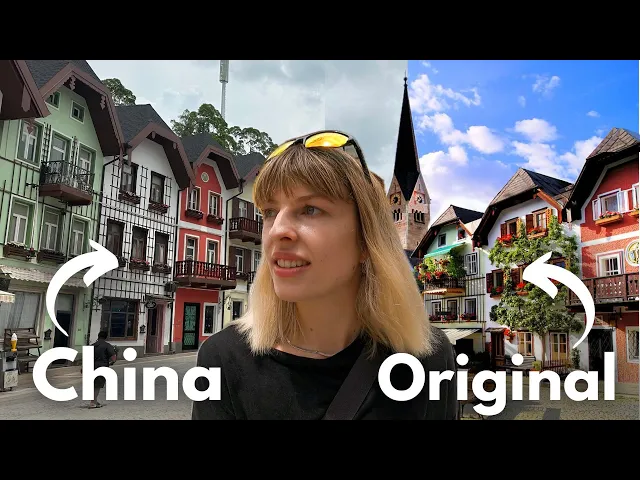
In 2012, a replica of Austria’s UNESCO World Heritage site Hallstatt was opened in China’s Guangdong Province. Built for nearly 1 billion US dollars, the town was developed by the country’s largest mining company, Minmetals Corporation.
While visiting nearby Shenzhen, I decided to check out this unusual copy of one of Austria’s most famous towns.
Cori Ander explores China's Hallstatt replica, a billion-dollar project. Discover the unique blend of authenticity and artificiality in this surprising destination.
Travel Guides & Tips in this video
Explore Cori Ander's captivating journey to China's astonishing replica of Hallstatt, a billion-dollar recreation of the Austrian town. This video offers a unique glimpse into the meticulous detail and surprising contrasts of this ambitious project, from its artificial lake to its unexpectedly quiet atmosphere. Discover the intriguing story behind its creation and uncover the blend of authenticity and artificiality that defines this one-of-a-kind destination.
Next travel video:
41 min
China's Hallstatt Replica: Guangdong's Billion-Dollar Town
In 2012, a replica of Austria’s UNESCO World Heritage site Hallstatt was opened in China’s Guangdong Province. Built for nearly 1 billion US dollars, the town was developed by the country’s largest mining company, Minmetals Corporation.
While visiting nearby Shenzhen, I decided to check out this...
China's Hallstatt Replica: Exploring Guangdong's Billion-Dollar Town
Explore China's fascinating Hallstatt replica in Guangdong Province! Built at a cost of nearly a billion dollars, this detailed copy of the Austrian town is a must-see. Discover the unique blend of European architecture and Chinese culture in this intriguing destination. A captivating journey awaits!
Attractions in this video: Hallstatt Replica, Glass Bridge, Wax Museum
More about the current video:(Published on 2025-06-26)
This video follows Cori Ander as she explores a remarkable replica of the Austrian town of Hallstatt, located in Guangdong Province, China. Built at a cost of nearly one billion US dollars by the Minmetals Corporation, this detailed copy features an artificial lake designed to mirror Hallstatt's lakeside setting. Cori's exploration reveals a fascinating blend of imitation and reality. While the architecture and landscaping strive for authenticity, subtle details betray the town's artificial nature. Fake flowers, non-functional shops, and even fake books populate the meticulously crafted streets. The church, though open to visitors, lacks religious iconography, suggesting its purpose is primarily aesthetic.
The video highlights the town's popularity as a wedding photography location, a testament to its visual appeal despite its artificiality. Cori notes the lack of crowds on her Saturday visit, contrasting with the town's purported status as a top tourist attraction. She observes empty upper floors in the buildings, suggesting underutilization of the space.
The exploration continues to a wax museum, offering a unique cultural perspective. Cori comments on the depiction of figures, noting the prevalence of blue-eyed, light-skinned figures, which may reflect a certain perception of Western tourists in China. The video concludes with Cori crossing a glass bridge, a common feature in Chinese tourist attractions, and reflecting on the overall success of this ambitious project, questioning whether it lives up to its billing as a major tourist destination. The experience showcases a unique blend of cultural exchange and commentary on the complexities of global tourism and imitation.