Original source
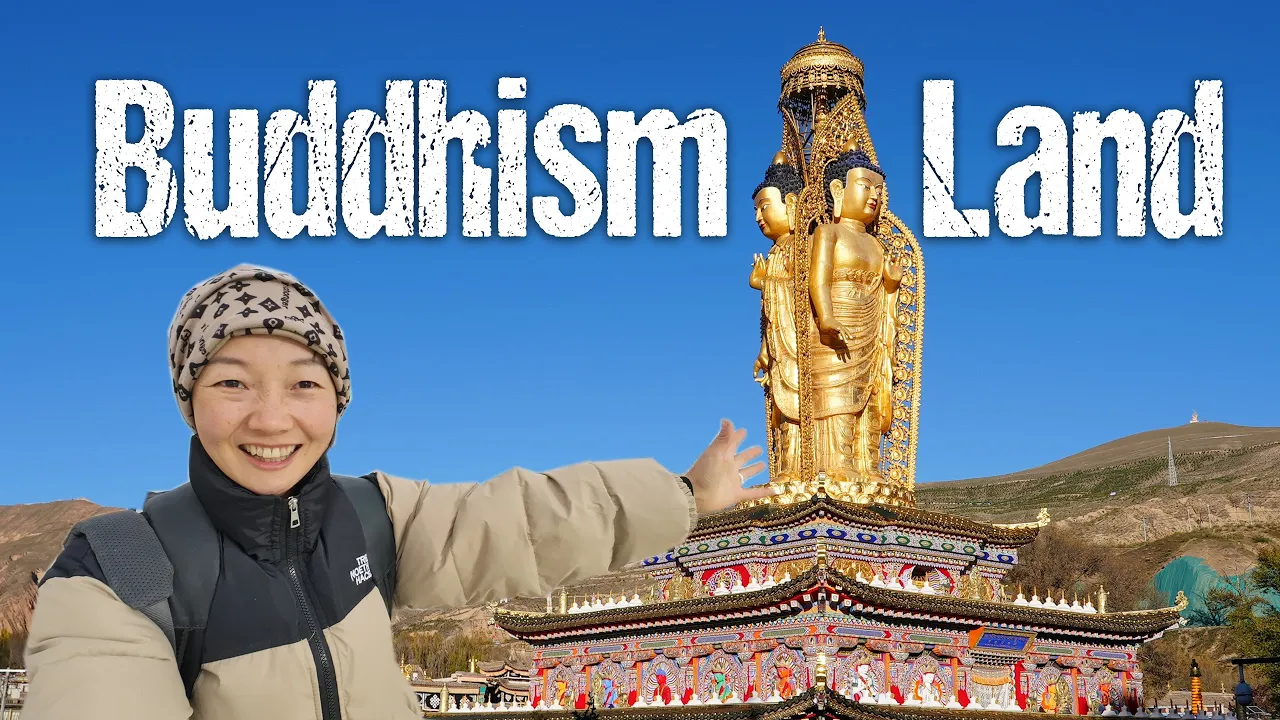
The HEART of Tibetan Buddhism in Qinghai Province, China 🇨🇳 I S2, EP107
Qinghai's Tibetan Buddhism: Delingha to Tongren
I am traveling further through Qinghai, firstly through Delingha, which is Mongolian for "Golden World" and describes the dry but golden landscape of this region. I am passing by one of China's larges solar power plants before entering the much greener Tongren Region past Qinghai's capital of...
I am traveling further through Qinghai, firstly through Delingha, which is Mongolian for "Golden World" and describes the dry but golden landscape of this region. I am passing by one of China's larges solar power plants before entering the much greener Tongren Region past Qinghai's capital of Xining.
Tongren is a meltpoint of especially Tibetans and Hui People and one can see the Buddhist as well as Islamic elements everywhere. I discover the secrets of Thanka Artists which are only present in this region of China.
Join me on an adventure through Qinghai's most diverse place
Little Chinese Everywhere embarks on a captivating journey through Qinghai Province, China, exploring the heart of Tibetan Buddhism. The adventure begins in Delingha, a city aptly named "Golden World" for its striking landscape, and continues through a vast solar power plant. The journey then leads to the vibrant Tongren region, a melting pot of Tibetan and Hui cultures, where Buddhist and Islamic influences intertwine. A highlight is the discovery of Thanka artists, unique to this area, showcasing their incredible skill. The exploration culminates in the charming Long Wu Old Town, completing a diverse and culturally rich experience in Qinghai.
I am traveling further through Qinghai, firstly through Delingha, which is Mongolian for "Golden World" and describes the dry but golden landscape of this region. I am passing by one of China's larges solar power plants before entering the much greener Tongren Region past Qinghai's capital of Xining.
Tongren is a meltpoint of especially Tibetans and Hui People and one can see the Buddhist as well as Islamic elements everywhere. I discover the secrets of Thanka Artists which are only present in this region of China.
Join me on an adventure through Qinghai's most diverse place
This episode of Little Chinese Everywhere takes us on a captivating journey through Qinghai Province, China, focusing on the unique cultural blend and artistic traditions found in the region. The journey begins in Delingha, a city described as a "golden world," reflecting its dry, golden landscape. Little Chinese Everywhere explores the city's vibrant life, contrasting it with the desolate western Qaidam Basin. The city's mixed population showcases a clear Mongolian and Tibetan influence, evident in its restaurants, shops, and architecture. A visit to a massive solar farm highlights Qinghai's commitment to renewable energy.
The journey continues eastward, showcasing a transition from arid landscapes to grasslands, and finally, to Tongren, a town renowned for its Thangka art. Tongren is described as a melting point of Tibetan and Hui cultures, with Buddhist and Islamic influences visible everywhere. Little Chinese Everywhere delves into the intricate world of Thangka painting, spending time with local artists who meticulously create these sacred Buddhist paintings using rare and precious materials like gold, lapis lazuli, and turquoise. The process is revealed as not just a skill, but a spiritual practice requiring immense patience, precision, and dedication. The artists share their insights into the symbolism and storytelling within each Thangka, highlighting the profound connection between art and Buddhist teachings.
The episode also explores the daily life and cultural traditions of the local communities. Little Chinese Everywhere interacts with locals, sampling traditional food and drinks like Qinghai milk tea and "Tuiguzhou" (return-bone-meat). The exploration extends to the town's unique blend of Tibetan and Hui cultures, visible in its architecture, clothing, and cuisine. The video highlights the historical significance of Tongren as a crossroads of cultures and its continued thriving Buddhist culture, exemplified by the grand monasteries and the ubiquitous presence of prayer flags and stupas. Little Chinese Everywhere’s personal interactions with the local artists and community members add a layer of authenticity and emotional depth to the narrative, offering a glimpse into the lives and beliefs of the people who call this region home. The video concludes with a sense of wonder and appreciation for the unique cultural richness and spiritual depth of this often-unseen part of China.
Little Chinese Everywhere's journey through Qinghai Province unveils the heart of Tibetan Buddhism. From the golden landscapes of Delingha to the vibrant cultural melting pot of Tongren, this episode is a visual feast. Witness the meticulous artistry of Thangka painting, a spiritual practice passed down through generations. Explore the unique blend of Tibetan and Hui cultures, and discover the surprising significance of a seemingly simple solar farm. This is a captivating exploration of faith, art, and cultural harmony in unseen corners of China.
Little Chinese Everywhere explores Qinghai's rich Tibetan Buddhist culture, witnessing Thangka painting and unique cultural blends in Tongren. A moving journey of faith and art.
Tibetan Buddhism & Thangka Art in Qinghai, China
0:00 Visit the many Thangka painting studios in Tongren, and observe the artists creating these intricate works of art. Engage with the artists to learn about their techniques and the spiritual significance of their work.
1:07 Explore Delingha, a city with a unique blend of Mongolian and Tibetan cultures. Sample local cuisine and browse the traditional shops to immerse yourself in the local culture.
1:49 Visit the impressive solar farm near Delingha, a testament to China's commitment to renewable energy. Learn about the scale of the project and its impact on the local community.
7:32 Visit Wutun Monastery, a significant site in Tibetan Buddhism and a center for Thangka art. Take a guided tour to learn about the history and significance of the monastery and its art.
16:02 Explore the Old Town of Tongren, where Hui culture is deeply ingrained. Observe the unique architecture, sample local delicacies, and interact with the friendly locals to gain insights into this fascinating culture.
0:00 Thangka painting studios
1:07 Delingha: Golden World
1:49 Delingha solar farm
2:54 Tibetan and Mongolian influences
4:50 Journey to Tongren
5:58 Arrival in Tongren
7:32 Wutun Monastery
8:19 Monk's tour of monastery
16:02 Tongren Old Town
16:41 Longwu Town
0:00 Intro
1:24 Delingha - Golden World
5:49 Tongren
8:20 Thanka Art
14:04 Long Wu Old Town
What is the most unique thing about the Thangka paintings?
The materials are really rare and precious, like lapis lazuli, turquoise, and real gold. And each painting takes a really long time to make, sometimes even years!
What's the food like in this part of China?
I tried a dish called Tuiguzhou, which is hand-pulled meat. And the Qinghai milk tea is salty, which was interesting!
What was it like visiting the monasteries?
The monasteries are beautiful and peaceful. I even got a tour from a monk who showed me some really intricate Thangka paintings. It was a very spiritual experience.