
Travel Guides & Tips in this video
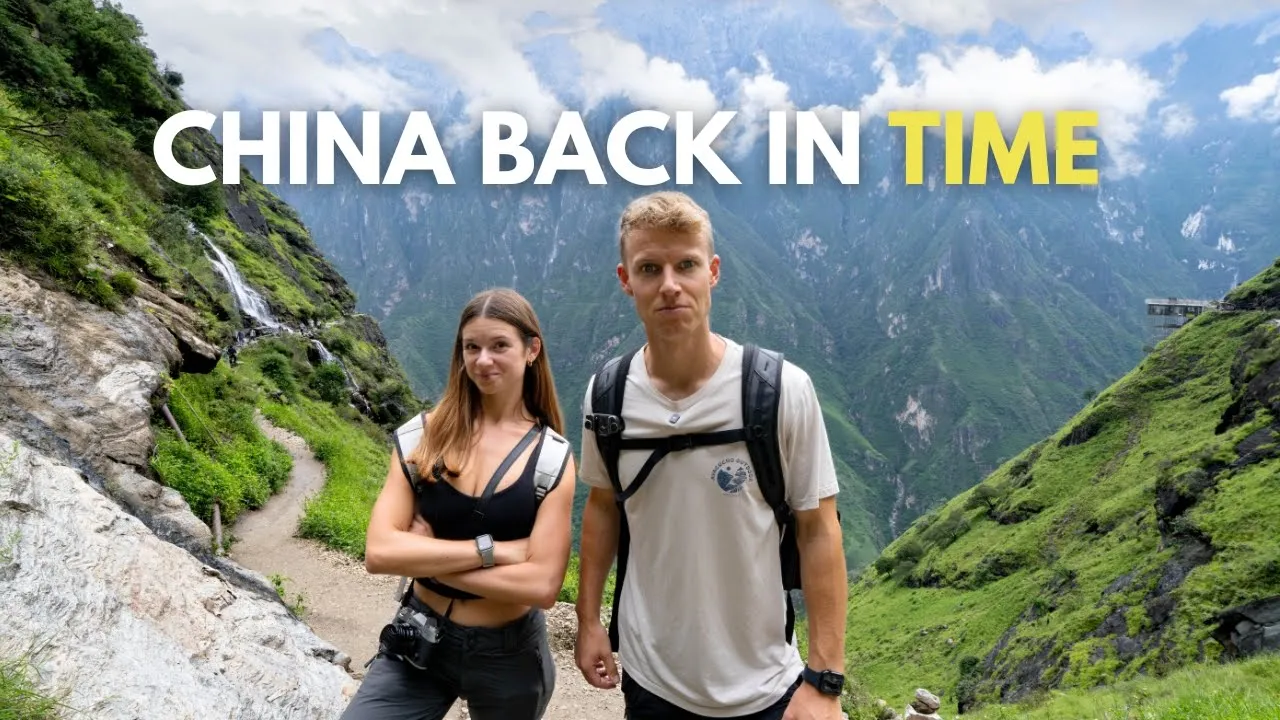
Joel and Emilia travel through Yunnan, visiting the Yuanyang rice terraces, Jianshui, Lijiang, Tiger Leaping Gorge, and Jade Dragon Mountain. They walk among fields cultivated by the Hani people for more than 1,300 years and see a drone carry supplies over the terraces. In Jianshui, locals offer fruit, and the travelers visit Xiaoyang Tower and ring an old bell. They continue by high-speed rail to Lijiang, at an altitude of 2,400 meters, and climb Lion Hill to Wangu Pavilion. Yunnan's coffee production is another part of the trip: the source says the province supplies 98% of China's coffee. At Tiger Leaping Gorge, they descend for two hours and visit waterfalls before reaching Tina's guest house. Jade Dragon Mountain brings a view of Blue Moon Valley, which is partly man-made, while clouds and long cable-car lines affect the visit.
More about the current video:()

Terraces and old towns in Yunnan
Joel and Emilia begin in Yuanyang at sunrise, walking through rice terraces cultivated by the Hani people for more than 1,300 years. The fields are an example of long-standing farming, but the scene also includes newer technology: a drone passes overhead carrying supplies. Their stay at Jackie's guest house brings views of the area's mushroom-shaped houses, and they see a local drying corn on a thatched roof. These details show both the working landscape and the homes around it.
The pair continue to Jianshui, whose old town dates to the 14th century. It feels lived in to them rather than arranged only for visitors. Local people offer them fruit and speak quickly in Chinese; Joel and Emilia respond with smiles and waves. They visit Xiaoyang Tower and hear the sound of an old bell when Joel rings it. After exploring Jianshui, they take a six-hour high-speed rail journey to Lijiang, which sits at 2,400 meters. The higher elevation affects them as they walk through the old town and climb Lion Hill to Wangu Pavilion.
Mountain routes, coffee, and tourism
Yunnan is described as China's coffee center, producing 98% of the country's beans. The source says the province's coffee is all Arabica and that it supplies Starbucks in the United States. The travelers then hike at Tiger Leaping Gorge. Their route includes a two-hour descent between steep cliffs, coffee stops, waterfalls, spiders, and a visit to Tina's guest house. The body describes the gorge as thirty meters wide, while the FAQ gives a narrower point of 25 meters; both figures are preserved in their original contexts. The legend in the FAQ says a tiger leaped across the narrowest point while escaping hunters.
Their final stop is Jade Dragon Mountain. Clouds obscure parts of the mountain, and cable-car queues are long, but they visit Blue Moon Valley. Its waterfalls and flooded areas are partly man-made, while the water comes from a glacier. The trip also leads Joel to reflect on tourism in Yunnan: visitor numbers are growing, yet the travelers encountered local culture and landscapes alongside the attractions. The route moves from Hani terraces and Jianshui's old town to Lijiang, the gorge, and the mountain, with practical decisions such as hiking duration, slippery rocks, and early arrival shaping each stop.
FAQs (From the traveler's perspective)
- Q: What were the local people like in Jianshui?
- A: Joel and Emilia describe the local people as very friendly. People gave them fruit and spoke to them in Chinese as if they understood; the travelers did not follow the conversation, so they smiled and waved in response.
- Q: What surprised them in the rice terraces?
- A: A drone flew across the fields carrying what looked like a bag of rice or a parcel. The sight stood out as a meeting of the Hani terraces' ancient farming traditions and modern technology.
- Q: Is Blue Moon Valley entirely natural?
- A: No. The source says the valley is partly man-made, with dammed waterfalls and flooded areas, although the water comes from the glacier. Joel and Emilia visit it during their stop at Jade Dragon Mountain.
- Q: What is the story behind Tiger Leaping Gorge's name?
- A: The FAQ says the gorge is named for a tiger that leaped across its narrowest point while escaping hunters. It gives that point as only 25 meters across; the body separately describes the gorge as thirty meters wide.
- Q: Why is Yunnan important for coffee?
- A: The source says Yunnan produces 98% of China's coffee and that all of it is Arabica. It also says Yunnan coffee supplies Starbucks in the United States.
