Original source
Inside China’s Most Restricted Region - Xinjiang 🇨🇳
Xinjiang: China's Most Restricted Region - Ancient & Modern
Holafly: holafly.sjv.io/6kg1d3
This is one of the best ways for you to support the channel and make your next travels so much easier with an instant internet connection and hassle-free processes.
Thank you so much! 🙏🏽🇨🇳
China is one of the world’s oldest and most influential civilizations, with...
I found China to be one of the world’s oldest and most influential civilizations, with a history that stretches back thousands of years. It is a country where ancient traditions and modern innovation exist side by side, creating a unique atmosphere that feels both deeply historic and strikingly futuristic. From imperial landmarks and classical architecture to cutting-edge skylines and high-speed rail networks, China offers an impressive blend of heritage, progress, and national ambition.<br><br>As the world’s second-largest economy, China plays a major role in global trade, manufacturing, technology, and infrastructure. I saw remarkable development over recent decades, lifting hundreds of millions of people out of poverty and building some of the most advanced transportation systems in the world. Its high-speed rail network is the largest on Earth, connecting major cities with speed and efficiency, while its urban centers showcase major achievements in engineering, innovation, and public development.<br><br>China is also rich in cultural depth and diversity. Its cuisine is celebrated worldwide, its festivals are vibrant and meaningful, and its regional traditions vary greatly across the country’s vast landscape. From the Great Wall and the Forbidden City to the mountains, rivers, megacities, and historic towns, China presents extraordinary variety in both scenery and cultural identity. The country has made significant contributions to world civilization, including inventions such as paper, printing, gunpowder, and the compass.<br><br>What makes China especially fascinating is its sense of scale, confidence, and transformation. It is a nation that continues to invest heavily in science, technology, clean energy, infrastructure, and education, while...
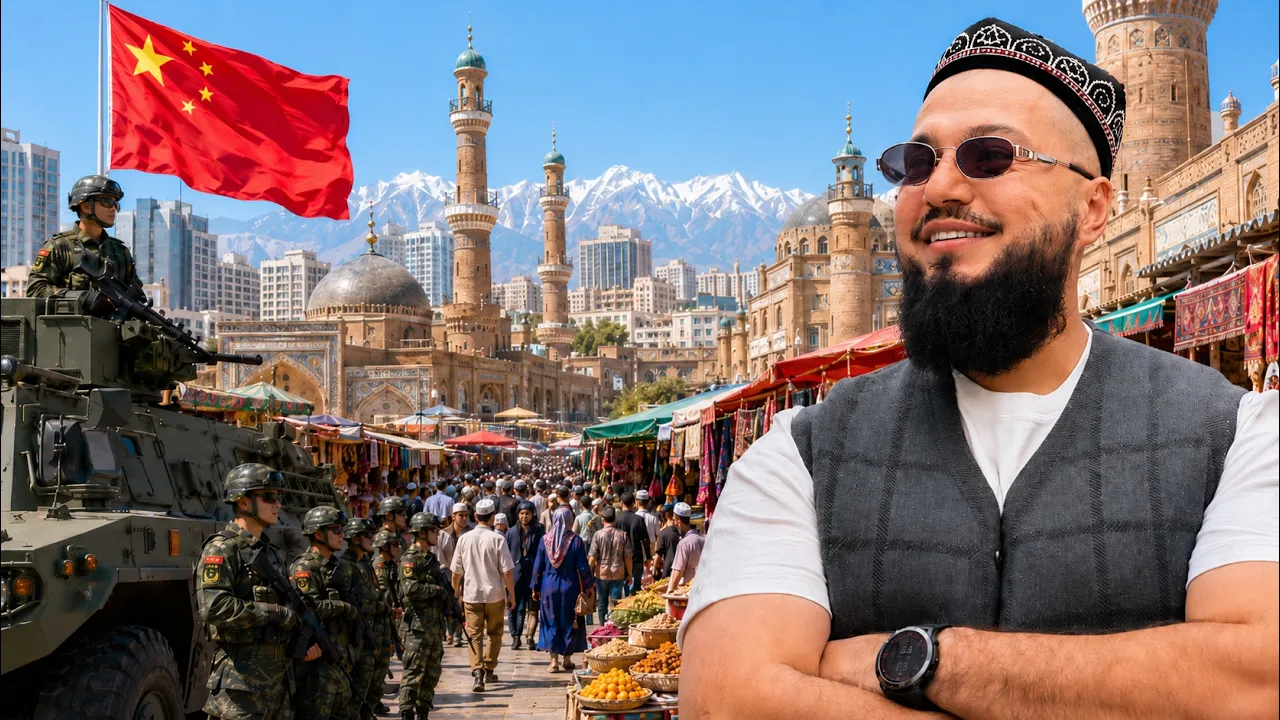
In this captivating episode, Davud ventures into Xinjiang, China's most restricted region, unveiling a land of stark contrasts. From ancient Silk Road bazaars to futuristic infrastructure, he captures the essence of a region balancing tradition and modernization. Witness the breathtaking landscapes, diverse cultures, and the resilience of its people. A rare and insightful journey into one of the world's most mysterious places.
I found China to be one of the world’s oldest and most influential civilizations, with a history that stretches back thousands of years. It is a country where ancient traditions and modern innovation exist side by side, creating a unique atmosphere that feels both deeply historic and strikingly futuristic. From imperial landmarks and classical architecture to cutting-edge skylines and high-speed rail networks, China offers an impressive blend of heritage, progress, and national ambition.<br><br>As the world’s second-largest economy, China plays a major role in global trade, manufacturing, technology, and infrastructure. I saw remarkable development over recent decades, lifting hundreds of millions of people out of poverty and building some of the most advanced transportation systems in the world. Its high-speed rail network is the largest on Earth, connecting major cities with speed and efficiency, while its urban centers showcase major achievements in engineering, innovation, and public development.<br><br>China is also rich in cultural depth and diversity. Its cuisine is celebrated worldwide, its festivals are vibrant and meaningful, and its regional traditions vary greatly across the country’s vast landscape. From the Great Wall and the Forbidden City to the mountains, rivers, megacities, and historic towns, China presents extraordinary variety in both scenery and cultural identity. The country has made significant contributions to world civilization, including inventions such as paper, printing, gunpowder, and the compass.<br><br>What makes China especially fascinating is its sense of scale, confidence, and transformation. It is a nation that continues to invest heavily in science, technology, clean energy, infrastructure, and education, while...
Davud Akhundzada takes us to Urumqi, the capital of China's Xinjiang Uyghur Autonomous Region, a place that feels like Central Asia meets China. He dives into the vibrant food market, where the aroma of lamb, spices, and sizzling barbecue fills the air. One standout moment is the Turkish coffee served in an edible cup—a touristy gimmick, but fun to try. He samples baklava, a sweet pastry with walnuts, and a deep-fried coral-reef-looking dessert that's oily but tasty. The market is overwhelming, with choices from pigeon soup to sheep head, all reflecting the region's Muslim culture. <br>Davud then ventures into a shopping area, haggling for a warm jacket. The negotiation is a cultural shift—unlike the rest of China, here prices are not fixed. He ends up paying 200 yuan ($30), knowing he overpaid. Later, he buys a handmade kalpak hat for 180 yuan, chatting with the vendor in a mix of Turkish, Uyghur, and gestures. The language similarities surprise him; words like 'rahmat' (thank you) are shared across Central Asia. <br>Beyond the market, Davud visits a viewpoint for 38 yuan, getting a panoramic look at the city, the mosque with its four minarets, and the surrounding mountains. He notes the cold weather, being 1,000 meters above sea level. In a dry-fruit shop, he discovers cordyceps—a fungus used in Chinese medicine costing up to $100,000 per kilo. He buys a handful of dates and a black apricot, marveling at the sweetness. <br>Throughout his short stay, Davud emphasizes the hospitality of the Uyghur people. He feels a deep connection through shared language and culture, making this one of the most memorable stops in China. The blend of Uyghur, Kazakh, Tajik, and Han influences creates a unique atmosphere—a place where Chinese and Central Asian worlds collide.
Davud Akhundzada dives into Xinjiang's Urumqi, a cultural crossroads where Central Asia meets China. He navigates bustling bazaars, haggles for a jacket, sips Turkish coffee from edible cups, and bonds with locals over shared language. The region's unique Uyghur heritage, hospitality, and surprising connections to Afghanistan make this a vivid, immersive journey.
Davud explores Urumqi's Uyghur markets, tastes local cuisine, haggles for souvenirs, and connects with the friendly, Central Asian culture of Xinjiang.
Exploring Urumqi's Uyghur Culture, Food & Markets in Xinjiang
15:17 When shopping in Urumqi's bazaars, be prepared to negotiate. Prices are not fixed, and haggling is expected. Start with half the asking price and work your way up.
31:40 Try the Uyghur plov (pilaf) at local restaurants. It's a hearty dish of rice, carrots, raisins, and lamb, often cooked for hours. Costs around $5 with tea.
50:41 Visit the viewpoint near the mosque for a panoramic city view. Entry is 38 yuan ($5.60) and includes a small yogurt. Great for photos, especially on clear days.
55:41 In the dry fruit market, look for camel milk bars and cordyceps. Cordyceps are expensive ($18/gram) and used in Chinese medicine. Always ask before tasting.
1:06:10 If you speak a Turkic language, you'll find many words are similar to Uyghur. Simple greetings like 'rahmat' (thank you) go a long way in building rapport with locals.
0:08 Arrival in Urumqi
2:33 Turkish coffee in edible cup
5:17 Trying Uyghur sweets
8:27 Exploring food market
15:17 Negotiating for a jacket
41:52 Buying a handmade hat
49:22 Viewpoint over mosque
55:41 Cordyceps and dry fruits
0:08 Arrival in Urumqi
2:33 Turkish coffee in edible cup
5:17 Trying Uyghur sweets
8:27 Exploring food market
15:17 Negotiating for a jacket
41:52 Buying a handmade hat
49:22 Viewpoint over mosque
55:41 Cordyceps and dry fruits
What are those bug-looking things in the market?
It's a type of insect used in traditional Chinese medicine, said to boost immunity. One gram costs about $18, and a kilo can go up to $100,000.
How much did you pay for the hat?
I negotiated from 180 yuan down to 180 yuan? Actually I paid 180 yuan for the handmade hat, but the fabric ones are only 50-60 yuan.
Can you eat the cordyceps directly or only drink as tea?
Yes, you can soak it in water and drink as tea, or eat it dry. It's for immunity.