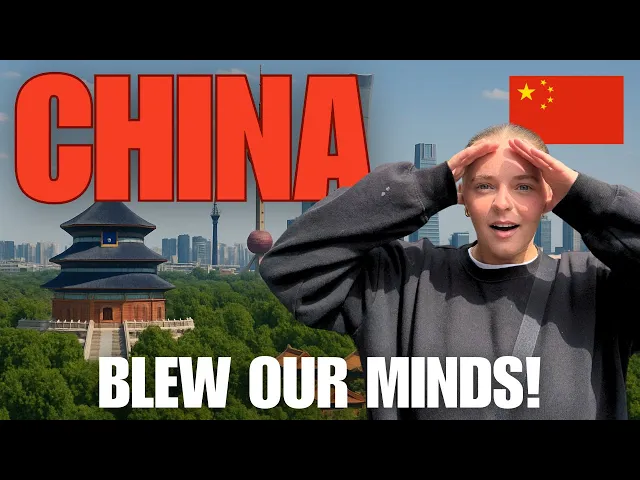
China’s 14th Five-Year Plan from 2021–2025, puts a strong focus on developing museums across the country. One of its key goals is to have at least one museum for every 250,000 people.
Rafa Goes Around! explores China's museum boom, showcasing futuristic exhibits, AI tech, and students eager to practice English. A fascinating look at cultural,
Travel Guides & Tips in this video
Rafa Goes Around! explores China's museum boom, revealing how the 14th Five-Year Plan is transforming the country into a global cultural powerhouse. From the stunning Shanghai Astronomy Museum to the innovative Xi'an Science and Technology Museum, this video showcases futuristic exhibits, friendly students eager to practice English, and cutting-edge tech like AI and VR. A must-see for anyone curious about China's rapid progress and its commitment to making science accessible and fun for all.
China's Museums: Scale and Development Under 5-Year Plan
China’s 14th Five-Year Plan from 2021–2025, puts a strong focus on developing museums across the country. One of its key goals is to have at least one museum for every 250,000 people #China #ChinaTravel #XiAn
Exploring China Futuristic Museum Boom and Tech Innovation
Prepare to be awestruck by the sheer magnitude of China's museums! From ancient artifacts to modern marvels, this video explores the incredible scale and ambition behind the nation's rapidly expanding museum scene. Discover the passion for preserving history and culture as China's 14th Five-Year Plan fuels an unprecedented museum boom. Get ready for a journey through time and art!
Attractions in this video: Chongdu Science Fiction Museum, Shanghai Astronomy Museum, Suzhou Science And Technology Museum, Xi'an Science And Technology Museum
More about the current video:(Published on 2025-07-19)
Rafa Goes Around! takes us on a journey through China's incredible museum boom, fueled by the government's 14th Five-Year Plan. The goal is ambitious: at least one museum for every 250,000 people, a target already hit in megacities like Beijing and Shanghai.
The video showcases a stunning lineup of new institutions, from the Futuristic Chongdu Science Fiction Museum and the Shanghai Astronomy Museum to the soon-to-open Suzhou Science and Technology Museum. These aren't just static displays; they are high-tech hubs designed to inspire the next generation of innovators.
A key highlight is how these museums engage the public. Rafa notes that school field trips are a daily occurrence, with kids genuinely excited to interact with exhibits. The private sector is deeply involved too, with giants like Lenovo building AI-powered science labs in rural schools and Huawei and Tencent integrating AR, VR, and 3D modeling to create immersive experiences.
The focus on national pride is clear, with exhibits showcasing Chinese tech achievements, from BYD electric vehicles to satellites and aerospace innovations. The Xi'an Science and Technology Museum is a standout, featuring a breathtaking central atrium with a massive mobius ring sculpture and mesmerizing, helium-filled flying fish that perform a daily show.
Beyond the bricks and mortar, China is taking science on the road. Mobile science museums and caravans have traveled millions of kilometers to bring interactive learning to rural and underserved communities. By 2024, science and tech museums had already seen over 100 million visits, a 16% increase from the previous year.
Rafa also shares a personal touch, interacting with shy but excited students eager to practice their English. This human connection underscores that these museums are not just about technology, but about fostering curiosity and cultural exchange. With plans to become a 'museum powerhouse' by 2035 and a mega cultural district in the works, China’s commitment to making knowledge accessible and fun is clear.
FAQs (From the traveler's perspective)
Q: What are China's museum goals?
A: The 14th Five-Year Plan aims for at least one museum per 250,000 people, a goal already met in major cities.
Q: How are private companies involved?
A: Lenovo built an AI-powered science lab, while Huawei and Tencent use AR, VR, and 3D modeling to make exhibits more immersive.
Q: What was the most surprising thing you found?
A: The Xi'an museum's giant mobius ring sculpture and the helium-filled flying fish that perform a floating show every hour.
Q: Are there museums for rural areas?
A: Yes, mobile science museums and caravans equipped with exhibits have traveled millions of kilometers to serve remote communities.
Q: What is the visitor turnout like?
A: In 2024, science and tech museums saw over 100 million visits, a 16% increase, and total museum visits surpassed 1 billion.